Uninsured

New and noteworthy

Quote from KFF President and CEO Drew Altman reads, "when it comes to the “affordability crisis” driving the national discussion of health care today, the chronically ill, and most of all the chronically ill uninsured, are the tip of the spear."

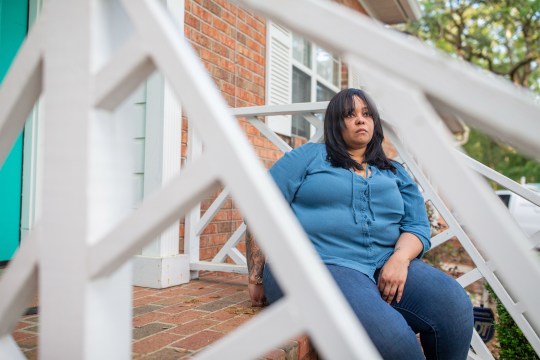
The Group that Struggles the Most in American Health Care

In a new column, Dr. Drew Altman, KFF’s Founding President and CEO, previews findings about the chronically ill uninsured from a large KFF survey of 25,000 Americans focusing on the cost and access challenges facing the chronically ill, which will be released tomorrow. He writes: “There are more than enough needs to go around in American health care, but if I had to pick the one group that struggles the most with costs and access, it would be people with chronic illnesses who are also uninsured.”


Other “Beyond the Data” columns >>

Key Facts about the Uninsured Population

The number and share of people without insurance grew in 2024, increasing for the first time since 2019, according to KFF’s analysis of data from the American Community Survey (ACS). This issue brief describes trends in health coverage in 2024, examines the characteristics of the uninsured population , and summarizes the access and financial implications of not having coverage.

Data and analysis

The coverage gap exists because some states did not expand Medicaid under the ACA to cover adults under age 65 without dependent children with incomes at/below 138% of the federal poverty level (FPL)

How Many Uninsured Are in the Coverage Gap?

An estimated 1.4 million uninsured individuals in the 10 states without Medicaid expansion, including many working adults, people of color, and those with disabilities, remain in the "coverage gap," ineligible for Medicaid or for ACA tax credits that would make coverage affordable.

The Uninsured and Health Coverage

This Health Policy 101 chapter examines the share of the United States population who are uninsured, highlighting their demographics and the challenges they face because of the lack of coverage.

Key Facts on Health Coverage of Immigrants

This fact sheet provides an overview of health coverage for immigrants based on data from the 2023 KFF/LA Times Survey of Immigrants. As of 2023, half of likely undocumented immigrant adults and one in five lawfully present immigrant adults reported being uninsured.

Who was uninsured in 2024?

Latest Polling
9.8%

The share of people under age 65 without insurance
62%

The share of uninsured adults who said they were uninsured because coverage is not affordable
59%

The share of uninsured adults who said they or someone living with them had problems paying for health care
39%

The share of uninsured adults who reported delaying or not getting needed care or medication due to cost

Stay informed.

Stay informed.

Filter

821-830 of 1,315 results

  • 2003 Health Insurance Survey – Summary and Chartpack

    Report

    The 2003 Kaiser Family Foundation Health Insurance Survey examines the public's level of satisfaction with their insurance coverage, their expectations of health insurance, the role of costs and other factors in health insurance decision-making, and attitudes toward employer-sponsored coverage. It also explores people's opinions about several alternative health insurance plans that are currently under consideration and explores how they might respond to these new options. Summary and Chartpack (.pdf)

  • 2003 Health Insurance Survey – Toplines

    Poll Finding

    The 2003 Kaiser Family Foundation Health Insurance Survey examines the public's level of satisfaction with their insurance coverage, their expectations of health insurance, the role of costs and other factors in health insurance decision-making, and attitudes toward employer-sponsored coverage. It also explores people's opinions about several alternative health insurance plans that are currently under consideration and explores how they might respond to these new options. Survey Toplines (.pdf)

  • Racial and Ethnic Disparities in Women’s Health Coverage and Access to Care

    Issue Brief

    Using data from the 2001 Kaiser Women’s Health Survey, a nationally representative survey of nearly 4,000 women between the ages of 18 to 64, this issue brief explores racial and ethnic disparities in health care among women. It provides new information on the differences in health status, health insurance coverage, and selected measures of access to care across three racial/ethnic groups of women: African American, Latina, and white. Issue Brief (.pdf)

  • What Happened to the Insurance Coverage of Children and Adults in 2006?

    Issue Brief

    A new, detailed analysis of the latest US Census Bureau data on health insurance coverage looks behind the 2.2 million increase in the number of uninsured, examining changes by age and income. Reversing years of steady declines, the number of uninsured children has grown by one million over the last two years. And, as debate continues on reauthorization of SCHIP, the analysis shows that 48 percent of the increase in uninsured children from 2005 to…

  • How Race/Ethnicity, Immigration Status, and Language Affect Health Insurance Coverage, Access to and Quality of Care Among the Low-Income Population

    Report

    This report examines the roles that race, language and citizenship status play in insurance coverage, access to health care and quality of health care, particularly for the low-income Latino population. The findings demonstrates that citizenship status and language proficiency have a significant impact on insurance coverage, access to care and the quality of care received among the low-income population. Report (.pdf)

  • Access to Care for the Uninsured: An Update

    Report

    As the Census Bureau releases the latest data on health insurance coverage, prior research has shown that health insurance coverage improves access to care and health outcomes. New data from the Kaiser 2003 Health Insurance Survey updates what is known about barriers to access to health care. Chart Pack (.pdf)

  • The Economic Downturn and Changes in Health Insurance Coverage, 2000-2003

    Report

    This report shows that number of uninsured Americans under age 65 increased by 5.1 million between 2000-2003 largely driven by continuing declines in employer sponsored insurance. For children, this decline was more than offset by increases in enrollment in Medicaid and the State Children’s Health Insurance Program (SCHIP), resulting in a decrease in the number of children without coverage. The same growth in public coverage did not occur for adults, and as a result all…

  • The California Single-Payer Debate, The Defeat of Proposition 186

    Report

    A report summarizing the campaigns of proponents and opponents to the California Health Security Act (Proposition 186) of 1994. The report includes findings from research commissioned by the Kaiser Family Foundation on the potential financial and administrative impact of the Act on California, as well as an analysis of the paid media campaigns on the issue (see also #1026, Statewide Surveys of Californians on Public Attitudes Toward the Single Payer Ballot Initiatives (Proposition 186), #1027,…