Uninsured

New and noteworthy

Quote from KFF President and CEO Drew Altman reads, "when it comes to the “affordability crisis” driving the national discussion of health care today, the chronically ill, and most of all the chronically ill uninsured, are the tip of the spear."

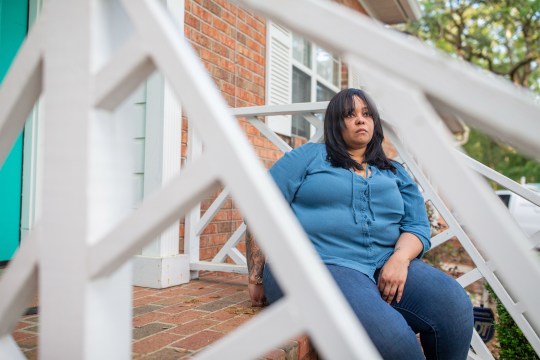
The Group that Struggles the Most in American Health Care

In a new column, Dr. Drew Altman, KFF’s Founding President and CEO, previews findings about the chronically ill uninsured from a large KFF survey of 25,000 Americans focusing on the cost and access challenges facing the chronically ill, which will be released tomorrow. He writes: “There are more than enough needs to go around in American health care, but if I had to pick the one group that struggles the most with costs and access, it would be people with chronic illnesses who are also uninsured.”


Other “Beyond the Data” columns >>

Key Facts about the Uninsured Population

The number and share of people without insurance grew in 2024, increasing for the first time since 2019, according to KFF’s analysis of data from the American Community Survey (ACS). This issue brief describes trends in health coverage in 2024, examines the characteristics of the uninsured population , and summarizes the access and financial implications of not having coverage.

Data and analysis

The coverage gap exists because some states did not expand Medicaid under the ACA to cover adults under age 65 without dependent children with incomes at/below 138% of the federal poverty level (FPL)

How Many Uninsured Are in the Coverage Gap?

An estimated 1.4 million uninsured individuals in the 10 states without Medicaid expansion, including many working adults, people of color, and those with disabilities, remain in the "coverage gap," ineligible for Medicaid or for ACA tax credits that would make coverage affordable.

The Uninsured and Health Coverage

This Health Policy 101 chapter examines the share of the United States population who are uninsured, highlighting their demographics and the challenges they face because of the lack of coverage.

Key Facts on Health Coverage of Immigrants

This fact sheet provides an overview of health coverage for immigrants based on data from the 2023 KFF/LA Times Survey of Immigrants. As of 2023, half of likely undocumented immigrant adults and one in five lawfully present immigrant adults reported being uninsured.

Who was uninsured in 2024?

Latest Polling
9.8%

The share of people under age 65 without insurance
62%

The share of uninsured adults who said they were uninsured because coverage is not affordable
59%

The share of uninsured adults who said they or someone living with them had problems paying for health care
39%

The share of uninsured adults who reported delaying or not getting needed care or medication due to cost

Stay informed.

Stay informed.

Filter

751-760 of 1,315 results

  • Medicare: Options for Reform, A Public Dialogue on Health Care: The Future of Medicare

    Report

    A public education brochure describing Medicare reform options that are being considered by Congress. This fact sheet is also a part of a packet of information as part of a joint public information project between Kaiser Family Foundation and League of Women Voters of public meetings held across the United States in October 1998 (#1427, available in print). Report Report

  • Two National Surveys: Views of Americans and Health Care Providers on Medical Abortion

    Other Post

    Will 1999 Be The Year For Mifepristone (RU-486)?And, An Update on Women's Other Options for Very Early Abortion September 16, 1998 Briefing Participants: Janet Benshoof PresidentCenter for Reproductive Law & Policy120 Wall Street, 18th FloorNew York, NY 10005Press Contact: Margie Kelly212/514-5534 Jacqueline E. Darroch, PhDSenior Vice PresidentThe Alan Guttmacher Institute120 Wall StreetNew York, NY 10005 Vanessa Northington Gamble, MD, PhDAssociate ProfessorHistory of Medicine and Family Medicine, and DirectorCenter for the Study of Race and Ethnicity…

  • Keeping Medicare and Medicaid When You Work, 2005: A Resource Guide for People with Disabilities, Their Families, and Their Advocates

    Report

    This guide helps to explain the program rules for Medicare and Medicaid with regard to work. Medicare and Medicaid have come to play important roles in the lives and the futures of roughly 20 million children, adults, and seniors with disabilities - and this guide gives people with disabilities new information to help them get the most from these programs. Full PDF Report Section 1: Protecting Health Coverage For People With Disabilities Who Work HTML…

  • Native Americans and Medicaid: Coverage and Financing Issues

    Report

    Medicaid plays several different roles of significance to Native Americans. Through its purchase of managed care products, Medicaid is reshaping the health care delivery system for many Native Americans and other underserved low-income populations. Medicaid also assists low-income elderly and disabled Indians who are eligible for Medicare in meeting their premium and cost-sharing obligations. Finally, Medicaid offers coverage for nursing home care and other long-term care services needed by frail elderly and disabled Native Americans.…

  • Child Health Facts:  National and State Profiles of Coverage

    Other Post

    Child Health Facts: National and State Profiles of Coverage Appendix 2 Medicaid Enhanced Matching Rate Matching Rate Alabama 69.3% 78.5% Alaska 59.8% 71.9% Arizona 65.3% 75.7% Arkansas 72.8% 81.0% California 51.2% 65.9% Colorado 52.0% 66.4% Connecticut 50.0% 65.0% Delaware 50.0% 65.0% District of Columbia 70.0% 79.0% Florida 55.7% 69.0% Georgia 60.8% 72.6% Hawaii 50.0% 65.0% Idaho 69.6% 78.7% Illinois 50.0% 65.0% Indiana 61.4% 73.0% Iowa 63.8% 74.6% Kansas 59.7% 71.8% Kentucky 70.4% 79.3% Louisiana 70.0%…

  • Low-Income Adults in New Orleans in 2008: Who Are They and How Are They Faring?

    Poll Finding

    Based on data from Kaiser's Second Post-Katrina Survey, this Survey Brief profiles low-income adults in New Orleans in 2008, examining their demographics, personal recovery from the aftermath of Hurricane Katrina, worries and concerns, and financial and health care challenges. It finds that low-income adults in New Orleans are more likely than other adults in the city to still be dealing with recovery from the aftermath of Hurricane Katrina and facing financial and health care challenges.…

  • Medicaid Spending Growth and the Great Recession, 2007-2009

    Fact Sheet

    This fact sheet examines how the recent recession drove up Medicaid enrollment as millions of Americans lost jobs and income, and how that increase in enrollment has been the primary cause of the increase in overall Medicaid spending. Fact Sheet (.pdf)

  • Health Coverage for the Unemployed

    Issue Brief

    This policy brief outlines the challenges facing the unemployed as they seek to remain insured after losing jobs and employer-sponsored health coverage. In May 2011, 13.9 million people in the U.S. were unemployed. Of these, 6.2 million had been unemployed for six months or more and faced limited options to remain insured. The brief examines potential sources of insurance, including through a spouse's plan, COBRA, the non-group insurance market and public programs. It also discusses…