Uninsured

New and noteworthy

Quote from KFF President and CEO Drew Altman reads, "when it comes to the “affordability crisis” driving the national discussion of health care today, the chronically ill, and most of all the chronically ill uninsured, are the tip of the spear."

The Group that Struggles the Most in American Health Care

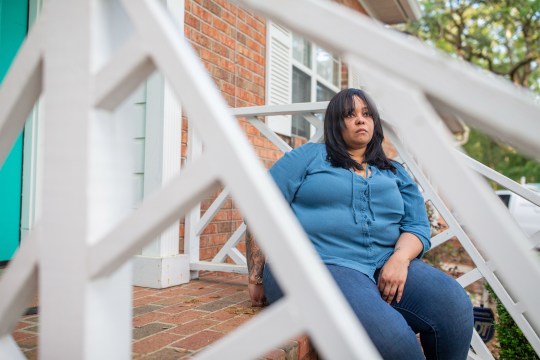
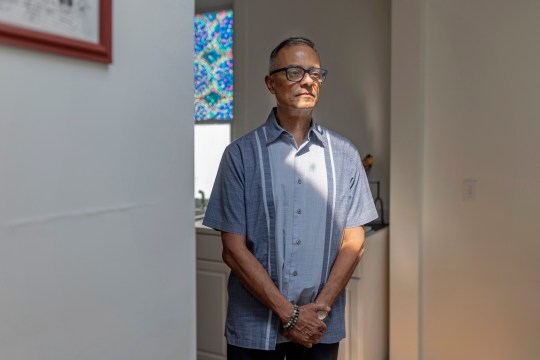
In a new column, Dr. Drew Altman, KFF’s Founding President and CEO, previews findings about the chronically ill uninsured from a large KFF survey of 25,000 Americans focusing on the cost and access challenges facing the chronically ill, which will be released tomorrow. He writes: “There are more than enough needs to go around in American health care, but if I had to pick the one group that struggles the most with costs and access, it would be people with chronic illnesses who are also uninsured.”

Other “Beyond the Data” columns >>

Key Facts about the Uninsured Population

The number and share of people without insurance grew in 2024, increasing for the first time since 2019, according to KFF’s analysis of data from the American Community Survey (ACS). This issue brief describes trends in health coverage in 2024, examines the characteristics of the uninsured population , and summarizes the access and financial implications of not having coverage.

Data and analysis

The coverage gap exists because some states did not expand Medicaid under the ACA to cover adults under age 65 without dependent children with incomes at/below 138% of the federal poverty level (FPL)

How Many Uninsured Are in the Coverage Gap?

An estimated 1.4 million uninsured individuals in the 10 states without Medicaid expansion, including many working adults, people of color, and those with disabilities, remain in the "coverage gap," ineligible for Medicaid or for ACA tax credits that would make coverage affordable.

The Uninsured and Health Coverage

This Health Policy 101 chapter examines the share of the United States population who are uninsured, highlighting their demographics and the challenges they face because of the lack of coverage.

Key Facts on Health Coverage of Immigrants

This fact sheet provides an overview of health coverage for immigrants based on data from the 2023 KFF/LA Times Survey of Immigrants. As of 2023, half of likely undocumented immigrant adults and one in five lawfully present immigrant adults reported being uninsured.

Who was uninsured in 2024?

Latest Polling
9.8%

The share of people under age 65 without insurance
62%

The share of uninsured adults who said they were uninsured because coverage is not affordable
59%

The share of uninsured adults who said they or someone living with them had problems paying for health care
39%

The share of uninsured adults who reported delaying or not getting needed care or medication due to cost

Stay informed.

Stay informed.

Filter

711-720 of 1,315 results

  • Variations in State Medicaid Buy-in Practices for Low-Income Medicare Beneficiaries: A 1999 Update

    Report

    This report updates a 1997 Foundation report to assess how states are implementing financial protections for the 16 million Medicare beneficiaries who are low-income. These protections, generally referred to as "buy-in programs," help low-income Medicare beneficiaries meet Medicare's cost-sharing requirements by using state Medicaid programs to pay either all or some portion of premiums, deductibles, and coinsurance amounts. Using information collected through a survey of state Medicaid directors and consumer advocates, the update seeks to…

  • Insurance Market Reforms and the Individual Insurance Marketplace: Implications for Coverage Expansions

    Report

    Proposals that attempt to expand coverage in the private individual insurance market will only work if private insurance is available and affordable. This paper describes how the current individual marketplace will affect the ability of such proposals to assure equitable access to affordable coverage. This paper is part of the Kaiser Incremental Health Reform Project. Issue Paper

  • Medicaid Managed Care’s Impact On Safety-Net Clinics In California

    Fact Sheet

    Medicaid Managed Care's Impact On Safety-Net Clinics In California Medicaid Managed Care's Impact On Safety-Net Clinics In California was published in the January/February 2000 issue of the journal Health Affairs. The report provides an overview of Medi-Cal Managed Care in California, and its effects on community health clinics, and related issues. In order to better understand the impact that the Medi-Cal managed care program has had on California safety-net providers, the Kaiser Family Foundation supported…

  • Long-Term Care:  Medicaid’s Role and Challenges

    Issue Brief

    Long-Term Care: Medicaid's Role and Challenges This Policy Brief examines Medicaid's role in providing long-term care services. It describes long-term care services, the population that needs these services, and how people get long-term care services. It provides an overview of health insurance coverage of persons with long-term care needs and describes both Medicare's and Medicaid's role in providing these services. It also examines some of the policy issues and challenges involved in providing long-term care…

  • A Risky Proposition?  Risk-Bearing and Solvency in California’s Medical Groups — Policy Brief

    Issue Brief

    A Risky Proposition? Risk-Bearing and Solvency in California's Medical Groups -- Policy Brief A Risky Proposition? Risk-Bearing and Solvency in California's Medical Groups is an 8-page policy brief to provide information about medical groups in California, including a discussion on risk-bearing, solvency, and proposed regulatory approaches. The brief includes a variety of perspectives presented by speakers at a California Health Policy Roundtable held in Sacramento, California on July 20, 1999. Roundtable

  • Medicaid and Children: Overcoming Barriers to Enrollment

    Report

    Findings from a National Survey This national telephone survey of low-income parents represents a major effort to better understand the barriers to Medicaid enrollment and to test the usefulness of ideas to facilitate enrollment in a quantitative way. Examining both parents of uninsured children who appear eligible for Medicaid and parents with children currently enrolled in Medicaid, the survey findings present: a profile of low-income, Medicaid-eligible children; parents' Medicaid knowledge and perceptions; key barriers to…

  • NewsHour/Kaiser Survey Underscores Difficulties Faced by Those Without Health Insurance

    Report

    The National Survey on the Uninsured from The NewsHour with Jim Lehrer and the Kaiser Family Foundation is this year's first nationwide survey on Americans' attitudes about the growing uninsured population and the difficulties uninsured people face getting medical care. The survey also assesses public attitudes on options to address the problem. News Release: NewsHour/Kaiser Survey Spotlights Misconceptions About the Medically Uninsured National Survey of the Uninsured Toplines/Survey Key Facts Chart Pack Fact Sheet Public…

  • Table

    Other Post

    SUMMARY OF CALIFORNIA VERSUS THE U KEY HEALTH CARE FACTS IN CALIFORNIA AND THE U.S. California U.S. Percentage uninsured (non-elderly) (1998) 24.4% 18.3% Percentage of children uninsured (1998) 20.8% 15.5% Percentage of non-elderly enrolled in Medicaid: 1998 11.1% 8.4% 1994 14.3% 10.0% Percentage of employers that offer health insurance (1999) 48% 61% Percentage of workers with access to coverage for "non-traditional" partners (1999) 31% 18% Average monthly HMO premium for family coverage (1999) $405 $445…

  • Targeting Medicare Drug Benefits: Costs and Issues

    Report

    This report, written by Marilyn Moon and Matthew Storeygard of the Urban Institute, estimates the potential cost of targeting drug benefits to low-income Medicare beneficiaries and those with catastrophic drug expenses and discusses some of the key programmatic issues that could arise under this approach. The authors predict that a targeted and comprehensive drug benefit would likely help more than half of the 11.3 million low-income beneficiaries who lack drug coverage through Medicaid or an…

  • Post-Election Survey: The Public and the Health Care Agenda for the New Administration and Congress

    Poll Finding

    This Kaiser Family Foundation-Harvard School of Public Health survey, conducted immediately after the 2000 Presidential election, finds that health care issues ranked near the top of voters priorities for spending the surplus. Medicare ranked among the top three priorities, along with education and Social Security, and ahead of paying off the national debt and cutting taxes. Education ranked first. The survey also found that voters support patients rights legislation and some action to help the…