Uninsured

New and noteworthy

Quote from KFF President and CEO Drew Altman reads, "when it comes to the “affordability crisis” driving the national discussion of health care today, the chronically ill, and most of all the chronically ill uninsured, are the tip of the spear."

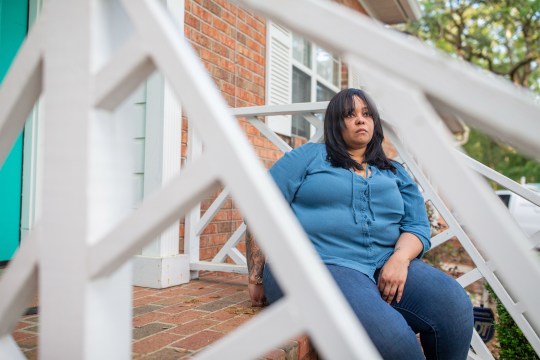
The Group that Struggles the Most in American Health Care

In a new column, Dr. Drew Altman, KFF’s Founding President and CEO, previews findings about the chronically ill uninsured from a large KFF survey of 25,000 Americans focusing on the cost and access challenges facing the chronically ill, which will be released tomorrow. He writes: “There are more than enough needs to go around in American health care, but if I had to pick the one group that struggles the most with costs and access, it would be people with chronic illnesses who are also uninsured.”


Other “Beyond the Data” columns >>

Key Facts about the Uninsured Population

The number and share of people without insurance grew in 2024, increasing for the first time since 2019, according to KFF’s analysis of data from the American Community Survey (ACS). This issue brief describes trends in health coverage in 2024, examines the characteristics of the uninsured population , and summarizes the access and financial implications of not having coverage.

Data and analysis

The coverage gap exists because some states did not expand Medicaid under the ACA to cover adults under age 65 without dependent children with incomes at/below 138% of the federal poverty level (FPL)

How Many Uninsured Are in the Coverage Gap?

An estimated 1.4 million uninsured individuals in the 10 states without Medicaid expansion, including many working adults, people of color, and those with disabilities, remain in the "coverage gap," ineligible for Medicaid or for ACA tax credits that would make coverage affordable.

The Uninsured and Health Coverage

This Health Policy 101 chapter examines the share of the United States population who are uninsured, highlighting their demographics and the challenges they face because of the lack of coverage.

Key Facts on Health Coverage of Immigrants

This fact sheet provides an overview of health coverage for immigrants based on data from the 2023 KFF/LA Times Survey of Immigrants. As of 2023, half of likely undocumented immigrant adults and one in five lawfully present immigrant adults reported being uninsured.

Who was uninsured in 2024?

Latest Polling
9.8%

The share of people under age 65 without insurance
62%

The share of uninsured adults who said they were uninsured because coverage is not affordable
59%

The share of uninsured adults who said they or someone living with them had problems paying for health care
39%

The share of uninsured adults who reported delaying or not getting needed care or medication due to cost

Stay informed.

Stay informed.

Filter

671-680 of 1,318 results

  • Pulling it Together: This Could Be the Next Big Issue in Health Reform

    Perspective

    No, this is not about “death panels.” The town hall meetings.  The media coverage of the town hall meetings.  Media polls about how the American people feel about the town hall meetings.  And even the media myth busting and fact checking about the most extreme claims made at the town hall meetings and the Administration's daily efforts to set the record straight.  All these things have focused attention on a few hot button issues that…

  • Kaiser Health Tracking Poll — August 2009

    Poll Finding

    The August Kaiser Health Tracking Poll finds a slim majority of Americans continues to favor moving forward on health care reform now despite an intensifying ad war and a political climate of contentious town hall meetings that coincide with rising concerns about the reform effort. Fifty-three percent of the public believes that tackling health reform is more important than ever, compared to 42 percent who say we cannot afford to take on health care reform…

  • How Will Uninsured Children Be Affected By Health Reform?

    Issue Brief

    This brief examines uninsured children and how they could be affected by health reform, including estimates of how many might qualify for coverage under a Medicaid expansion, how many would be eligible for subsidies and how many would not be eligible for such help. Issue Brief (.pdf)

  • How Will Uninsured Parents Be Affected By Health Reform?

    Issue Brief

    This brief examines uninsured parents and how they could be affected by health reform, including estimates of how many might qualify for coverage under a Medicaid expansion, how many would be eligible for subsidies and how many would not be eligible for such help. Issue Brief (.pdf)

  • Survey of Healthy San Francisco Participants

    Poll Finding

    This survey of enrollees in Healthy San Francisco (HSF), the city’s health care access program for the uninsured, reports high rates of satisfaction and signs that the program has improved access to care for those uninsured residents who have enrolled. In 2006, San Francisco created a unique health access program to provide access to affordable basic and ongoing health care services for its uninsured residents at participating clinics and hospitals. All uninsured city residents not…

  • Chartpack: Kaiser Health Tracking Poll — August 2009

    Poll Finding

    This document contains the chartpack from the August Health Tracking Poll. The survey was designed and analyzed by public opinion researchers at the Kaiser Family Foundation and was conducted August 4 through August 11, 2009, among a nationally representative random sample of 1,203 adults ages 18 and older. Telephone interviews conducted by landline (801) and cell phone (402, including 123 who had no landline telephone) were carried out in English and Spanish. The margin of…

  • Toplines: Kaiser Health Tracking Poll — August 2009

    Poll Finding

    This document contains the toplines from the August Health Tracking Poll. The survey was designed and analyzed by public opinion researchers at the Kaiser Family Foundation and was conducted August 4 through August 11, 2009, among a nationally representative random sample of 1,203 adults ages 18 and older. Telephone interviews conducted by landline (801) and cell phone (402, including 123 who had no landline telephone) were carried out in English and Spanish. The margin of…

  • How Will Uninsured Childless Adults Be Affected By Health Reform?

    Issue Brief

    This brief examines uninsured childless adults and how they could be affected by health reform, including estimates of how many might qualify for coverage under a Medicaid expansion, how many would be eligible for subsidies and how many would not be eligible for such help. Issue Brief (.pdf)

  • Key Findings: Kaiser Health Tracking Poll — August 2009

    Poll Finding

    This document contains the key findings from the August Health Tracking Poll. The survey was designed and analyzed by public opinion researchers at the Kaiser Family Foundation and was conducted August 4 through August 11, 2009, among a nationally representative random sample of 1,203 adults ages 18 and older. Telephone interviews conducted by landline (801) and cell phone (402, including 123 who had no landline telephone) were carried out in English and Spanish. The margin…

  • Express Lane Eligibility Efforts: Lessons Learned from Early State Cross-Program Enrollment Initiatives

    Issue Brief

    The Children's Health Insurance Program Reauthorization Act of 2009 (CHIPRA) provides states new options to reach and enroll eligible but uninsured low-income children into Medicaid and CHIP. The law's Express Lane Eligibility (ELE) provisions enable state Medicaid and CHIP agencies to identify, enroll and recertify children by relying on eligibility findings from other programs, such as Head Start or Food Stamps, rather than having to re-analyze eligibility under their own rules. Further, CHIPRA authorizes greater…