Uninsured

New and noteworthy

Quote from KFF President and CEO Drew Altman reads, "when it comes to the “affordability crisis” driving the national discussion of health care today, the chronically ill, and most of all the chronically ill uninsured, are the tip of the spear."

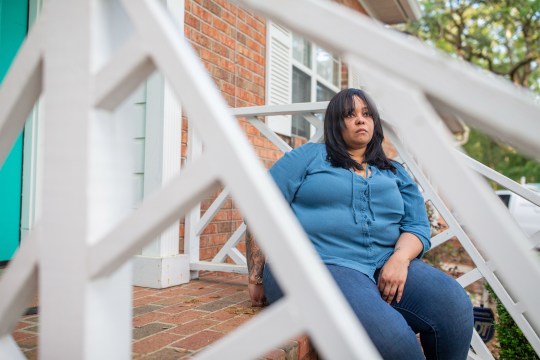
The Group that Struggles the Most in American Health Care

In a new column, Dr. Drew Altman, KFF’s Founding President and CEO, previews findings about the chronically ill uninsured from a large KFF survey of 25,000 Americans focusing on the cost and access challenges facing the chronically ill, which will be released tomorrow. He writes: “There are more than enough needs to go around in American health care, but if I had to pick the one group that struggles the most with costs and access, it would be people with chronic illnesses who are also uninsured.”


Other “Beyond the Data” columns >>

Key Facts about the Uninsured Population

The number and share of people without insurance grew in 2024, increasing for the first time since 2019, according to KFF’s analysis of data from the American Community Survey (ACS). This issue brief describes trends in health coverage in 2024, examines the characteristics of the uninsured population , and summarizes the access and financial implications of not having coverage.

Data and analysis

The coverage gap exists because some states did not expand Medicaid under the ACA to cover adults under age 65 without dependent children with incomes at/below 138% of the federal poverty level (FPL)

How Many Uninsured Are in the Coverage Gap?

An estimated 1.4 million uninsured individuals in the 10 states without Medicaid expansion, including many working adults, people of color, and those with disabilities, remain in the "coverage gap," ineligible for Medicaid or for ACA tax credits that would make coverage affordable.

The Uninsured and Health Coverage

This Health Policy 101 chapter examines the share of the United States population who are uninsured, highlighting their demographics and the challenges they face because of the lack of coverage.

Key Facts on Health Coverage of Immigrants

This fact sheet provides an overview of health coverage for immigrants based on data from the 2023 KFF/LA Times Survey of Immigrants. As of 2023, half of likely undocumented immigrant adults and one in five lawfully present immigrant adults reported being uninsured.

Who was uninsured in 2024?

Latest Polling
9.8%

The share of people under age 65 without insurance
62%

The share of uninsured adults who said they were uninsured because coverage is not affordable
59%

The share of uninsured adults who said they or someone living with them had problems paying for health care
39%

The share of uninsured adults who reported delaying or not getting needed care or medication due to cost

Stay informed.

Stay informed.

Filter

491-500 of 1,315 results

  • Medicaid as a Platform for Broader Health Reform: Supporting High-Need and Low-Income Populations

    Issue Brief

    Medicaid is the health insurance safety net for nearly 60 million of the nation's poorest and sickest individuals. It provides access to a comprehensive scope of benefits with limited cost-sharing that is geared to meet the health needs and limited resources of the low-income, high-need populations it serves, populations for whom private coverage is often not available, not affordable or inadequate. This paper, based on years of research and analysis from the Kaiser Commission on…

  • Health Care and the Middle Class: More Costs and Less Coverage

    Report

    This analysis paper examines the availability, affordability and stability of the health insurance coverage of the American middle class, defined as those with incomes of $44,000 to $88,000 for a family of four. It also addresses the growing burden of health care costs for the middle class, the adequacy of today's health insurance plans to protect them from large medical bills, and the difference both make as individuals and families make health care decisions for…

  • Summary of Coverage Provisions in the Patient Protection and Affordable Care Act

    Issue Brief

    This short summary describes the health coverage provisions contained in the final version of the Affordable Care Act signed into law in March 2010, including the individual mandate requirements, expansion of public programs, health insurance exchanges, changes to private insurance and employer requirements.

  • West vs. South: Regional Differences in Views of the Health Reform Law

    Poll Finding

    This Data Note examines regional variations in public opinion of the health reform law based on the November 2010 Kaiser Health Tracking Poll. The analysis takes a special look at the Western and Southern regions of the country, where many states are likely to see the biggest increases in coverage under the law, and which stand to be disproportionately eligible for federal Medicaid funds. Despite these similarities in how the two regions might be affected,…

  • Medicare Cost-Sharing: Implications for Beneficiaries

    Event Date:
    Event

    Tricia Neuman, Vice President and Director of the Medicare Policy Project, testified on behalf of herself and Thomas Rice, Ph.D., of UCLA's School of Public Health, before the House Ways and Means Subcommittee on Health on cost-sharing requirements under Medicare and supplemental Medigap policies. The statement reviews Medicare beneficiaries' current cost-sharing responsibilities, the evidence on the impact of out-of-pocket costs on health-care utilization, and the implications for proposals that would modify Medicare's cost-sharing structure.

  • Understanding the Health-Care Needs and Experiences of People with Disabilities:  Findings from a 2003 Survey

    Report

    Understanding the Health-Care Needs and Experiences of People with Disabilities: Findings from a 2003 Survey People with disabilities are at risk in the health-care system because of their wide-ranging health-care needs, their relatively heavy use of prescription drugs, health-care and support services, and typically low incomes. A new survey of people with permanent mental and/or physical disabilities explores their health-care experiences and challenges in accessing and paying for care. Report (.pdf) Chartpack, video, press release,…

  • The Role of Health Coverage for People with Disabilities

    Event Date:
    Event

    People with disabilities are at risk in the health-care system because of their wide-ranging health-care needs, their relatively heavy use of prescription drugs, health-care and support services, and typically low incomes. A new survey of people with permanent mental and/or physical disabilities explores their health-care experiences and challenges in accessing and paying for care. Report Chartpack Health Affairs Article-- "Uncovering the Health Challenges Facing People with Disabilities: The Role of Health Insurance"

  • Retiree Health Benefits Now and in the Future, Report

    Report

    Retiree Health Benefits Now and In the Future - Report This survey, conducted by the Kaiser Family Foundation and Hewitt Associates between June and September 2003 provides detailed information on retiree health programs offered by large private-sector employers. The data in this survey reflect the responses of 408 large firms (private-sector employers with 1,000 or more workers) and provides information on eligibility, benefits, premiums, and total cost in 2003, and offers insights as to what…

  • Challenges and Tradeoffs in Low-Income Family Budgets:  Implications for Health Coverage

    Report

    Challenges and Tradeoffs in Low-Income Family Budgets: Implications for Health Coverage - Report This report explores the experiences of families trying to make ends meet on limited budgets. By discussing these families’ work, spending patterns, financial challenges, priorities and tradeoffs and health care and coverage, this report intends to provide a deeper understanding of families’ financial pressures and choices and information to assess the impact of current and proposed policies. Report (.pdf)