Uninsured

New and noteworthy

Quote from KFF President and CEO Drew Altman reads, "when it comes to the “affordability crisis” driving the national discussion of health care today, the chronically ill, and most of all the chronically ill uninsured, are the tip of the spear."

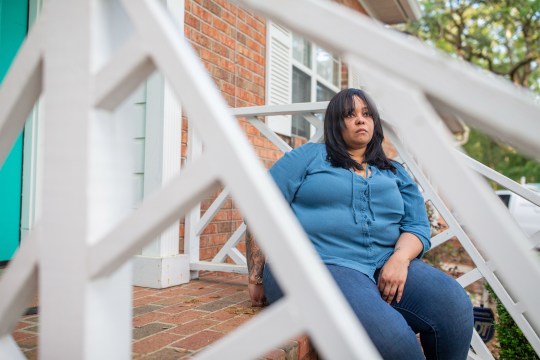
The Group that Struggles the Most in American Health Care

In a new column, Dr. Drew Altman, KFF’s Founding President and CEO, previews findings about the chronically ill uninsured from a large KFF survey of 25,000 Americans focusing on the cost and access challenges facing the chronically ill, which will be released tomorrow. He writes: “There are more than enough needs to go around in American health care, but if I had to pick the one group that struggles the most with costs and access, it would be people with chronic illnesses who are also uninsured.”


Other “Beyond the Data” columns >>

Key Facts about the Uninsured Population

The number and share of people without insurance grew in 2024, increasing for the first time since 2019, according to KFF’s analysis of data from the American Community Survey (ACS). This issue brief describes trends in health coverage in 2024, examines the characteristics of the uninsured population , and summarizes the access and financial implications of not having coverage.

Data and analysis

The coverage gap exists because some states did not expand Medicaid under the ACA to cover adults under age 65 without dependent children with incomes at/below 138% of the federal poverty level (FPL)

How Many Uninsured Are in the Coverage Gap?

An estimated 1.4 million uninsured individuals in the 10 states without Medicaid expansion, including many working adults, people of color, and those with disabilities, remain in the "coverage gap," ineligible for Medicaid or for ACA tax credits that would make coverage affordable.

The Uninsured and Health Coverage

This Health Policy 101 chapter examines the share of the United States population who are uninsured, highlighting their demographics and the challenges they face because of the lack of coverage.

Key Facts on Health Coverage of Immigrants

This fact sheet provides an overview of health coverage for immigrants based on data from the 2023 KFF/LA Times Survey of Immigrants. As of 2023, half of likely undocumented immigrant adults and one in five lawfully present immigrant adults reported being uninsured.

Who was uninsured in 2024?

Latest Polling
9.8%

The share of people under age 65 without insurance
62%

The share of uninsured adults who said they were uninsured because coverage is not affordable
59%

The share of uninsured adults who said they or someone living with them had problems paying for health care
39%

The share of uninsured adults who reported delaying or not getting needed care or medication due to cost

Stay informed.

Stay informed.

Filter

461-470 of 1,315 results

  • Medicaid’s Role for Hispanic Americans

    Fact Sheet

    This fact sheet examines Medicaid's role for Hispanic Americans. It includes data on Medicaid's coverage of Hispanic Americans and the program's impact on their access to care, as well as the impacts of the recent recession and the coming expansion of Medicaid under health reform on enrollment in Medicaid among Hispanic Americans. The fact sheet also has a chart showing state-by-state data on health insurance coverage of Hispanic Americans. Fact Sheet (.pdf)

  • Pulling It Together: Medicare, Medicaid, and The Multiplier Effect

    Perspective

    We are witnessing a battle in Washington right now about the future of health care’s two big public programs, Medicare and Medicaid. It’s a budget battle, it’s an ideological battle, it’s a partisan political battle, and while it might not always be obvious following the debate, it’s a high stakes battle for people. In 2011, over a hundred million low-income, disabled, and elderly beneficiaries will be served by the two programs. Many of the proposals…

  • SCHIP Program Enrollment: June 2003 Update

    Report

    This SCHIP enrollment report finds that overall enrollment growth is slowing and enrollment declined in 13 states. It also found that some states are capping enrollment and a handful of sates are reducing eligibility and benefits under SCHIP. Report (.pdf)

  • Retiree Health Benefits Now and In the Future – Chartpack

    Report

    This chartpack (charts used at the briefing releasing this survey), from the survey conducted by the Kaiser Family Foundation and Hewitt Associates between June and September 2003, provides detailed information on retiree health programs offered by large private-sector employers. The data in this survey reflect the responses of 408 large firms (private-sector employers with 1,000 or more workers) and provides information on eligibility, benefits, premiums, and total cost in 2003, and offers insights as to…

  • With Federal Support, States Hold Steady in Medicaid and CHIP Coverage Policies for Low-Income Children and Families Despite Recession

    News Release

    New 50-State Survey Finds Some States Make Targeted Expansions to Strengthen Coverage and Achieve Efficiencies as They Prepare for Health Reform WASHINGTON -- Despite tight budgets, nearly all states maintained or made targeted expansions or improvements in their Medicaid and Children’s Health Insurance Programs (CHIP) eligibility and enrollment rules in 2010, preserving the programs’ ability to provide coverage to millions of low-income Americans who otherwise lack affordable options, according to a new survey released today…

  • Determining Income for Adults Applying for Medicaid and Exchange Coverage Subsidies: How Income Measured With a Prior Tax Return Compares to Current Income at Enrollment

    Issue Brief

    A major goal of the Patient Protection and Affordable Care Act (ACA) is to significantly expand coverage and reduce the number of uninsured. Beginning in 2014, the ACA will establish a new continuum of coverage that will provide assistance to individuals with incomes up to 400% of poverty through a broad expansion in Medicaid and by making premium tax credits available to eligible individuals to purchase coverage through new Health Insurance Exchanges. The law standardizes…

  • Health Care Coverage and Access for Hispanics: How Does It Differ Across America

    Event Date:
    Event

    A new report from the Foundation's Kaiser Commission on Medicaid and the Uninsured finds that as the Hispanic population grows and moves beyond urban centers, Hispanics in "new growth communities" face greater barriers to health care than those in cities considered "major Hispanic centers." By 2003, the uninsured rate for Hispanics in new growth communities rose to a level equal to that of Hispanics in major centers. However, less than half (43%) of the Hispanic…

  • Health Savings Accounts and High Deductible Health Plans: Are They An Option for Low-Income Families?

    Issue Brief

    Health Savings Accounts (HSAs) are a type of medical savings account that allow consumers to save for medical expenses on a tax-fee basis. They are linked with high deductible health plans (HDHPs), and together these insurance and savings options represent a new approach to health care, commonly referred to as consumer-directed care. This brief, based on analyses of available data and research, finds that most low-income families would not benefit from HSA-HDHPs due to an…

  • Toplines: The Public’s Health Care Agenda

    Poll Finding

    These toplines provide the complete survey questions and findings from The Public’s Health Care Agenda for the New Congress and Presidential Campaign, conducted jointly by the Kaiser Family Foundation and the Harvard School of Public Health between November 9 and 19, 2006. The survey looks at the public’s priorities and views on health issues as a new Democratic majority takes the leadership of Congress and as the 2008 presidential campaign begins to take shape. It…

  • New Publications Examine SCHIP Experience; Trends in Access to Medicaid and SCHIP Coverage

    Fact Sheet

    Maintaining and expanding health coverage for children and parents will likely be in the forefront of health care policy debates in Washington and state capitols in 2007. With states generally in better financial shape since the fiscal crisis earlier in the decade, many have expressed interest in improving access to their Medicaid and State Children's Health Insurance Programs (SCHIP). A new 50-state survey shows that one-third of states (17) increased access to health coverage in…