Uninsured

New and noteworthy

Quote from KFF President and CEO Drew Altman reads, "when it comes to the “affordability crisis” driving the national discussion of health care today, the chronically ill, and most of all the chronically ill uninsured, are the tip of the spear."

The Group that Struggles the Most in American Health Care

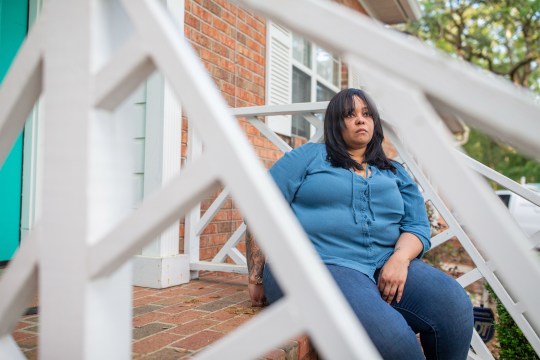
In a new column, Dr. Drew Altman, KFF’s Founding President and CEO, previews findings about the chronically ill uninsured from a large KFF survey of 25,000 Americans focusing on the cost and access challenges facing the chronically ill, which will be released tomorrow. He writes: “There are more than enough needs to go around in American health care, but if I had to pick the one group that struggles the most with costs and access, it would be people with chronic illnesses who are also uninsured.”
Other “Beyond the Data” columns >>

Key Facts about the Uninsured Population

The number and share of people without insurance grew in 2024, increasing for the first time since 2019, according to KFF’s analysis of data from the American Community Survey (ACS). This issue brief describes trends in health coverage in 2024, examines the characteristics of the uninsured population , and summarizes the access and financial implications of not having coverage.

Data and analysis

The coverage gap exists because some states did not expand Medicaid under the ACA to cover adults under age 65 without dependent children with incomes at/below 138% of the federal poverty level (FPL)

How Many Uninsured Are in the Coverage Gap?

An estimated 1.4 million uninsured individuals in the 10 states without Medicaid expansion, including many working adults, people of color, and those with disabilities, remain in the "coverage gap," ineligible for Medicaid or for ACA tax credits that would make coverage affordable.

The Uninsured and Health Coverage

This Health Policy 101 chapter examines the share of the United States population who are uninsured, highlighting their demographics and the challenges they face because of the lack of coverage.

Key Facts on Health Coverage of Immigrants

This fact sheet provides an overview of health coverage for immigrants based on data from the 2023 KFF/LA Times Survey of Immigrants. As of 2023, half of likely undocumented immigrant adults and one in five lawfully present immigrant adults reported being uninsured.

Who was uninsured in 2024?

Latest Polling
9.8%

The share of people under age 65 without insurance
62%

The share of uninsured adults who said they were uninsured because coverage is not affordable
59%

The share of uninsured adults who said they or someone living with them had problems paying for health care
39%

The share of uninsured adults who reported delaying or not getting needed care or medication due to cost

Stay informed.

Stay informed.

Filter

171-180 of 1,316 results

  • Women and Health Care: A National Profile – Report

    Report

    Report - Women and Health Care: A National Profile Women and Health Care: A National Profile is a nationally representative telephone survey of 2,766 women ages 18 and older. A shorter companion survey of 507 men was also conducted. Full Report (.pdf) Report Highlights (.pdf) Introduction and Methods (.pdf) Chapter 1: The Demographics of Women (.pdf) Chapter 2: The Health of Women (.pdf) Chapter 3: Women and Health Insurance Coverage (.pdf) Chapter 4: Women's Access…

  • How Has ACA Marketplace Enrollment Changed Across States in 2026?

    Issue Brief

    Following several years of rapid enrollment growth in the Affordable Care Act (ACA) Marketplaces that corresponded with temporary enhanced premium tax credits, enrollment fell for the first time in seven years in 2026, when those tax credits expired. Every state except for New Mexico saw a drop in ACA Marketplace enrollment from 2025 to 2026. State-based Marketplaces that run their own enrollment platforms, including those that partially offset the expiring federal enhanced tax credits, generally…

  • Uninsured Children in the South

    Other Post

    Over 4 million Southern Children have no Health Insurance Embargoed for release until: 8:30 am, ET, Monday, December 9, 1996 For more information contact: Chris Ferris (202)347-5270 New Study: Despite Recent Gains, South Still Home to Disproportionate Share ofNation's Uninsured Children Washington, D.C. -- A new report, sponsored by the Kaiser Family Foundation and prepared by the Southern Institute on Children and Families, finds that the South was home to 4.1 million uninsured children in…

  • The Public Opinion Update on The Uninsured

    Other Post

    Kaiser Public Opinion Update, April 2000 summarizes key findings from past surveys on the uninsured conducted by the Kaiser Family Foundation and the Harvard School of Public Health and a new survey conducted by the Foundation in conjunction with The NewsHour with Jim Lehrer. The surveys show that the public is concerned about the problem of the uninsured, but that solutions remain elusive because of the lack of public consensus on the best approach and…

  • Medicaid and the Elderly – Policy Brief

    Issue Brief

    Medicaid and the Elderly September 1995 Medicaid is a crucial health financing program for the elderly population, providing assistance to over 1 in 10 Americans age 65 or older. Nearly four million elderly people receive Medicaid assistance with medical and long-term care expenses. Medicaid's coverage helps low-income elderly people gain access to health care services, eases financial burdens for medical expenses, and provides a safety net for long-term care coverage. Medicaid plays three essential roles…

  • Directions for Health Reform: Testimony before the Committee on Labor and Human Resources, United States Senate

    Event Date:
    Event

    This testimony presents a brief overview of the uninsured and health insurance coverage in the United States. The testimony describes the important role that the Medicaid program has come to play in providing health insurance coverage for 32 million low-income Americans, and it provides some perspective on policy options for consideration in the debate on the future direction of health reform.

  • Changes in Health Insurance Coverage in the Great Recession, 2007-2010

    Issue Brief

    This issue brief examines changes in health insurance coverage over the last decade, with a focus on how changes in the economy, particularly during the "Great Recession" of 2007 to 2009, have affected coverage and the number of uninsured. The paper finds that the number of uninsured grew substantially during the first recession of the decade, increasing by 5 million people from 2000 to 2004; increased more slowly during the brief recovery, growing by 2.1…

  • The Role of National Firms in Medicare+Choice

    Report

    This report addresses national managed care firms participation in M+C and the factors influencing their decision processes about M+C products. Based on interviews with executives and senior staff of national managed care firms, this report examines how eight national firms strategically position their M+C product, including the process that firms use when making decisions and the key factors they say most influence their decisions related to participation. Report

  • New Reports Examine Near-Elderly Health Coverage Trends and Six Near-Elderly Uninsured Individuals’ Experiences with the American Health Care System

    Report

    Two new reports focus on health coverage in the near elderly (age 55-64) population. One report examines trends in the population's income, health status, and insurance coverage and the other report profiles six near-elderly uninsured individuals' life challenges in the years preceding Medicare eligibility. Health Insurance Coverage of the Near Elderly At the Edge: Near Elderly Americans Talk About Health Insurance

  • Medical Debt and Access to Health Care

    Report

    This study examines the privately insured who have had problems paying medical bills and compares their access to care to those who have not had medical bill problems as well as those with no health coverage at all, using a national representative survey of adults. The study finds that care-seeking patterns among those with private coverage but having problems paying their medical bills resembled those of the uninsured. Executive Summary (.pdf) Report (.pdf)