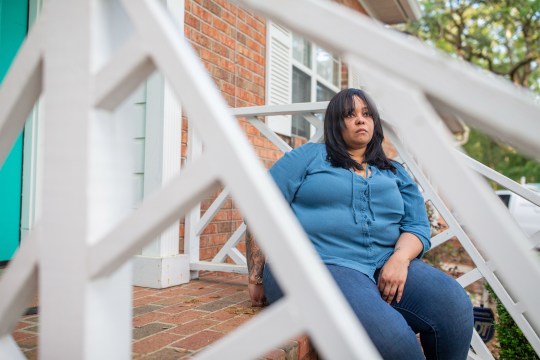
Uninsured

New and noteworthy

Quote from KFF President and CEO Drew Altman reads, "when it comes to the “affordability crisis” driving the national discussion of health care today, the chronically ill, and most of all the chronically ill uninsured, are the tip of the spear."

The Group that Struggles the Most in American Health Care

In a new column, Dr. Drew Altman, KFF’s Founding President and CEO, previews findings about the chronically ill uninsured from a large KFF survey of 25,000 Americans focusing on the cost and access challenges facing the chronically ill, which will be released tomorrow. He writes: “There are more than enough needs to go around in American health care, but if I had to pick the one group that struggles the most with costs and access, it would be people with chronic illnesses who are also uninsured.”


Other “Beyond the Data” columns >>

Key Facts about the Uninsured Population

The number and share of people without insurance grew in 2024, increasing for the first time since 2019, according to KFF’s analysis of data from the American Community Survey (ACS). This issue brief describes trends in health coverage in 2024, examines the characteristics of the uninsured population , and summarizes the access and financial implications of not having coverage.

Data and analysis

The coverage gap exists because some states did not expand Medicaid under the ACA to cover adults under age 65 without dependent children with incomes at/below 138% of the federal poverty level (FPL)

How Many Uninsured Are in the Coverage Gap?

An estimated 1.4 million uninsured individuals in the 10 states without Medicaid expansion, including many working adults, people of color, and those with disabilities, remain in the "coverage gap," ineligible for Medicaid or for ACA tax credits that would make coverage affordable.

The Uninsured and Health Coverage

This Health Policy 101 chapter examines the share of the United States population who are uninsured, highlighting their demographics and the challenges they face because of the lack of coverage.

Key Facts on Health Coverage of Immigrants

This fact sheet provides an overview of health coverage for immigrants based on data from the 2023 KFF/LA Times Survey of Immigrants. As of 2023, half of likely undocumented immigrant adults and one in five lawfully present immigrant adults reported being uninsured.

Who was uninsured in 2024?

Latest Polling
9.8%

The share of people under age 65 without insurance
62%

The share of uninsured adults who said they were uninsured because coverage is not affordable
59%

The share of uninsured adults who said they or someone living with them had problems paying for health care
39%

The share of uninsured adults who reported delaying or not getting needed care or medication due to cost

Stay informed.

Stay informed.

Filter

1,091-1,100 of 1,318 results

  • Health Insurance Coverage in America: 1999 Data Update

    Report

    Health Insurance Coverage in America: 1999 Data Update This chart book provides the latest information on health insurance coverage, with special attention to the uninsured. It includes trends and major shifts in coverage and a profile of the uninsured population. Chartbook Link to other Health Insurance Coverage in America chartbooks.

  • Medicaid’s Role for Low-Income Medicare Beneficiaries

    Fact Sheet

    Medicaid's Role for Low-Income Medicare Beneficiaries An overview that identifies low-income Medicare beneficiaries (dual eligibles), how Medicaid can provide care for them, and the challenges to accessing care. Fact Sheet

  • Prescription Drug Coverage for the Medicare Population

    Report

    Diane Rowland, executive director of the Commission, testified to the Subcommittee on Health of the U.S. House Committee on Energy and Commerce about providing prescription drugs to seniors. Her testimony includes discussion of Medicaid's role in providing outpatient drug coverage. Testimony Chart Pack

  • Covering the Low-Income Uninsured: The Case For Expanding Public Programs

    Issue Brief

    An article in the January/February 2001 issue of Health Affairs by Judith Feder, Larry Levitt, Ellen O’Brien, and Diane Rowland assesses how best to expand health insurance coverage for the low-income uninsured. The article concludes that despite flaws in existing public programs, which can and should be remedied, strengthening programs like Medicaid and CHIP establishes a foundation for truly effective coverage for all low-income Americans. Available at www.healthaffairs.org.

  • Falling Through the Cracks: Health Insurance Coverage of Low-Income Women

    Report

    Access to health coverage is a challenge for millions of low-income women. Because they are more likely to be low-wage workers and work in industries that don't offer benefits, access to job-based coverage is often problematic. Avenues for assistance are available to some through Medicaid. However, despite the program s broadened focus on children and pregnant women, restrictive income and categorical requirements still leave millions of women ineligible and often uninsured. Recent changes in public…

  • Health Insurance Coverage Of Low-Income Women

    Fact Sheet

    Low-income women's high rate of health problems and limited economic resources make access to health care and adequate health insurance coverage particularly important. Health coverage, whether through the private sector or publicly through Medicaid, has been demonstrated to improve access to care for low-income women. However, obtaining coverage is not easy or even possible for many women. Job-based insurance is not always an option for low-income women, despite their high workforce participation. Assistance is available…

  • Post-Election Survey: The Public and the Health Care Agenda for the New Administration and Congress

    Poll Finding

    This Kaiser Family Foundation-Harvard School of Public Health survey, conducted immediately after the 2000 Presidential election, finds that health care issues ranked near the top of voters priorities for spending the surplus. Medicare ranked among the top three priorities, along with education and Social Security, and ahead of paying off the national debt and cutting taxes. Education ranked first. The survey also found that voters support patients rights legislation and some action to help the…

  • Parents’ Views of Children’s Health Insurance Programs: A Survey of Denied Applicants for Kaiser Permanente’s Child Health Plan

    Poll Finding

    In 1997, Kaiser Permanente launched the Child Health Plan to provide subsidized health insurance for low income California children not eligible for Medi-Cal (California's Medicaid program) or Healthy Families (California's State Children's Health Insurance Program). As part of a broader evaluation of the Child Health Plan funded jointly by the Kaiser Family Foundation and the California HealthCare Foundation, these reports provide findings from a survey of low income parents who were eligible for Medi-Cal or…

  • Uninsured 101

    Other Post

    What You Really Need to Know About an American Dilemma This briefing, co-sponsored by the Alliance for Health Reform and the Kaiser Family Foundation, provides key information on one of the critical issues facing the nation. Since 1991, the Alliance has organized scores of forums in Washington, presenting a wide range of expert views to legislative staff, journalists, policy analysts and advocates. Led by Democratic Senator Jay Rockefeller of West Virginia and Republican Senator Bill…