Uninsured

New and noteworthy

Quote from KFF President and CEO Drew Altman reads, "when it comes to the “affordability crisis” driving the national discussion of health care today, the chronically ill, and most of all the chronically ill uninsured, are the tip of the spear."

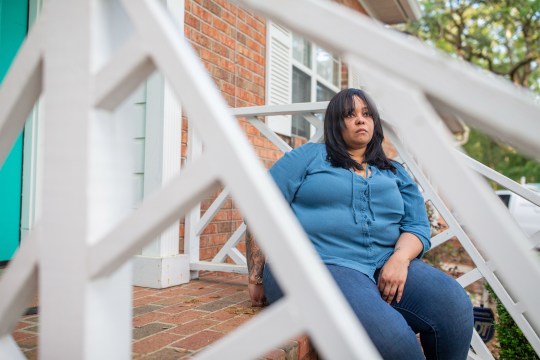
The Group that Struggles the Most in American Health Care

In a new column, Dr. Drew Altman, KFF’s Founding President and CEO, previews findings about the chronically ill uninsured from a large KFF survey of 25,000 Americans focusing on the cost and access challenges facing the chronically ill, which will be released tomorrow. He writes: “There are more than enough needs to go around in American health care, but if I had to pick the one group that struggles the most with costs and access, it would be people with chronic illnesses who are also uninsured.”


Other “Beyond the Data” columns >>

Key Facts about the Uninsured Population

The number and share of people without insurance grew in 2024, increasing for the first time since 2019, according to KFF’s analysis of data from the American Community Survey (ACS). This issue brief describes trends in health coverage in 2024, examines the characteristics of the uninsured population , and summarizes the access and financial implications of not having coverage.

Data and analysis

The coverage gap exists because some states did not expand Medicaid under the ACA to cover adults under age 65 without dependent children with incomes at/below 138% of the federal poverty level (FPL)

How Many Uninsured Are in the Coverage Gap?

An estimated 1.4 million uninsured individuals in the 10 states without Medicaid expansion, including many working adults, people of color, and those with disabilities, remain in the "coverage gap," ineligible for Medicaid or for ACA tax credits that would make coverage affordable.

The Uninsured and Health Coverage

This Health Policy 101 chapter examines the share of the United States population who are uninsured, highlighting their demographics and the challenges they face because of the lack of coverage.

Key Facts on Health Coverage of Immigrants

This fact sheet provides an overview of health coverage for immigrants based on data from the 2023 KFF/LA Times Survey of Immigrants. As of 2023, half of likely undocumented immigrant adults and one in five lawfully present immigrant adults reported being uninsured.

Who was uninsured in 2024?

Latest Polling
9.8%

The share of people under age 65 without insurance
62%

The share of uninsured adults who said they were uninsured because coverage is not affordable
59%

The share of uninsured adults who said they or someone living with them had problems paying for health care
39%

The share of uninsured adults who reported delaying or not getting needed care or medication due to cost

Stay informed.

Stay informed.

Filter

1,081-1,090 of 1,316 results

  • Medicaid and Prescription Drugs

    Fact Sheet

    Summarizes the coverage of outpatient prescription drugs by Medicaid. Many low-income seniors and other Medicaid recipients rely on this benefit as their only means of drug coverage. Information on the drug rebate program and utilization management procedures is included, as well as data on who uses the benefit, how much is spent per enrollee, and what the data says about future trends. Fact Sheet : An Overview

  • Managed Care for Low-Income Populations with Special Needs: The Oregon Experience

    Report

    This report focuses on Oregon's experience in moving their disabled Medicaid beneficiaries into managed care. It is one of a series of reports from The Kaiser/Commonwealth Low-Income Coverage and Access Project. This project examines how changes in the Medicaid program have affected health insurance coverage and access to care for hte low-income population in eight states: California, Florida, Maryland, Minnesota, New York, Oregon, Tennessee and Texas. Report

  • The Key to the Door: Medicaid’s Role in Improving Health Care for Women and Children

    Report

    This article, authored by Diane Rowland, Alina Salganicoff, and Patricia Keenan of the Kaiser Commission on Medicaid and the Uninsured, assesses Medicaid's contributions as a public financing program for health insurance coverage for the poor over the last three decades. It reviews Medicaid's impact on the low-income population and discusses the limitations of the program as a strategy for improving the health of low-income groups. While gaps in coverage and limitations in access persist between…

  • Survey on Health Care

    Other Post

    NPR/Kaiser Family Foundation/Harvard Kennedy School of Government Survey on Health Care A survey by NPR, the Kaiser Family Foundation, and Harvard s Kennedy School of Government finds that many Americans have real problems when it comes to accessing and paying for health care, and even if they haven't yet faced a problem, many worry about getting and paying for care in the future. The survey also shows that, while people think helping seniors with the…

  • The Current State of Retiree Health Benefits: Findings from the Kaiser/Hewitt 2002 Retiree Health Survey

    Report

    This report presents findings from a study of large private-sector employers conducted by researchers at Hewitt Associates and the Kaiser Family Foundation between July and September of 2002. The study is based on survey responses of 435 large private-sector firms (1,000+ employees) that currently offer retiree health benefits, and includes 36% of all Fortune 100 companies and 28% of all Fortune 500 companies. Information was collected on a variety of topics including costs, premiums, retiree…

  • Medicaid’s Role for Low-Income Medicare Beneficiaries

    Fact Sheet

    Medicaid's Role for Low-Income Medicare Beneficiaries An overview that identifies low-income Medicare beneficiaries (dual eligibles), how Medicaid can provide care for them, and the challenges to accessing care. Fact Sheet: Medicaid's Role for Low-Income Medicare Beneficiaries

  • Restructuring Medicaid Financing: Implications of the NGA Proposal

    Report

    An analysis of the National Governors Association proposal to restructure Medicaid, including the financial impact of the core of the proposal. The report considers possible responses to the reforms and outlines some issues to consider as policymakers think about reforming the program.

  • Medicaid Support for Family Planning in the Managed Care Era

    Report

    As the largest source of public funding for contraceptive care in the United States, Medicaid plays a crucial role in financing family planning services and supplies for millions of low-income women across the nation. In the past 15 years, managed care has become the primary way of delivering care to children and adults on Medicaid, a development which has had significant implications for how family planning services are financed, organized and delivered under Medicaid. This…

  • Key Facts: Women and HIV/AIDS

    Report

    Women comprise a growing share of new cases of AIDS in the United States. In 1986, women only represented 7% of new cases of AIDS. By 1999 that share had risen to nearly one quarter. Not only do women represent an increasing share of persons with AIDS, today they represent 30 percent of new HIV infections. Women of color, particularly African Americans, have been hardest hit among women. This report provides an overview of the…

  • Managed Care And Low-Income Populations: A Case Study of Managed Care in Oregon

    Report

    To gather early insights and timely information for state and federal policymakers concerning how the movement to managed care is affecting the poor and their access to care, the Henry J. Kaiser Family Foundation and The Commonwealth Fund are jointly sponsoring case studies and population surveys in California, Minnesota, New York, Oregon, and Tennessee. This case study describes the first year's experience of Oregon's Initiative, the Oregon Health Plan (OHP). It is designed to furnish…