Uninsured

New and noteworthy

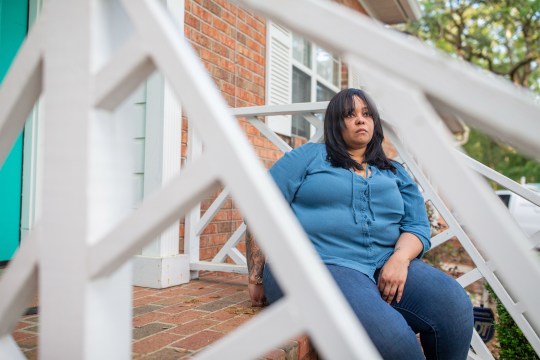
Quote from KFF President and CEO Drew Altman reads, "when it comes to the “affordability crisis” driving the national discussion of health care today, the chronically ill, and most of all the chronically ill uninsured, are the tip of the spear."

The Group that Struggles the Most in American Health Care

In a new column, Dr. Drew Altman, KFF’s Founding President and CEO, previews findings about the chronically ill uninsured from a large KFF survey of 25,000 Americans focusing on the cost and access challenges facing the chronically ill, which will be released tomorrow. He writes: “There are more than enough needs to go around in American health care, but if I had to pick the one group that struggles the most with costs and access, it would be people with chronic illnesses who are also uninsured.”


Other “Beyond the Data” columns >>

Key Facts about the Uninsured Population

The number and share of people without insurance grew in 2024, increasing for the first time since 2019, according to KFF’s analysis of data from the American Community Survey (ACS). This issue brief describes trends in health coverage in 2024, examines the characteristics of the uninsured population , and summarizes the access and financial implications of not having coverage.

Data and analysis

The coverage gap exists because some states did not expand Medicaid under the ACA to cover adults under age 65 without dependent children with incomes at/below 138% of the federal poverty level (FPL)

How Many Uninsured Are in the Coverage Gap?

An estimated 1.4 million uninsured individuals in the 10 states without Medicaid expansion, including many working adults, people of color, and those with disabilities, remain in the "coverage gap," ineligible for Medicaid or for ACA tax credits that would make coverage affordable.

The Uninsured and Health Coverage

This Health Policy 101 chapter examines the share of the United States population who are uninsured, highlighting their demographics and the challenges they face because of the lack of coverage.

Key Facts on Health Coverage of Immigrants

This fact sheet provides an overview of health coverage for immigrants based on data from the 2023 KFF/LA Times Survey of Immigrants. As of 2023, half of likely undocumented immigrant adults and one in five lawfully present immigrant adults reported being uninsured.

Who was uninsured in 2024?

Latest Polling
9.8%

The share of people under age 65 without insurance
62%

The share of uninsured adults who said they were uninsured because coverage is not affordable
59%

The share of uninsured adults who said they or someone living with them had problems paying for health care
39%

The share of uninsured adults who reported delaying or not getting needed care or medication due to cost

Stay informed.

Stay informed.

Filter

991-1,000 of 1,318 results

  • Compendium of Cultural Competence Initiatives in Health Care

    Report

    Public and private sector organizations are involved in a number of activities that seek to reduce cultural and communication barriers to health care. These activities are often described as cultural competency and/or cross-cultural education. A recent Institute of Medicine report recommended that the health care system pursue several of these techniques as part of a multi-level strategy to reduce racial and ethnic disparities in medical care. To address this need, the Henry J. Kaiser Family…

  • Children Discharged from Foster Care:  Strategies to Prevent the Loss of Health Coverage at a Critical Transition

    Report

    This report discusses the importance of maintaining health coverage for children who are discharged from foster care and presents strategies that state child welfare and Medicaid agencies can employ to reach this goal. In addition, the report also addresses the needs of children who age out of the foster care system at age 18, and discusses state options to expand health coverage to this group. Report

  • Disability, Health Coverage, and Welfare Reform

    Report

    This report analyzes data from a survey of 42 low-income families with children with moderate or severe disabilities to better understand the impact of welfare reform on health coverage for these families. Report

  • The Current State of Retiree Health Benefits: Findings from the Kaiser/Hewitt 2002 Retiree Health Survey

    Report

    This report presents findings from a study of large private-sector employers conducted by researchers at Hewitt Associates and the Kaiser Family Foundation between July and September of 2002. The study is based on survey responses of 435 large private-sector firms (1,000+ employees) that currently offer retiree health benefits, and includes 36% of all Fortune 100 companies and 28% of all Fortune 500 companies. Information was collected on a variety of topics including costs, premiums, retiree…

  • Assessing Tax Subsidies to Cover the Uninsured

    Other Post

    Tax Reform to Expand Health Coverage: Administrative Issues and ChallengesPrepared for the Kaiser Family Foundation by Jack Meyer of the Economic and Social Research Institute, this report analyzes the administrative and implementation issues associated with expanding tax subsidies for the purchase of private health insurance. Recent Tax Proposals to Increase Health Insurance CoverageThis report, written by Deloitte & Touche LLP, includes a side-by-side analysis of recent tax proposals by Members of Congress and various health…

  • Racial/Ethnic Differences in Cardiac Care: The Weight of the Evidence

    Fact Sheet

    Numerous studies over the past two decades have documented racial and ethnic differences in care for heart conditions. To assess the quality of the evidence and to summarize the information for a physician audience, the Henry J. Kaiser Family Foundation collaborated with the American College of Cardiology Foundation to review the body of research on racial/ethnic differences in cardiac care. There is credible evidence that minority patients are less likely than white patients to receive…

  • Medicare’s Disabled Beneficiaries: The Forgotten Population in the Debate Over Drug Benefits

    Report

    About 5 million Americans under age 65 qualify for Medicare coverage because they are totally and permanently disabled. They are more likely than the elderly to live in poverty, to be in poor health, and to experience difficulties living independently and performing basic daily tasks. A new study from The Commonwealth Fund and the Henry J. Kaiser Family Foundation, reports that the disabled have few options other than Medicaid for obtaining prescription coverage. In ,…

  • Medicare+Choice in California: Lessons and Insights

    Report

    Thirty-five percent of all California Medicare beneficiaries are enrolled in a M+C plan, far in excess of the 14 percent rate nationwide. This report seeks to identify what lessons for the nation can be drawn from the California M+C experience, as Congress debates the implications of major withdrawals from the M+C program and potential policy changes aimed at reversing this trend. The report is based largely on analysis of M+C data on plan participation, withdrawals,…

  • Changes in Insurance Coverage: 1994-2000 and Beyond

    Report

    This background report explores the insurance trends for the latter half of the 1990s and examines why the number of uninsured nonelderly Americans fell in 2000 for the second straight year. Some of the key findings include: -- Between 1999 and 2000, the number of uninsured declined by 570,000; uninsured children actually declined by 700,000 while the number of uninsured adults increased by 130,000. Expansions in Medicaid and the State Children's Health Insurance Program (SCHIP)…