Public Opinion

Health Costs

KFF Health Tracking Poll: Health Care Costs and the Midterms

This KFF poll finds that health care costs continue to top the public’s list of affordability worries, even as concerns about gas prices have risen in recent weeks, with two-thirds of the public expressing worry over affording health care costs. Majorities say health costs will influence their vote this election. Voters favor Democrats on the issue, while Republicans hold an advantage on addressing fraud and abuse.

Poll: Prescription Costs Regulation, Affordability and TrumpRx

KFF’s Health Tracking Poll finds that most Americans (59%) are worried about affording prescription drugs and support more regulation of prescription drug pricing (72%). Looking ahead to the midterm elections, the Democratic party currently holds the advantage for who voters trust to address health costs, including prescription drugs.

ACA Marketplace Survey Feature Image - Website

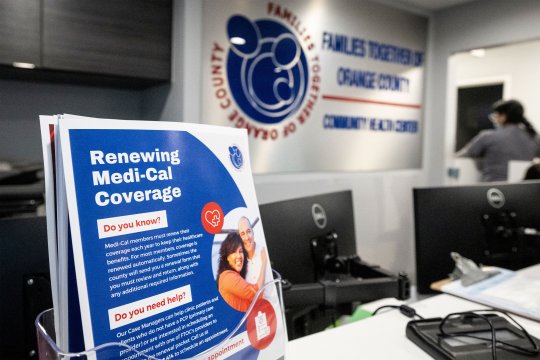
Survey: ACA Enrollees’ Cost Concerns and Coverage Changes

This follow-up survey of adults who had ACA Marketplace insurance in 2025 examines enrollees' cost concerns and coverage changes after the expiration of the enhanced premium tax credits. It finds half of returning enrollees say their health care costs are “a lot higher” and most expect to cut back on basic household expenses to afford coverage.

Health Information and Trust

Dashboard: Polling on Health Information and Trust

Drawing on KFF’s poll findings, this interactive dashboard tracks the public’s trusted sources for health information, attitudes toward vaccines, and use of news, social media, and AI for health-related information.

Recent Polls

The Public’s View of Immigration Enforcement in Health Care Settings

Amid reports of Immigration and Customs Enforcement (ICE) at hospitals and President Trump’s reversal of policy protecting “sensitive locations” like hospitals, KFF’s Health Tracking Poll finds that a majority of the public say they are concerned about the Trump administration’s actions in health care settings.

Knowledge and Views of Medication Abortion

This KFF Health Tracking Poll finds that many, including women of reproductive age, remain unfamiliar with key facts about mifepristone. Fewer than half of all adults say they believe abortion pills are safe now, compared to over half of all adults two years ago. This poll explores awareness and perception of the recent FDA review of the medication, and support for policies aimed at restricting it.

KFF-Washington Post Survey Explores Parents’ Trust In, and Confusion About, Childhood Vaccines

The KFF-Washington Post partnership Survey of Parents explores experiences and views pertaining to childhood vaccines. The Survey of Parents also sheds light on school vaccination requirements, views on federal health agencies and policy changes, and the views of parents with children diagnosed with autism spectrum disorder. This poll comes as the Trump administration revamps federal policies, and HHS Secretary Robert F. Kennedy Jr. continues to question the childhood vaccine schedule.

KFF/New York Times Survey of Immigrants

KFF-New York Times Survey: Immigrants Report Rising Fear, Negative Economic and Health Impacts, and Changing Political Views During the First Year of President Trump’s Second Term

The 2025 Survey of Immigrants, a partnership between KFF and The New York Times, takes an in-depth look at the experiences of immigrants during the first year of President Trump’s second term, including their worries related to increased immigration enforcement, their health and economic wellbeing, and the political views and preferences of immigrant voters. The survey paints a portrait of families under strain — where fear of detention and economic instability are negatively impacting immigrants’ health and reshaping immigrant families’ daily lives and views of U.S. political parties.

Read the News Release | Explore The New York Times’ Reporting

the essentials

Health Tracking Poll

Our signature survey project provides up-to-date data on the public’s health care views, knowledge, and experiences.

Survey Question Finder

Search all KFF polls since 1992 by keyword and date to find full question wording and results.

Health Information and Trust Tracking Poll

The Health Information and Trust Tracking Poll is part of KFF’s Health Information and Trust Initiative, which tracks health misinformation and analyzes its impact on the public.

Polls in Health Policy

This chapter of our digital “textbook” explores why surveys are essential for understanding health policy issues. 

Subscribe to KFF Emails

Choose which emails are best for you.
Sign up here

Filter

1,161 - 1,170 of 1,836 Results

  • Kaiser Health Tracking Poll — January 2010

    Feature

    The January Kaiser Health Tracking Poll finds that Americans are divided over congressional health reform proposals, but also that large shares of people, including skeptics, become more supportive after being told about many of the major provisions in the bills. The poll, conducted before the Massachusetts Senate vote, finds opinion about the legislation is split, with 42 percent supporting the proposals, 41 percent opposing them and 16 percent withholding judgment. But majorities reported feeling more…

  • Massachusetts Special Election Poll

    Poll Finding

    The Foundation, as part of The Washington Post/Kaiser Family Foundation/Harvard University partnership series, conducted a poll to better understand how health care played into the mix of issues and frustrations that brought voters to the polls in the Massachusetts special election for U.S. Senate. The poll was conducted among a random sample of 880 voters in the Massachusetts special election on January 19, 2010 and also interviewed were 242 Massachusetts adults who did not participate…

  • Generation M2: Media in the Lives of 8- to 18-Year-Olds

    Poll Finding

    Generation M2: Media in the Lives of 8- to 18-Year-Olds is the third in a series of large-scale, nationally representative surveys by the Foundation about young people’s media use. The report is based on a survey conducted between October 2008 and May 2009 among a nationally representative sample of 2,002 3rd-12th grade students ages 8-18, including a self-selected subsample of 702 respondents who completed seven-day media use diaries, which were used to calculate multitasking proportions.…

  • Survey of Detroit Area Residents — Summary Brief

    Poll Finding

    The Washington Post/Kaiser Family Foundation/Harvard University Survey of Detroit Area Residents reveals a population that is facing some of the worst effects of the current economic recession. Home of the nation’s domestic auto industry, Detroit’s residents have been at the forefront of the country’s economic woes. The survey illuminates the experiences and needs of those living in the midst of this economic catastrophe, including questions about job loss and job security, views about the future…

  • Key Findings: Kaiser Health Tracking Poll — December 2009

    Poll Finding

    This document contains the key findings from the December Health Tracking Poll. The survey was designed and analyzed by public opinion researchers at the Kaiser Family Foundation and was conducted December 7 through December 13, 2009, among a nationally representative random sample of 1,204 adults ages 18 and older. Telephone interviews conducted by landline (801) and cell phone (403, including 111 who had no landline telephone) were carried out in English and Spanish. The margin…

  • Toplines: Kaiser Health Tracking Poll — December 2009

    Poll Finding

    This document contains the toplines from the December Health Tracking Poll. The survey was designed and analyzed by public opinion researchers at the Kaiser Family Foundation and was conducted December 7 through December 13, 2009, among a nationally representative random sample of 1,204 adults ages 18 and older. Telephone interviews conducted by landline (801) and cell phone (403, including 111 who had no landline telephone) were carried out in English and Spanish. The margin of…

  • Chartpack: Kaiser Health Tracking Poll — December 2009

    Poll Finding

    This document contains the chartpack from the December Health Tracking Poll. The survey was designed and analyzed by public opinion researchers at the Kaiser Family Foundation and was conducted December 7 through December 13, 2009, among a nationally representative random sample of 1,204 adults ages 18 and older. Telephone interviews conducted by landline (801) and cell phone (403, including 111 who had no landline telephone) were carried out in English and Spanish. The margin of…

  • Kaiser Health Tracking Poll — December 2009

    Poll Finding

    The December Kaiser Health Tracking Poll finds a dip on several measures of public opinion on health care reform. The number of Americans who say they personally will be better off if reform passes fell to 35 percent in December, down from 42 percent last month. Meanwhile, 27 percent say they will be worse off, and 32 percent said they don’t expect to see much of a difference. Similarly, 45 percent say the country would…

  • Chartpack: Kaiser Health Tracking Poll — November 2009

    Poll Finding

    This document contains the chartpack from the November Health Tracking Poll. The survey was designed and analyzed by public opinion researchers at the Kaiser Family Foundation and was conducted November 5 through November 12, 2009, among a nationally representative random sample of 1,203 adults ages 18 and older. Telephone interviews conducted by landline (802) and cell phone (401, including 112 who had no landline telephone) were carried out in English and Spanish. The margin of…

  • Key Findings: Kaiser Health Tracking Poll — November 2009

    Poll Finding

    This document contains the key findings from the November Health Tracking Poll. The survey was designed and analyzed by public opinion researchers at the Kaiser Family Foundation and was conducted November 5 through November 12, 2009, among a nationally representative random sample of 1,203 adults ages 18 and older. Telephone interviews conducted by landline (802) and cell phone (401, including 112 who had no landline telephone) were carried out in English and Spanish. The margin…