
Mental Health
New and noteworthy
Data Show Uptick in Suicide Deaths in 2025 Following a Two-Year Decline
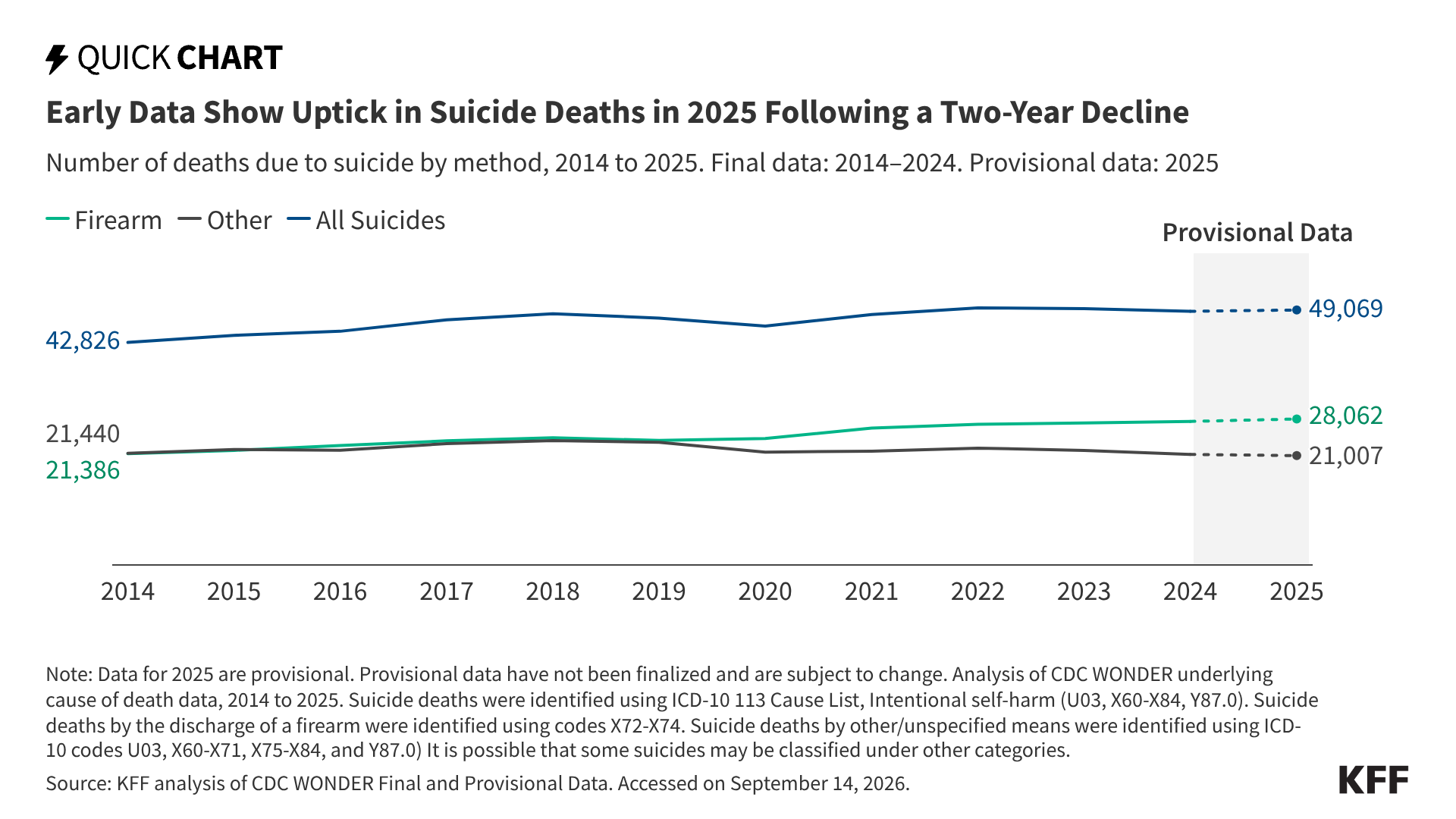
Overall, suicide deaths peaked in 2022 and declined through 2024 before increasing slightly by nearly 250 deaths in 2025. However, trends differed by method.
Firearm suicides reached their highest level in 2025, according to provisional data, while suicides by other means continued to decline. Firearms accounted for 57% of all suicide deaths in 2025, up from 50% in 2015. Contacts to the federally mandated crisis number, 988, also continue to grow four years after implementation.
Firearm suicides reached their highest level in 2025, according to provisional data, while suicides by other means continued to decline. Firearms accounted for 57% of all suicide deaths in 2025, up from 50% in 2015. Contacts to the federally mandated crisis number, 988, also continue to grow four years after implementation.
Key CDC Data
-
Opioid Deaths: National, State and Demographic Trends
Opioid overdose deaths fell sharply from 2023 to 2024, driven largely by decreases in fentanyl-involved deaths.
-
Suicide Deaths: National, State and Demographic Trends
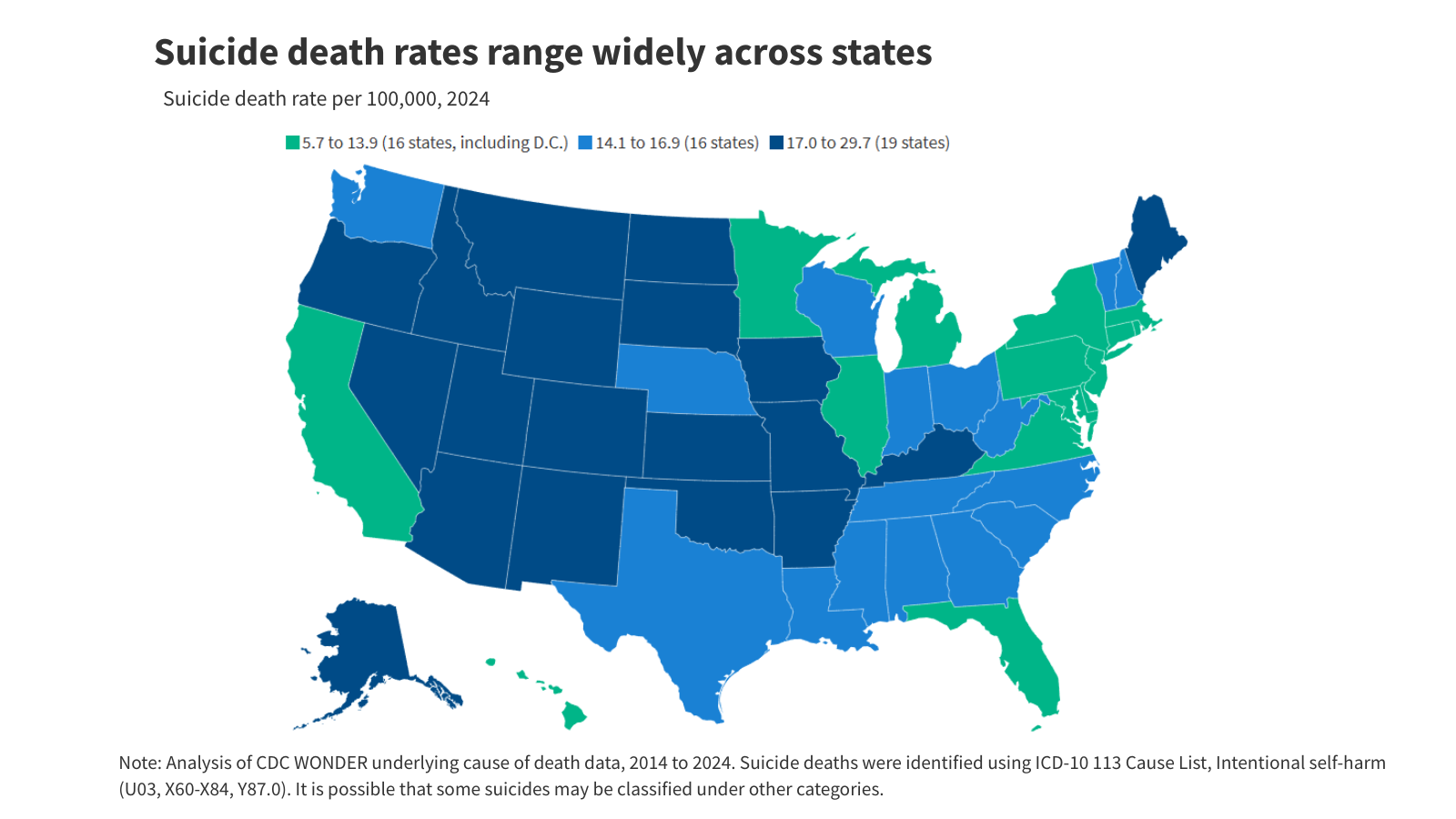
Overall suicide deaths fell slightly from their peak, but firearm suicides reached their highest level and accounted for 57% of all suicides.
-
Alcohol Deaths: National, State and Demographic Trends
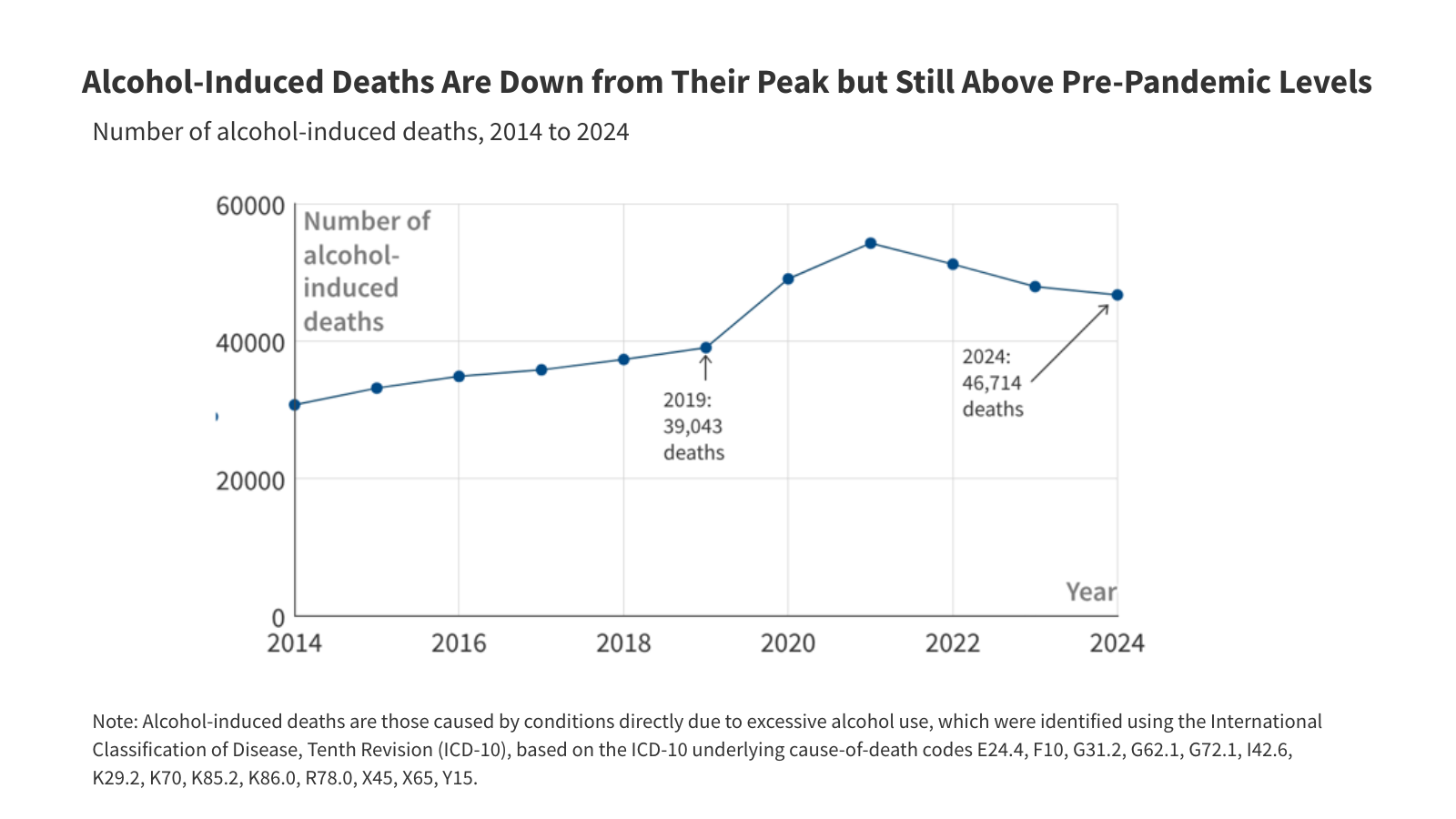
Alcohol deaths increased gradually before the pandemic, jumped in 2020 and 2021, and have fallen somewhat since then.
-
3 Things to Know About Substance Use and Suicide Mortality
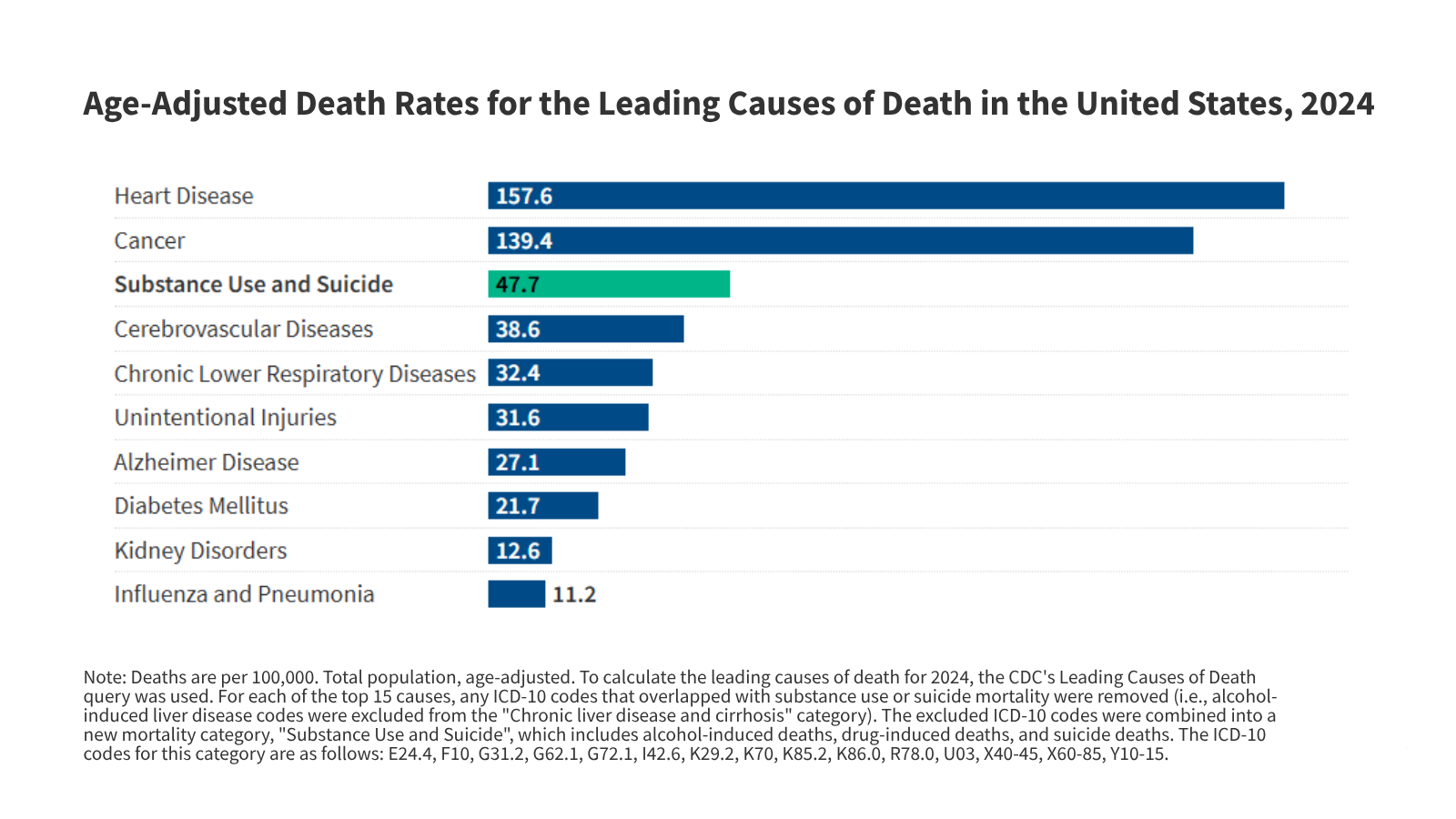
CDC data show that substance use and suicide deaths combined were the third leading cause of death in the U.S., behind heart disease and cancer.
Access and coverage
Mental Health Parity at a Crossroads
More than 25 years after the first federal mental health parity protections were put in place, adequate coverage for behavioral health care remains elusive. This brief explains the federal behavioral health parity requirements and sets out key policy issues.Section 1115 Waiver Watch: Contingency Management
Of the 800,000 Medicaid enrollees aged 12 to 64 with a diagnosed stimulant use disorder in 2019, about 20% were in states that now have approved 1115 Medicaid waivers for contingency management services.The Landscape of School-Based Mental Health Services
In the 2024-2025 school year, 18% of students utilized school-based mental health services. This issue brief explores the landscape of mental health services, including services offered, utilization, barriers, and funding, as well as recent federal actions.5 Key Facts about Medicaid Coverage for Adults with Mental Illness
Nationwide, an estimated 52 million nonelderly adults live with mental illness, and Medicaid covers nearly one in three (29%) of them, or about 15 million adults.Medicaid Mental Health and Substance Use: Expansion Trends and the Fiscal Pressure Ahead
Behavioral health was the most frequently expanded Medicaid benefit over the past decade, with states adding crisis services, community-based care, peer supports, and substance use disorder treatment.
Latest News
-

Patient Dies by Suicide After ‘Insurance Issue’ Delayed Medicine for Lung Disease Flare-Ups
-

It’s Hard To Predict Who Will Be Suicidal. It’s Easier To Ensure People Can’t Shoot Themselves.
-

3 Common Drugs Older Adults Might Be Overusing
-

A Generation of Kids Suffer as Trump Destabilizes Immigrant Families

