Medicare

NEW AND NOTEWORTHY

Examining the Potential Impact of Medicare’s New WISeR Model

A federal initiative to establish new prior authorization requirements in traditional Medicare, called the Wasteful and Inappropriate Service Reduction (WISeR) model, is likely to have only modest impact in its first year.

State Profiles for Dual-Eligible Individuals

This data collection draws on Medicare and Medicaid administrative data to present national and state-level information on people who are covered by both Medicare and Medicaid, referred to as dual-eligible individuals (also known as dually-enrolled beneficiaries).

Data Visualization

The Facts About Medicare Spending

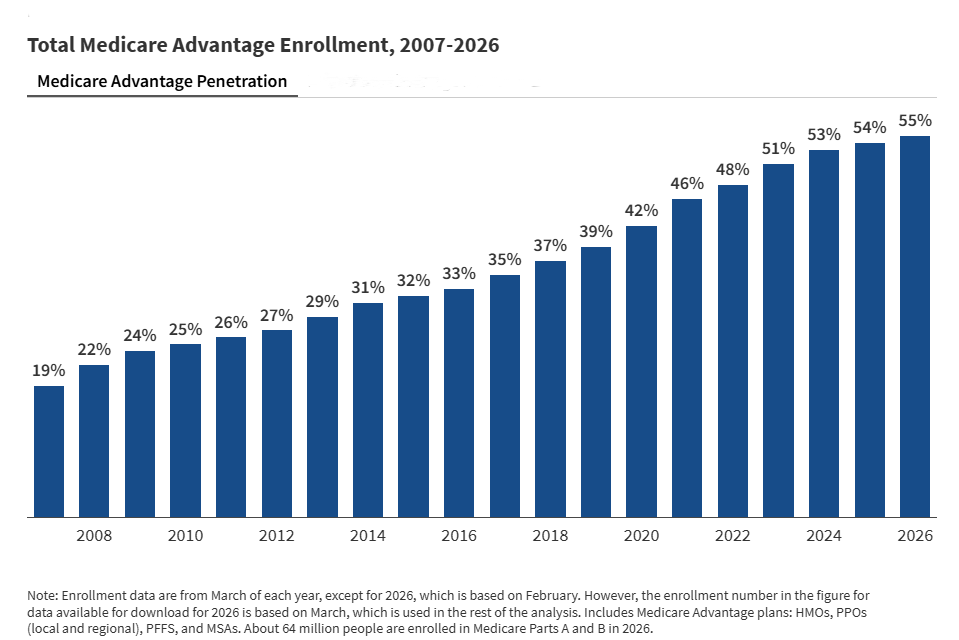
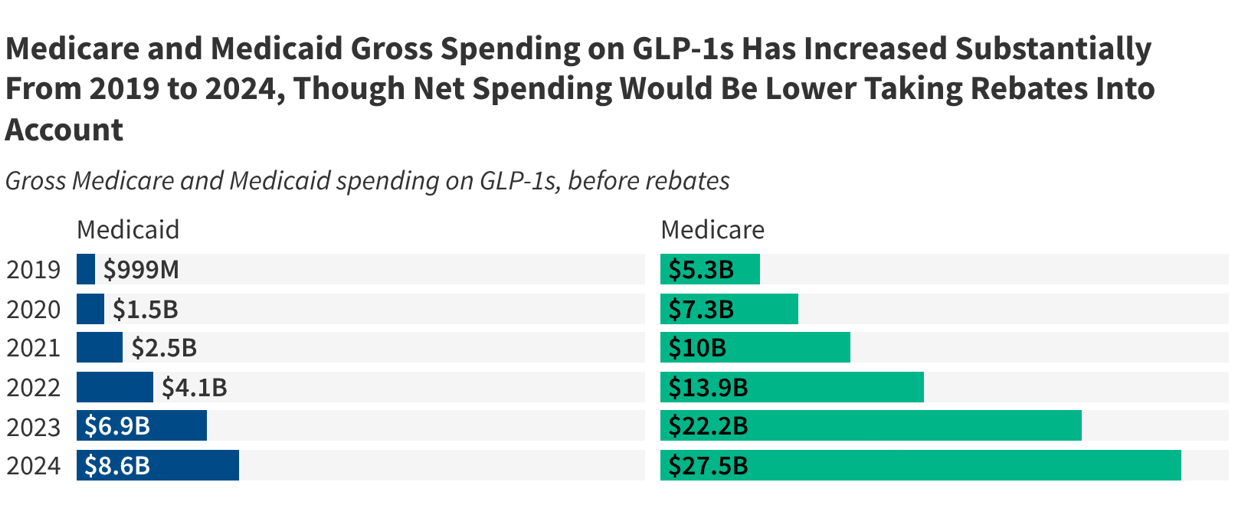
This interactive provides the facts on Medicare spending. Medicare, which serves 67 million people and accounts for 12 percent of the federal budget and 21 percent of national health spending, is often the focus of discussions about health expenditures, health care affordability and the sustainability of federal health programs. Explore data on enrollment growth, Medicare spending trends overall and per person, growth in Medicare spending relative to private insurance, spending on benefits and Medicare Advantage, Part A trust fund solvency challenges, and growth in out-of-pocket spending by beneficiaries.

Read More

Stay informed.

Stay informed.

Filter

641 - 650 of 1,602 Results

  • Prior Authorization in Medicare Advantage Plans: How Often Is It Used?

    Issue Brief

    Medicare Advantage enrollees are encouraged to select their plan based on a number of factors, including premiums, cost-sharing, extra benefits, drug coverage, quality of care, and provider networks, but a potentially overlooked factor is access to covered services and the potential impact of prior authorization requirements. In this data note, we examine the share of Medicare Advantage enrollees that are in plans requiring prior authorization and approval before covering the costs of services.

  • Health Care and the Candidates in the 2018 Midterm Elections: Key Issues and Races

    Issue Brief

    Introduction With the 2018 midterm election season in full swing, health care has emerged as one of the top issues for voters. The issue is playing a prominent role in many House, Senate, and gubernatorial races, and health-related measures have made it onto the ballot in several states. Democratic candidates, in particular, have made health care a central part of their campaigns and a focus of their political ads, highlighting popular provisions in the Affordable…

  • People on Medicare Will Be Able to Choose Among 24 Medicare Advantage Plans and 27 Medicare Part D Drug Plans, on Average, During the Open Enrollment Period for 2019, New Analyses Find

    News Release

    With Medicare Advantage playing an increasingly larger role in Medicare, the average person on Medicare will be able to choose among 24 plans during the annual Medicare open enrollment period that began Oct. 15, finds a new analysis from KFF (the Kaiser Family Foundation). The new analysis, Medicare Advantage Plans in 2019: First Look, finds that: Nationally, 2,734 Medicare Advantage plans for general enrollment will be offered in 2019 -- more than in any year…

  • Medicare Part D: A First Look at Prescription Drug Plans in 2019

    Issue Brief

    This issue brief provides an overview of the Medicare Part D prescription drug benefit plan landscape, with a focus on stand-alone drug plans, the largest segment of the Part D market. It includes national and state-level data on plan availability, premiums, benefit design, cost sharing, information about premium-free plans for low-income beneficiaries, and information about the top ten Part D plans for 2019.

  • Medicare Advantage 2019 Spotlight: First Look

    Issue Brief

    In 2019, more than 20 million Medicare beneficiaries (34%) are enrolled in Medicare Advantage plans, which are mainly HMOs and PPOs offered by private insurers as an alternative to the traditional Medicare program. This issue brief provides an overview of the Medicare Advantage plans that will be available in 2019, including the variation in the number of plans available by county and plan type. The brief also examines the insurers entering the Medicare Advantage market…

  • Implications of “Medicare for All” and “Public Plan” Strategies: New Brief and Interactive Tool Summarize Legislative Proposals and Key Issues

    News Release

    The idea of expanding the role of government programs such as Medicare and Medicaid has received renewed attention on Capitol Hill and on the campaign trail this year as policymakers consider ways to expand health insurance coverage and moderate health care costs. Lawmakers have introduced eight such proposals in the current Congress. They range from bills that would create a new, all-encompassing national health insurance program (sometimes called “Medicare-for-All”) to less sweeping measures that would…

  • Medicare-for-All and Public Plan Buy-In Proposals: Overview and Key Issues

    Issue Brief

    This issue brief compares eight Medicare-for-All and public plan option bills that have been introduced in the 115th Congress. The brief describes the range of proposals on the table and raises key questions related to how these proposals could affect coverage, out-of-pocket costs, existing coverage, payments to providers, as well as overall costs and financing, and potential tradeoffs.

  • Closing the Medicare Part D Coverage Gap: Trends, Recent Changes, and What’s Ahead

    Issue Brief

    This data note examines the latest data and trends in the Medicare Part D coverage gap, where enrollees must pay a greater share of their prescription drug costs. The note includes data about how many Part D enrollees reached the coverage gap, their average out-of-pocket spending, the value of manufacturer discounts, and recent and proposed changes affecting out-of-pocket costs for Part D enrollees who reach the gap.