Medicare

New & Noteworthy
Examining the Potential Impact of Medicare’s New WISeR Model

A federal initiative to establish new prior authorization requirements in traditional Medicare, called the Wasteful and Inappropriate Service Reduction (WISeR) model, is likely to have only modest impact in its first year.

State Profiles for Dual-Eligible Individuals

This data collection draws on Medicare and Medicaid administrative data to present national and state-level information on people who are covered by both Medicare and Medicaid, referred to as dual-eligible individuals (also known as dually-enrolled beneficiaries).

Data Visualization

The Facts About Medicare Spending

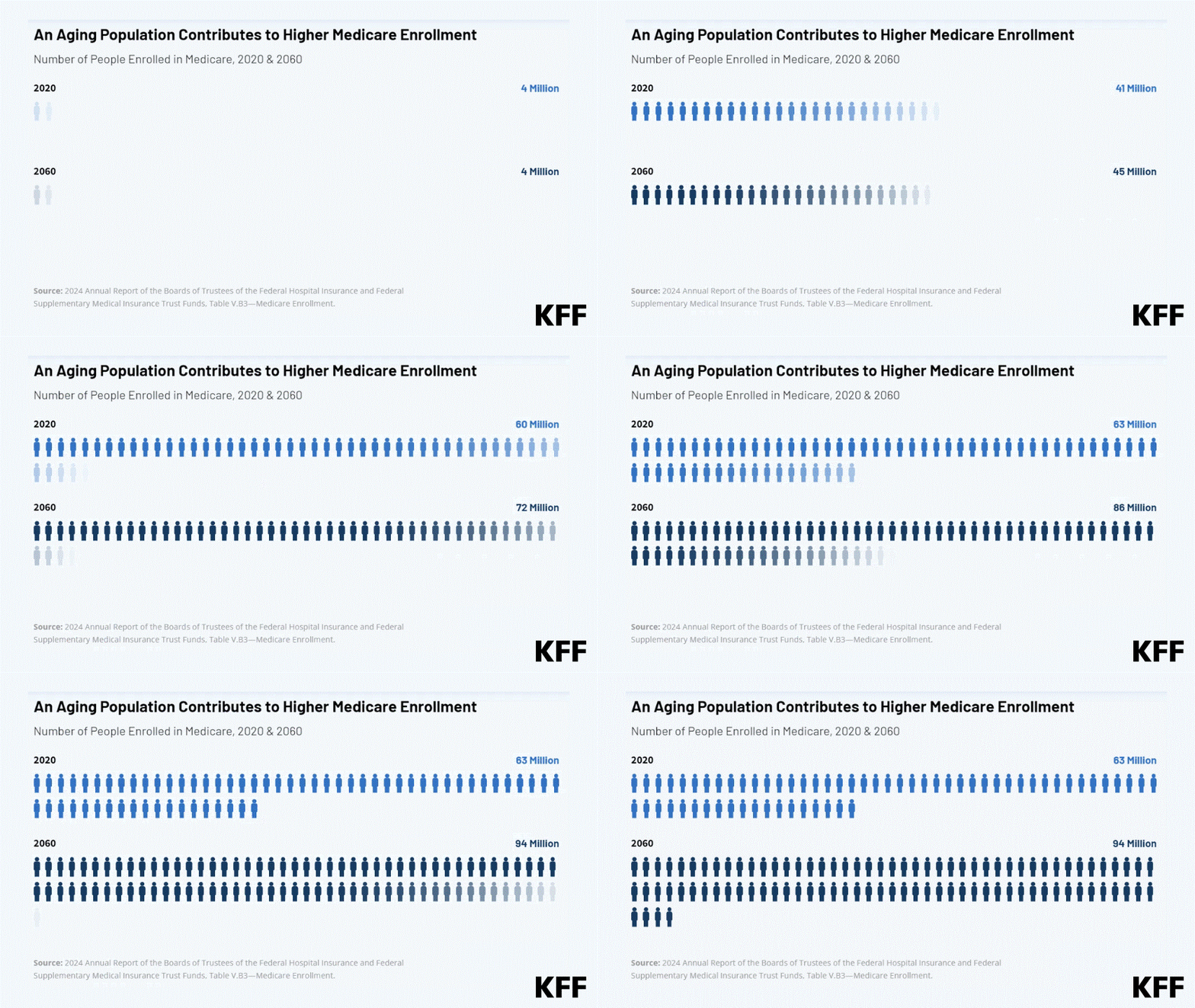
This interactive provides the facts on Medicare spending. Medicare, which serves 67 million people and accounts for 12 percent of the federal budget and 21 percent of national health spending, is often the focus of discussions about health expenditures, health care affordability and the sustainability of federal health programs.

Explore data on enrollment growth, Medicare spending trends overall and per person, growth in Medicare spending relative to private insurance, spending on benefits and Medicare Advantage, Part A trust fund solvency challenges, and growth in out-of-pocket spending by beneficiaries.

Related: FAQs on Medicare Financing and Trust Fund Solvency

Read More

Subscribe to KFF Emails

Choose which emails are best for you.
Sign up here

Filter

471 - 480 of 1,592 Results

  • How Much Is Enough? Out-of-Pocket Spending Among Medicare Beneficiaries: A Chartbook

    Report

    This new analysis and chartbook examines out-of-pocket spending among Medicare beneficiaries, including spending on health and long-term care services and insurance premiums, using the most current year of data available from a nationally representative survey of people on Medicare. It explores which types of services account for a relatively large share of out-of-pocket spending, which groups of beneficiaries (including by age, gender, health status, and chronic conditions) are especially hard hit by high out-of-pocket costs, and trends in out-of-pocket spending between 2000 and 2010.

  • Medicare Advantage Hospital Networks: How Much Do They Vary?

    Report

    This report takes an in-depth look at Medicare Advantage plans’ hospital networks. The analysis draws upon data from 409 Medicare Advantage plans serving beneficiaries in 20 diverse counties that together accounted for about one in seven (14%) Medicare Advantage enrollees nationwide in 2015. The report examines the size and composition of plans’ hospital networks, the variation across counties, the inclusion of Academic Medical Centers and NCI-Designated Cancer Centers, and the relationship between network size and other plan features, including premiums, quality star ratings, per capita Medicare spending, parent organization, and plan tax status.

  • It Pays to Shop: Variation in Out-of-Pocket Costs for Medicare Part D Enrollees in 2016

    Issue Brief

    This analysis focuses on out-of-pocket drug costs for Medicare Part D enrollees in 2016 for specialty, brand, and generic drugs. Part D drug plans differ considerably in the drugs they list on their formularies, their use of formulary tiers, and the level and structure of cost sharing applied to those tiers. Plan decisions affect different beneficiaries in different ways, depending on the drugs they use. The financial consequences for Part D plan enrollees can be substantial. In addition to examining costs for common drugs, we also examine profiles of multiple drugs for several hypothetical Part D enrollees.

  • Does Education Narrow the Gap in Wealth Among Older Adults, by Race and Ethnicity?

    Issue Brief

    This analysis of per capita income and assets among older adults in 2019 shows that differences in median per capita income among White, Black, and Hispanic adults ages 65 and older are narrower when comparing people with similar levels of education, although among college graduates, the gap in income continues to be wide between Hispanic and White seniors. The gaps in savings and home equity remain wide, and are particularly striking among seniors with less than a high school education. The patterns are similar for men and women, as well as across different age groups of older adults.

  • Health Spending for 60-64 Year Olds Would Be Lower Under Medicare Than Under Large Employer Plans

    Issue Brief

    During the presidential campaign, President Biden proposed to lower the age of Medicare eligibility from 65 to 60. This analysis uses claims data for covered medical services from both large employer plans and traditional Medicare to illustrate the potential spending effects of using Medicare payment rates in lieu of higher rates paid by employer plans for people 60-64 who shift from large employer plans to Medicare.

  • Medicare Advantage in 2021: Star Ratings and Bonuses

    Issue Brief

    In 2021, 81 percent of all Medicare Advantage enrollees are in plans that receive a bonus payment from Medicare based on star quality ratings (or because they are new), substantially higher than the share in 2015 (55 percent). Annual bonus payments from the federal government to Medicare Advantage insurers have increased correspondingly, quadrupling from $3 billion in 2015 to $11.6 billion in 2021.