Medicare

New & Noteworthy
Examining the Potential Impact of Medicare’s New WISeR Model

A federal initiative to establish new prior authorization requirements in traditional Medicare, called the Wasteful and Inappropriate Service Reduction (WISeR) model, is likely to have only modest impact in its first year.

State Profiles for Dual-Eligible Individuals

This data collection draws on Medicare and Medicaid administrative data to present national and state-level information on people who are covered by both Medicare and Medicaid, referred to as dual-eligible individuals (also known as dually-enrolled beneficiaries).

Data Visualization

The Facts About Medicare Spending

This interactive provides the facts on Medicare spending. Medicare, which serves 67 million people and accounts for 12 percent of the federal budget and 21 percent of national health spending, is often the focus of discussions about health expenditures, health care affordability and the sustainability of federal health programs.

Explore data on enrollment growth, Medicare spending trends overall and per person, growth in Medicare spending relative to private insurance, spending on benefits and Medicare Advantage, Part A trust fund solvency challenges, and growth in out-of-pocket spending by beneficiaries.

Related: FAQs on Medicare Financing and Trust Fund Solvency

Read More

Subscribe to KFF Emails

Choose which emails are best for you.
Sign up here

Filter

281 - 290 of 1,592 Results

  • The Facts About the $35 Insulin Copay Cap in Medicare

    Policy Watch

    This brief describes the facts about actions taken under both the Trump and Biden Administrations related to capping insulin copayments for people with Medicare and explains the differences between their approaches.

  • FAQs on Medicare Financing and Trust Fund Solvency

    Issue Brief

    In discussions of Medicare’s financial condition, attention frequently centers on one specific measure—the solvency of the Medicare Hospital Insurance (HI) trust fund, out of which Medicare Part A benefits are paid. Based on current projections from the Medicare Board of Trustees, the HI trust fund is projected to be depleted in 2036, 12 years from now. These FAQs answer key questions about Medicare financing and trust fund solvency.

  • Health Policy 101 Introduction

    Feature

    Health Policy 101 is a comprehensive guide covering fundamental aspects of U.S. health policy and programs, including Medicare, Medicaid, the Affordable Care Act, employer-sponsored insurance, the uninsured population, health care costs and affordability, women's health issues, and health care politics. It includes overviews of private health insurance regulation, racial and ethnic disparities, public health, international comparison of health systems, U.S. global health policy, and the federal role in health policy. The chapters can be downloaded in a PDF format for faculty and student use, and the information will be updated annually or as data and circumstances change.

  • How Many Older Adults Live in Poverty?

    Issue Brief

    To provide context for understanding the financial needs and well-being of older adults, this brief analyzes the latest data on poverty rates among the 58 million non-institutionalized adults ages 65 and older in the U.S overall, based on both the official poverty measure and the Supplemental Poverty Measure.

  • KFF Health Tracking Poll May 2024: Voters’ Views of Health Policy Issues in Context of Presidential Campaigns

    Feature

    Voters are split largely along partisan lines in terms of who they trust in regard to various health care issues, but Biden captures more than Trump trust from Independent voters. Biden is also more trusted by older adults when it comes to entitlement programs. Voters are still largely unaware of the drug pricing provisions of the Inflation reduction Act. Large majorities of voters, particularly Democratic voters, support a federal right to abortion.

  • KFF Health Tracking Poll May 2024: The Public’s Use and Views of GLP-1 Drugs

    Feature

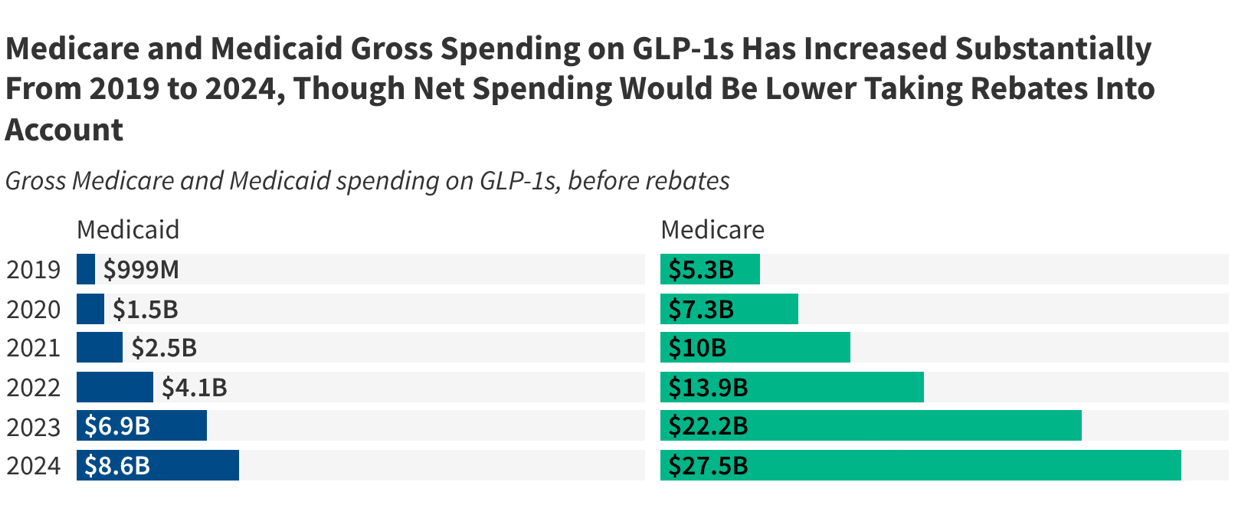
    KFF’s latest Health Tracking Poll examines the public’s views and use of an an increasingly popular class of prescription drugs used for weight loss and to treat diabetes or prevent heart attacks or strokes. The poll finds 12% of adults report having taken one of these GLP-1 drugs, which include Ozempic, Webovy and Mounjaro. This includes 6% who say they are currently taking one of the drugs.