Medicare

NEW AND NOTEWORTHY

Examining the Potential Impact of Medicare’s New WISeR Model

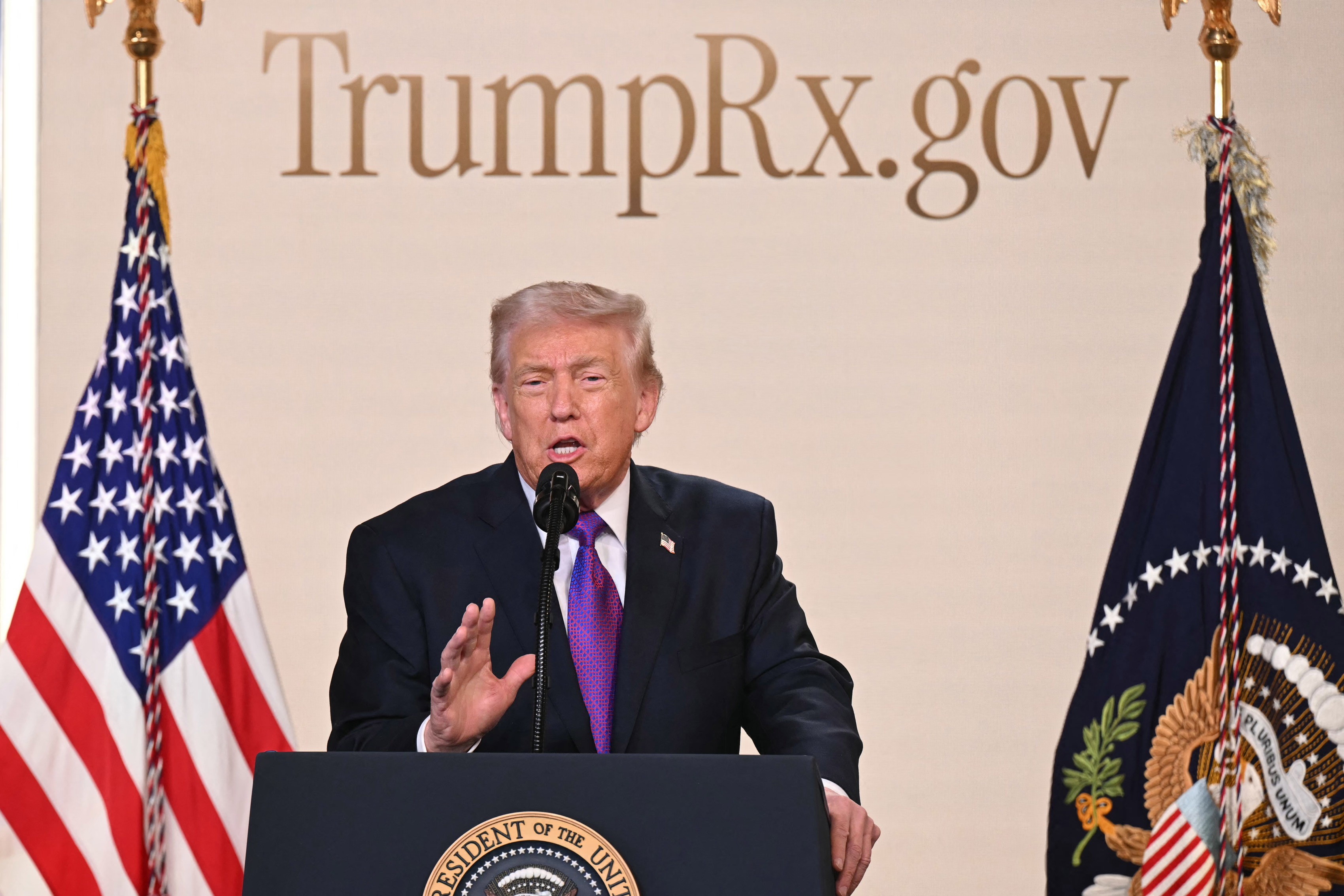
A federal initiative to establish new prior authorization requirements in traditional Medicare, called the Wasteful and Inappropriate Service Reduction (WISeR) model, is likely to have only modest impact in its first year.

State Profiles for Dual-Eligible Individuals

This data collection draws on Medicare and Medicaid administrative data to present national and state-level information on people who are covered by both Medicare and Medicaid, referred to as dual-eligible individuals (also known as dually-enrolled beneficiaries).

Data Visualization

The Facts About Medicare Spending

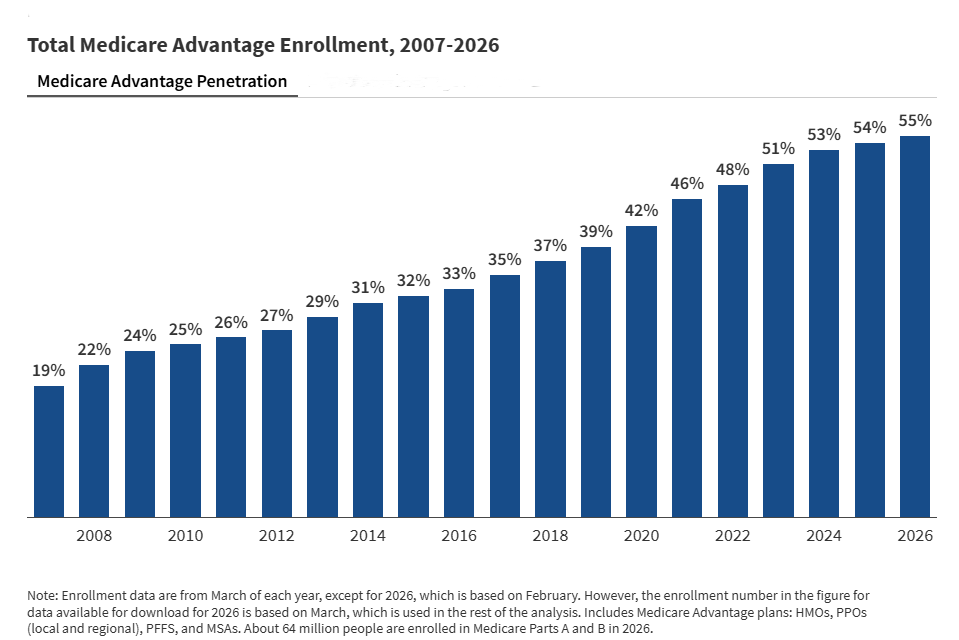
This interactive provides the facts on Medicare spending. Medicare, which serves 67 million people and accounts for 12 percent of the federal budget and 21 percent of national health spending, is often the focus of discussions about health expenditures, health care affordability and the sustainability of federal health programs. Explore data on enrollment growth, Medicare spending trends overall and per person, growth in Medicare spending relative to private insurance, spending on benefits and Medicare Advantage, Part A trust fund solvency challenges, and growth in out-of-pocket spending by beneficiaries.

Read More

Stay informed.

Stay informed.

Filter

1,331 - 1,340 of 1,602 Results

  • e-Health and the Elderly: How Seniors Use the Internet for Health

    Poll Finding

    A national Kaiser Family Foundation survey of older Americans found that as the Internet becomes an increasingly important resource for informing decisions about health and health care options, less than a third (31%) of seniors (age 65 and older) have ever gone online, but that more than two-thirds (70%) of the next generation of seniors (50-64 year-olds) have done so. The differences among seniors and 50-64 year-olds are striking and indicate that online resources for…

  • Health Care Agenda for the New Congress – Chartpack

    Poll Finding

    This chartpack provides key findings from the survey of the public's attitudes regarding the health care agenda for Bush's second term and the new Congress in 2005. It assesses the relative priority placed on health-care concerns by the American public and also provides insight into public opinion on key issues likely to face the new Congress, such as implementing the Medicare drug law, controlling health care costs, reducing the nation’s uninsured population and reforming the…

  • The Distributional Consequences of  Medicare Premium Support Proposal

    Other Post

    The Distributional Consequences of a Medicare Premium Support Proposal This article analyzes the expected distributional impact of enacting a premium support proposal for Medicare based on legislation introduced by Sen. Breaux and Sen. Frist in 1999. This legislation suggested that the Federal Employees Health Benefits plan be used as a model for Medicare. The article simulates impacts in three areas: among beneficiaries who choose to retain fee-for-service coverage, between different geographic areas, and according to…

  • Summary of the Proposed Rule to Implement the New Medicare Prescription Drug Benefit

    Issue Brief

    In August 2004, the Centers for Medicare and Medicaid Services published a proposed rule to implement the Medicare Prescription Drug Benefit (Title I of the Medicare Modernization Act). Given the high level of interest in the proposed rules for implementing the Medicare drug benefit, the Kaiser Family Foundation commissioned Health Policy Alternatives, Inc. to prepare this summary of the proposed regulations. Issue Brief (.pdf)

  • Current Trends and Future Outlook for Retiree Health Benefits:  Findings from the Kaiser/Hewitt 2004 Survey on Retiree Health Benefits

    Other Post

    Current Trends and Future Outlook for Retiree Health Benefits: Findings from the Kaiser/Hewitt 2004 Survey on Retiree Health Benefits A new survey of large employers finds businesses and retirees experienced double-digit increase in retiree health costs, with further increases expected in 2005. The survey also includes an early look at employers' responses to the new Medicare drug law. News Release Report - Interactive online version and downloadable chapters Chartpack Materials From the December 14, 2004…

  • The Impact of Cost Sharing on Appropriate Utilization and Health Status: A Review of the Literature on Seniors

    Other Post

    The Impact of Cost-Sharing on Appropriate Utilization and Health Status: A Review of the Literature on Seniors This article provides a review of research that has addressed the impact of patient cost-sharing on the use of health care services and subsequent health status for those ages 65 and older. Twenty-two studies are reviewed -- 16 focusing on cost-sharing for prescription drugs and 6 on cost-sharing for medical services. The article concludes that most studies examined…

  • Prescription Drug Spending Under The MMA: Modeling The Impact On Out-of-Pocket Costs

    Event Date:
    Event

    This report projects the impact of the new Medicare drug benefit on out-of-pocket spending for people who enroll in 2006. The analysis is based on a model developed by the Actuarial Research Corporation for the Kaiser Family Foundation. The model generally conforms to the Congressional Budget Office’s assumptions and projections about Medicare drug benefit spending and participation rates for the new benefit and for the low-income subsidy. The report was released at a briefing in…

  • Estimates of Medicare Beneficiaries’ Out-of-Pocket Drug Spending in 2006

    Report

    This report projects the impact of the new Medicare drug benefit on out-of-pocket spending for people who enroll in 2006. This analysis from November 2004 estimates that 6.9 million beneficiaries are projected to be affected by the coverage gap (the so-called "doughnut hole") in the standard Part D drug benefit. This estimate is based on projected enrollment in Part D plans of 29 million (Congressional Budget Office, July 2004), prior to implementation of the drug…

  • Health Care and the 2004 Elections: Medical Liability Reform

    Issue Brief

    Medical Liability Reform   Download a printable .pdf of Health Care and the 2004 Elections: Medical Liability Reform. IssueBackgroundOptions for Assuring Access to Affordable Liability CoverageAssessing Candidate PositionsIssue Sharp increases in medical liability insurance premiums in recent years, and the withdrawal of some insurers from this market have focused the attention of health care providers, patients, and policymakers on reform of the medical liability system. Of additional concern is that the fear of liability causes…