Medicare

NEW AND NOTEWORTHY

Examining the Potential Impact of Medicare’s New WISeR Model

A federal initiative to establish new prior authorization requirements in traditional Medicare, called the Wasteful and Inappropriate Service Reduction (WISeR) model, is likely to have only modest impact in its first year.

State Profiles for Dual-Eligible Individuals

This data collection draws on Medicare and Medicaid administrative data to present national and state-level information on people who are covered by both Medicare and Medicaid, referred to as dual-eligible individuals (also known as dually-enrolled beneficiaries).

Data Visualization

The Facts About Medicare Spending

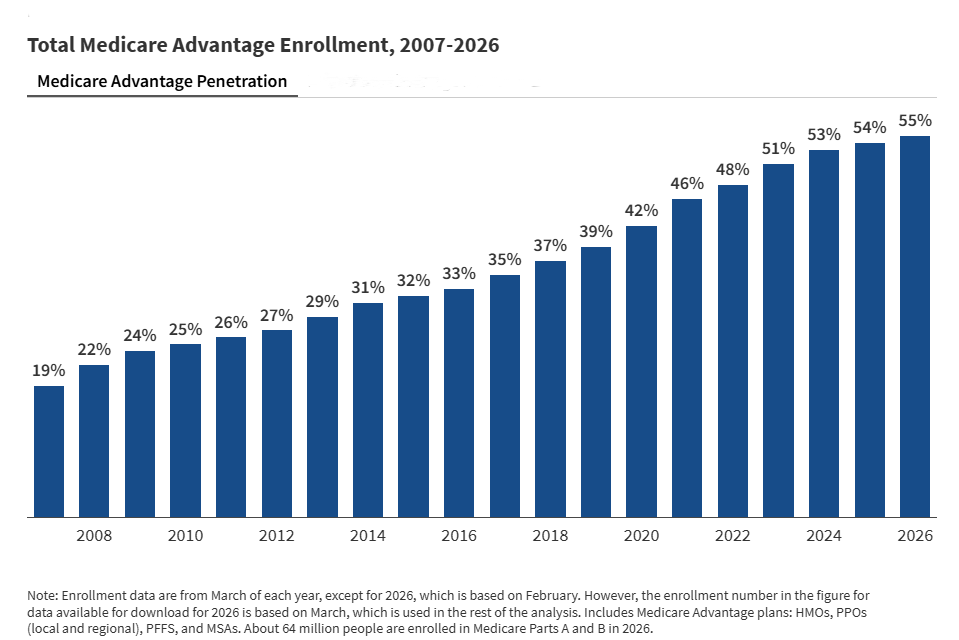
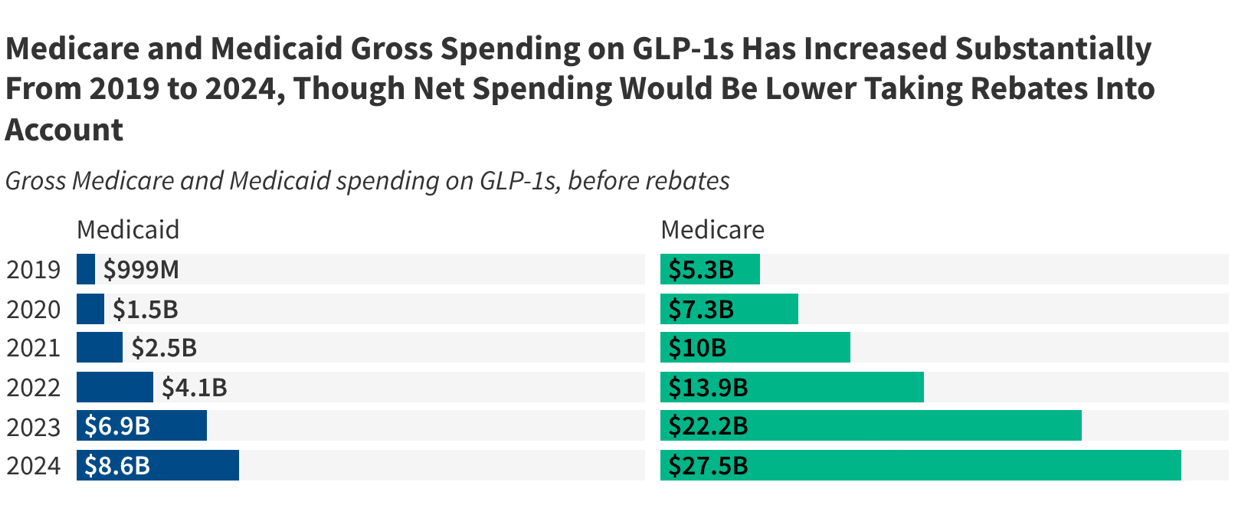
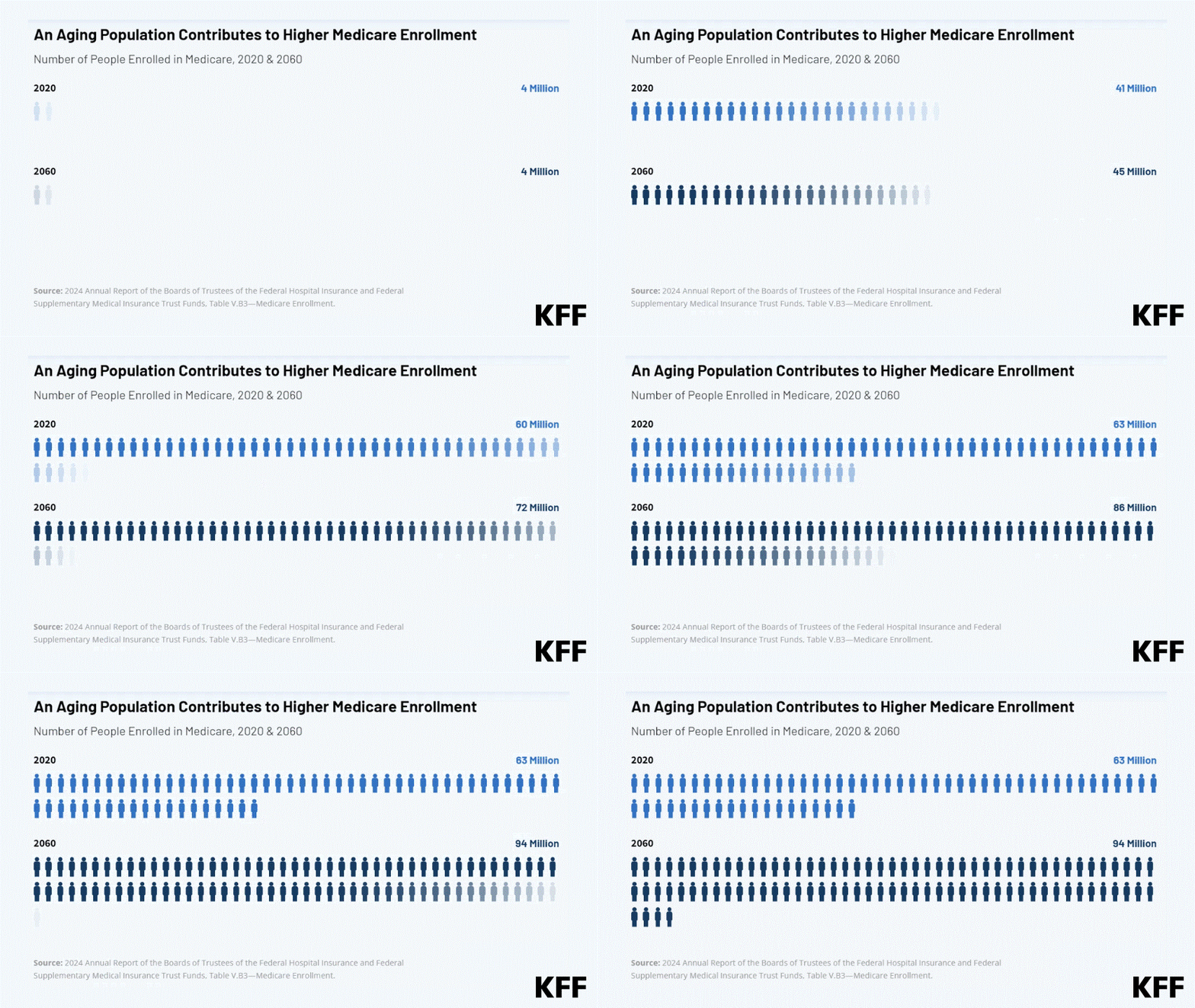
This interactive provides the facts on Medicare spending. Medicare, which serves 67 million people and accounts for 12 percent of the federal budget and 21 percent of national health spending, is often the focus of discussions about health expenditures, health care affordability and the sustainability of federal health programs. Explore data on enrollment growth, Medicare spending trends overall and per person, growth in Medicare spending relative to private insurance, spending on benefits and Medicare Advantage, Part A trust fund solvency challenges, and growth in out-of-pocket spending by beneficiaries.

Read More

Stay informed.

Stay informed.

Filter

1,271 - 1,280 of 1,605 Results

  • Issue Briefs Describe Changes in Private Plan Market and Effects on Medicare Beneficiaries

    Issue Brief

    These two issue briefs describe the different types of private plan options available to people on Medicare, identify key characteristics of the organizations offering the new Medicare drug benefit, and analyze how companies are positioning themselves to attract Medicare enrollees. The Growth of Private Plans in Medicare, 2006 The Landscape of Private Firms Offering Medicare Prescription Drug Coverage in 2006

  • The Growth of Private Plans in Medicare, 2006

    Issue Brief

    , details the different types of private plan options available to people on Medicare. These include Medicare Advantage plans (such as Medicare HMOs, PPOs and private fee-for-service plans) and new stand-alone prescription drug plans. • In 2006, all Medicare beneficiaries have access to at least one type of private Medicare Advantage plan, up from 77% in 2004. The increase in access stems largely from the creation of new Medicare regional PPOs and the expansion of…

  • The Landscape of Private Firms Offering Medicare Prescription Drug Coverage in 2006

    Issue Brief

    describes key characteristics of the organizations that offer the new Medicare drug benefit and analyzes how companies are positioning themselves to attract Medicare enrollees. • Seven of the 10 organizations that sponsor stand-alone prescription drug plans nationwide are based in commercial insurance firms with substantial Medicare Advantage experience, and three of the 10 firms are in the pharmacy benefit management and service sector. • Nine of the 10 organizations that sponsor stand-alone prescription drug plans…

  • Medicare-Medicaid Policy Interactions

    Issue Brief

    Because over seven million elderly and disabled individuals are entitled to benefits under both Medicare and Medicaid, policy changes in one program not only affect both coverage and spending in the other but also impact access to services by individuals eligible for both programs. This primer summarizes two key policy interactions and includes a quick reference table of the most significant linkages between the two programs. Issue Brief (.pdf)

  • The President’s FY 2007 Budget Proposal: Overview and Briefing Charts

    Report

    This chartpack reviews the President’s FY 2007 budget request to Congress and highlights overall budget assumptions and funding for major health programs. It begins with a description of the federal budget process, followed by summary information on the overall composition of the Administration’s budget. Overall, the budget includes net reductions for Medicare, Medicaid, and other health programs administered by the Department of Health and Human Services. The budget also includes additional expenditures for proposals to…

  • The Transition of Dual Eligibles to Medicare Part D Prescription Drug Coverage: State Actions During Implementation

    Report

    This 50-state survey of Medicaid officials assesses states’ early experience relating to the transition of low-income seniors and people with disabilities enrolled in both Medicaid and Medicare (dual eligibles) to the Medicare Part D drug benefit. Conducted by Health Management Associates, the survey covers the types of problems observed by states during the transition of dual eligibles to the Medicare drug benefit, state actions to correct problems and ensure temporary coverage, and specific data on…

  • Tracking Prescription Drug Coverage Under Medicare:  Five Ways to Look at the New Enrollment Numbers

    Issue Brief

    Tracking Prescription Drug Coverage Under Medicare: Five Ways to Look at the New Enrollment Numbers This new analysis, which assesses Medicare drug benefit enrollment statistics released Feb. 22 by the U.S. Department of Health and Human Services, examines five different approaches to understanding the Medicare drug coverage numbers: What share of the total Medicare population has creditable prescription drug coverage? What share of the total Medicare population is enrolled in a Medicare drug plan? How…

  • Kaiser Health Poll Report Survey – Selected Findings on Seniors’ Views of the Medicare Prescription Drug Benefit

    Poll Finding

    Kaiser Health Poll Report Survey – Selected Findings on Seniors' Views of the Medicare Prescription Drug Benefit This February 2006 Kaiser Family Foundation tracking poll finds that 45% of seniors say they have enrolled or plan to enroll in a drug plan, 29% say they do not intend to enroll in a drug plan and another 23% say they are uncertain. The majority of those who do not plan to enroll say they have another…