Medicare

NEW AND NOTEWORTHY

Examining the Potential Impact of Medicare’s New WISeR Model

A federal initiative to establish new prior authorization requirements in traditional Medicare, called the Wasteful and Inappropriate Service Reduction (WISeR) model, is likely to have only modest impact in its first year.

State Profiles for Dual-Eligible Individuals

This data collection draws on Medicare and Medicaid administrative data to present national and state-level information on people who are covered by both Medicare and Medicaid, referred to as dual-eligible individuals (also known as dually-enrolled beneficiaries).

Data Visualization

The Facts About Medicare Spending

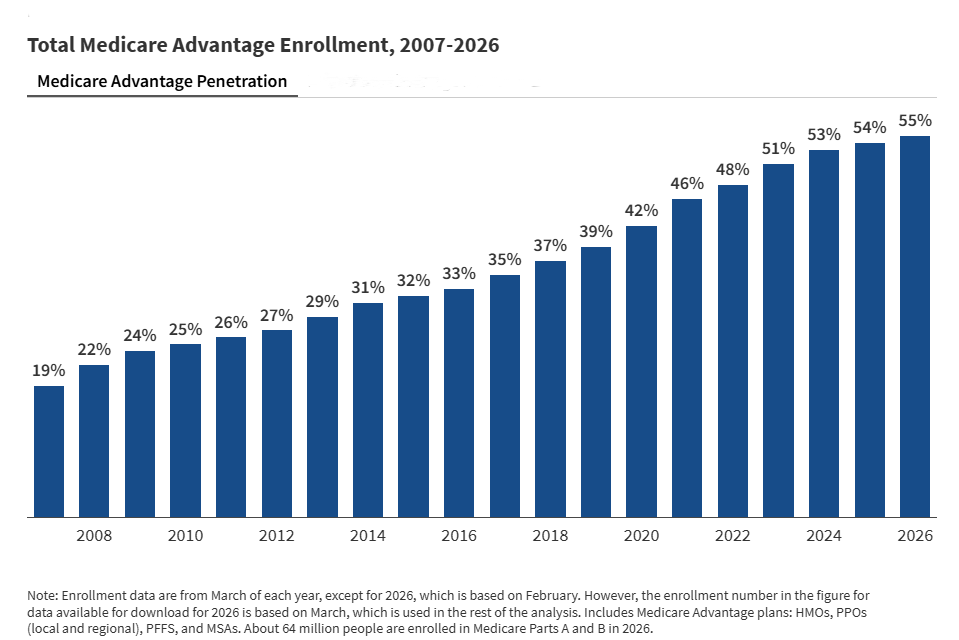
This interactive provides the facts on Medicare spending. Medicare, which serves 67 million people and accounts for 12 percent of the federal budget and 21 percent of national health spending, is often the focus of discussions about health expenditures, health care affordability and the sustainability of federal health programs. Explore data on enrollment growth, Medicare spending trends overall and per person, growth in Medicare spending relative to private insurance, spending on benefits and Medicare Advantage, Part A trust fund solvency challenges, and growth in out-of-pocket spending by beneficiaries.

Read More

Stay informed.

Stay informed.

Filter

1,161 - 1,170 of 1,602 Results

  • Key Findings: Kaiser Health Tracking Poll — April 2009

    Poll Finding

    This document contains the key findings from the April Health Tracking Poll. The survey was designed and analyzed by public opinion researchers at the Kaiser Family Foundation and was conducted April 2 through April 8, 2009, among a nationally representative random sample of 1,203 adults ages 18 and older. Telephone interviews conducted by landline (902) and cell phone (301, including 98 who had no landline telephone) were carried out in English and Spanish. The margin…

  • Retiree Health VEBAs: A New Twist On An Old Paradigm

    Issue Brief

    This issue brief provides an overview of stand-alone Voluntary Employees' Beneficiary Association trusts, through which employers have been able to rid themselves of future obligations to pay retiree health benefits in exchange for making a significant payment to designed to approximate the projected cost of these benefits. The paper include three case studies, including the VEBAs at the Big Three automakers. Issue Brief (.pdf)

  • Choosing a Medicare Part D Plan: Are Medicare Beneficiaries Choosing Low-Cost Plans?

    Report

    Since 2006, Medicare beneficiaries have had the opportunity to choose from among dozens of plans to get the Part D prescription drug benefit, facing wide variation in benefits, premiums and cost-sharing. The array of choices, with more than 50 stand-alone drug plans in many states, could allow beneficiaries to select a plan that provides the best value for their individual medical and economic needs. This study uses actual pharmacy claims experiences, and premium and cost-sharing…

  • Snapshots from the Kitchen Table: Family Budgets and Health Care

    Video

    This Kaiser Family Foundation documentary, “Snapshots from the Kitchen Table: Family Budgets and Health Care,” profiles several American families who are struggling to make ends meet. It depicts the narrow financial ledge on which millions of low- and middle- income working households stand even in normal economic times, and illustrates the central role that health care costs and coverage play in a household’s economic stability. Some of the families profiled have health insurance, others do…

  • Reports Analyze Cost and Coverage of People Eligible for Both Medicaid and Medicare and Options for Reforming Financing of Their Care

    Issue Brief

    These issue briefs examine coverage of the nearly 9 million "dual eligibles," the low-income elderly and persons with disabilities who are enrolled in both Medicare and Medicaid. The reports explore the national and state impacts of shifting the financing of selected services for dual eligibles from Medicaid to Medicare, and provide state-level Medicaid spending and enrollment data related to this population. The policy options studied could collectively provide tens of billions of dollars in annual…

  • Rethinking Medicaid’s Financing Role for Medicare Enrollees

    Issue Brief

    This issue brief examines coverage of the nearly 9 million "dual eligible" beneficiaries, the low-income elderly and persons with disabilities who are enrolled in both Medicare and Medicaid. It explores the national and state impacts of shifting the financing of selected services for dual eligibles from Medicaid to Medicare, including having the federal government pick up the full cost of Medicare premiums, cost-sharing and gaps in Medicare-covered services and long-term care services for this population.…

  • Pulling it Together from Drew Altman: Multiple Agendas for Controlling Health Care Costs

    Perspective

    In what would be a domestic policy trifecta, we may be headed for interconnected big debates about economic recovery, entitlement programs and health reform. A core issue in the entitlement and health reform debates is the problem of rising health care costs. President Obama, now apparently fully briefed on the economic, budget and health reform realities he faces, is talking conspicuously about hard choices that may lie ahead. In a short period of time the…

  • Revisiting ‘Skin in the Game’ Among Medicare Beneficiaries: An Updated Analysis of the Increasing Financial Burden of Health Care Spending From 1997 to 2005

    Issue Brief

    This issue brief presents an analysis of the financial burden of out-of-pocket health care spending for Medicare beneficiaries between 1997 and 2005. The analysis shows median out-of-pocket spending as a share of Medicare beneficiaries' income increased between 1997 and 2005, from 11.9 percent to 16.1 percent. For some beneficiaries, the spending burden was even greater, with 25 percent of people on Medicare spending nearly one-third or more of their income on health care.

  • Medicare 101 Tutorial

    Interactive

    This tutorial was produced for kaiserEDU.org, a Kaiser Family Foundation website that ceased production in September 2013. The kaiserEDU.org tutorials are no longer being updated but have been made available on kff.org due to demand by professors who are using the tutorials in class assignments. You may search for other tutorials to view on kff.org. To download this or other tutorials, visit the tutorials archive page.  Slides are available for download using the “Download Slides” link within the…