Medicaid

new and noteworthy

Medicaid: What to Watch in 2026

Medicaid: What to Watch in 2026

In this brief, KFF explores how state fiscal pressures are likely to converge with the implementation of the 2025 reconciliation law to affect Medicaid coverage, financing, and access to care over the next year, especially leading up to the midterm elections.

Medicaid Watch

Featuring policy research, polling and news about how Medicaid is changing, and the impact of those changes due to the tax and spending cuts law

Medicaid and work

Tracking Medicaid Work Requirements:
Data and Policies

To implement Medicaid work requirements, states will need to make important policy and operational decisions, implement needed system upgrades or changes, develop new outreach and education strategies, and hire and train staff, all within a relatively short timeframe. The information tracked here can serve as a resource to understand Medicaid work requirements and state options, gauge readiness, and track implementation of the requirements.

understanding medicaid

5 Facts: Provider Taxes

All states except Alaska cover some state Medicaid costs with taxes on health care providers. This brief uses data from KFF’s 2024-2025 survey of Medicaid directors to describe current practices and the federal rules governing them.

5 Facts: Medicaid and Hospitals

Absorbing reductions in Medicaid spending could be challenging for hospitals, particularly for those that are financially vulnerable. This brief provides data on the reach of Medicaid across hospitals, patients, and charity care.

5 Facts: Medicaid and Immigrants

Confusion persists about immigrants’ eligibility for federal programs. This brief helps readers understand how current Medicaid policy affects immigrants as well as the potential impacts of policy changes under the Trump administration.

5 Facts: Medicaid and Rural Areas

Approximately 66 million people live in rural areas – about 20% of the U.S. population. Nearly 1 in 4 of them have Medicaid, a higher share than in urban areas (24% vs 21%).

5 Facts: Nursing Facilities

The substantial Medicaid savings in the reconciliation bill that has been passed by the House could have major implications for nearly 15,000 federally certified nursing facilities and the 1.2 million people living in them.

2025 Medicaid Home Care survey

Payment Rates Ahead of 2025 Reconciliation Law

This issue brief describes Medicaid payment rates for home care and other workforce supports that are in place in 2025, before the majority of the 2025 reconciliation law provisions start taking effect.

Home Care Support for Family Caregivers in 2025
number of responding states, including DC, that allow payments for family caregivers by type of home care program and type of caregiver.

This issue brief describes the availability of self-directed services and supports for family caregivers in Medicaid home care in 2025, before most provisions in the reconciliation law take effect.

States’ Management of Home Care Spending

This issue brief describes the mechanisms states are currently using to limit Medicaid spending on home care and their plans for adopting new mechanisms in state fiscal year (FY) 2026.

Waiting Lists for Medicaid Home Care, 2016 to 2025
A Look at Waiting Lists for Medicaid Home- and Community-Based Services from 2016 to 2025

This data note provides new information about waiting lists in Medicaid home care before many of the provisions in the 2025 reconciliation law go into effect.

Eligibility and coverage
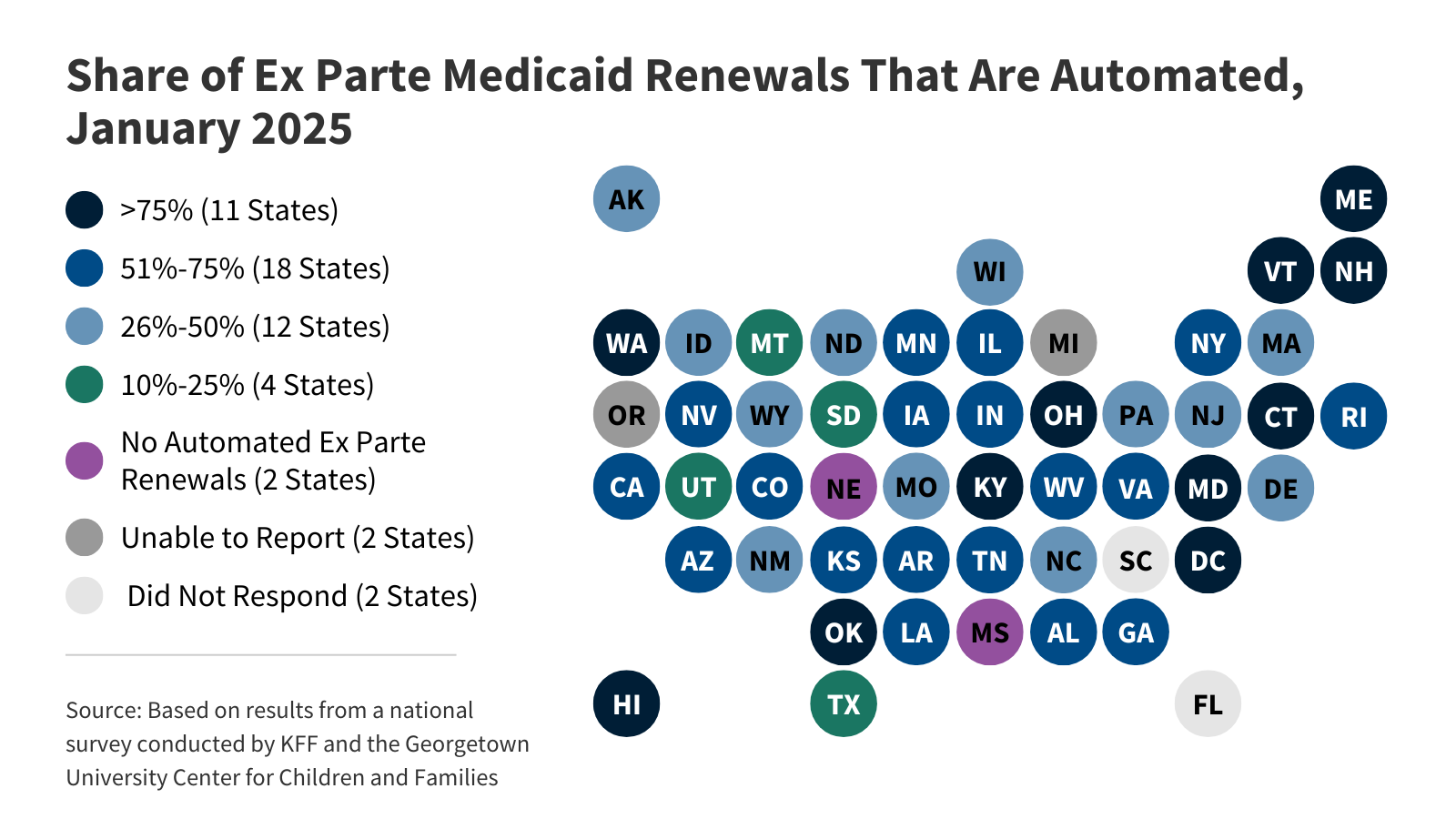
  • Eligibility, Enrollment, and Renewal Policies

    KFF's survey findings capture state actions that seek to improve the accuracy and efficiency of Medicaid and CHIP enrollment and renewal processes, as of January 2025.
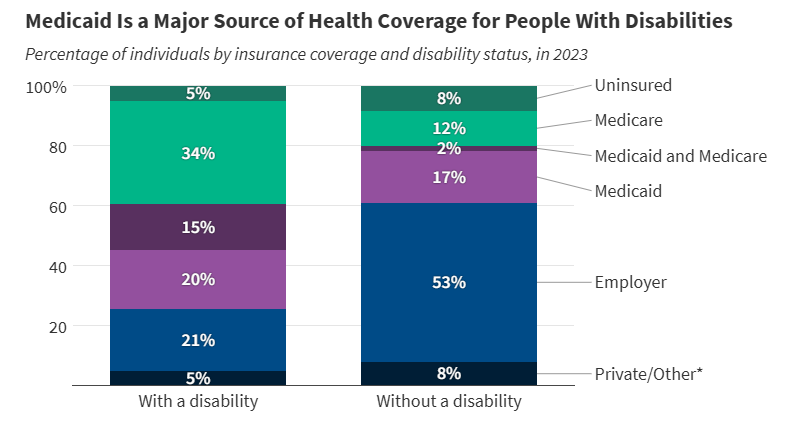
  • Seniors and People with Disabilities

    More than 1 in 3 people with disabilities (15 million) have Medicaid (35%). In comparison, only 19% of people without disabilities have Medicaid.
  • Children with Special Needs

    Amid debates about proposed cuts to federal Medicaid spending, this brief analyzes key characteristics of children with special health care needs and explores how Medicaid provides them with coverage.
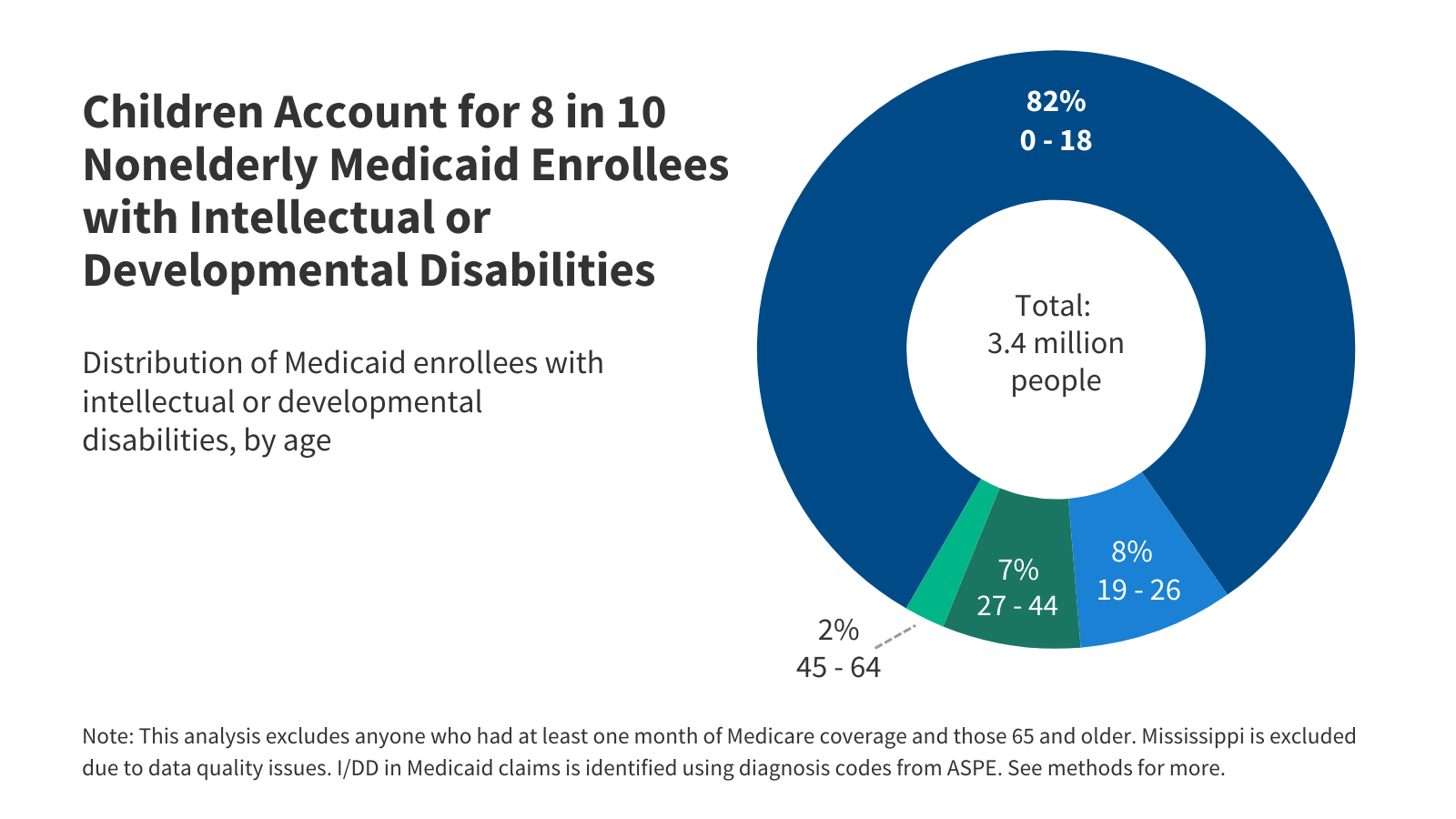
  • People With Intellectual and Developmental Disabilities

    Among the estimated 8 million people with intellectual and developmental disabilities (I/DD), over three million have Medicaid coverage.
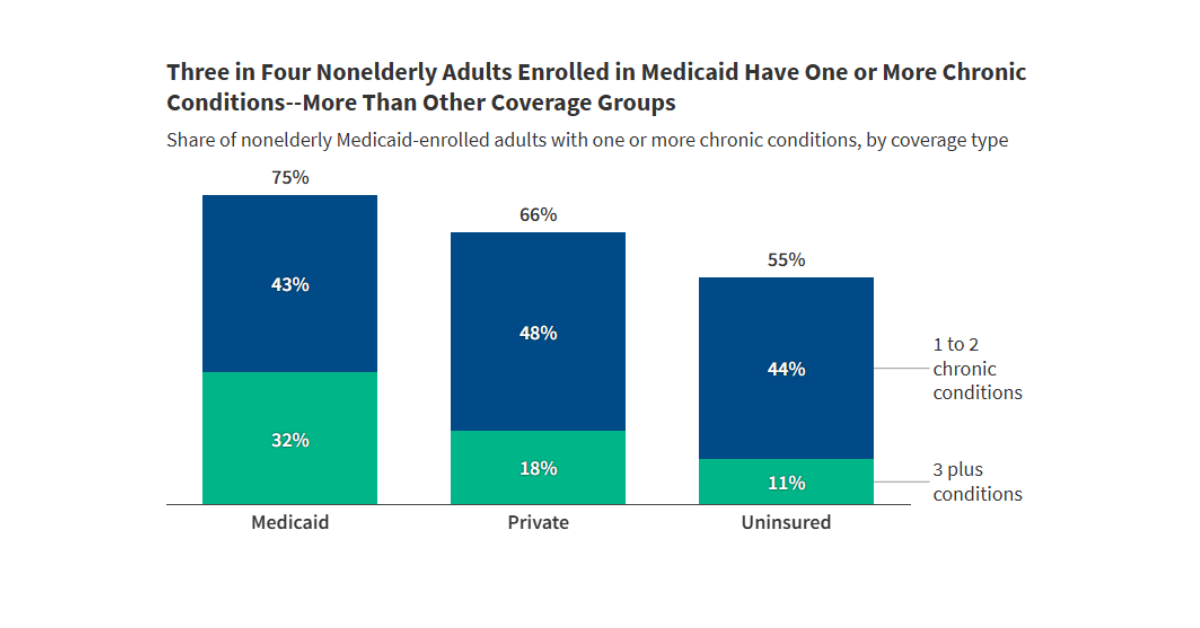
  • Adults with Chronic Conditions

    Among working age adults enrolled in Medicaid, approximately three quarters have one or more chronic conditions, and nearly one-third have three or more.

Subscribe to KFF Emails

Choose which emails are best for you.
Sign up here
Filter

1,411 - 1,420 of 2,685 Results

  • The Impact of the Children’s Health Insurance Program (CHIP): What Does the Research Tell Us?

    Issue Brief

    The Children’s Health Insurance Program (CHIP) was established in 1997 to provide coverage for uninsured children who are low-income but above the threshold for Medicaid eligibility. In 2009, and again in the Affordable Care Act (ACA), Congress extended federal funding for CHIP, but funding will expire a little over a year from now. Decisions about CHIP’s future funding will be consequential as more than 8 million low-income children were covered by CHIP at some point during 2012. To help inform the policy debate about CHIP, this brief reviews key data and evidence from the large body of research on the impact of children’s coverage.

  • What Worked and What’s Next? Strategies in Four States Leading ACA Enrollment Efforts

    Issue Brief

    This brief highlights the experiences of four states—Colorado, Connecticut, Kentucky, and Washington—that established a State-based Marketplace (SBM), implemented the ACA’s Medicaid expansion, and achieved success enrolling eligible individuals into coverage. Based on interviews with key stakeholders in each state, it identifies effective strategies that contributed to enrollment and current priorities looking forward.

  • What’s Trending in Health Care? Conservative Ideas

    News Release

    What’s Trending in Health Care? Conservative Ideas In his latest column for The Wall Street Journal’s Think Tank, Drew Altman cuts through the political debate and reviews how some ideas conservatives like are taking hold in the American health system. All previous columns by Drew Altman are available online.

  • What’s Trending in Health Care? Conservative Ideas

    From Drew Altman

    In his latest column for The Wall Street Journal’s Think Tank, Drew Altman cuts through the political debate and reviews how some ideas conservatives like are taking hold in the American health system.

  • National Survey Finds 10.6 Million People Helped By Navigators and Assisters During the Affordable Care Act’s First Open Enrollment Period

    News Release

    An estimated 10.6 million people nationally received personal help from navigators and assisters during the Affordable Care Act's first open enrollment period, finds a new Kaiser Family Foundation survey of navigators and assister programs nationally. The survey estimates that the 4,400 assister programs operating nationally had an estimated 28,000 full-time staff and volunteers, suggesting each assister would have helped more than 370 people on average during the six-month open enrollment period that ran from October 1 through March 31.

  • Survey of Health Insurance Marketplace Assister Programs

    Report

    This survey by the Kaiser Family Foundation of Navigators and other Marketplace consumer assistance programs under the Affordable Care Act (Obamacare) offers a nationwide analysis of the number and distribution of assisters and people they helped. The report examines the experience of programs in conducting outreach and enrollment assistance during the first open enrollment period. It also reviews the nature of help consumers needed applying for Medicaid or premium tax credits and understanding health insurance choices, and discusses key factors that impacted the effectiveness of Marketplace Assister Programs.

  • Children’s Health Coverage – What You Need To Know

    Event Date:
    Event

    On Monday, July 14, 2014, the Kaiser Family Foundation and the Alliance for Health Reform will host a briefing to discuss CHIP, and why it was created, as well as experiences with children’s coverage through CHIP and Medicaid, and some of the key policy and financing questions around children’s health coverage looking forward.

  • On Medicaid Expansion, Red States Will Be Watching Red States

    From Drew Altman

    This was published as a Wall Street Journal Think Tank column on June 30, 2014. Since the Supreme Court made expanding Medicaid optional for states under the Affordable Care Act, 26 states have expanded Medicaid.