2025 KFF Marketplace Enrollees Survey
In 2025, about one in three ACA enrollees said they would be “very likely” to look for a lower-premium Marketplace plan If their premium payments doubled.
The independent source for health policy research, polling, and news.
KFF’s policy research provides facts and analysis on a wide range of policy issues and public programs.
KFF designs, conducts and analyzes original public opinion and survey research on Americans’ attitudes, knowledge, and experiences with the health care system to help amplify the public’s voice in major national debates.
KFF Health News is a national newsroom that produces in-depth journalism about health issues and is one of the organization’s core operating programs.
In 2025, about one in three ACA enrollees said they would be “very likely” to look for a lower-premium Marketplace plan If their premium payments doubled.
Adults ages 50 to 64 are disproportionately affected by the expiration of ACA enhanced premium tax credits because they make up a large number of Marketplace enrollees and premiums rise with age.
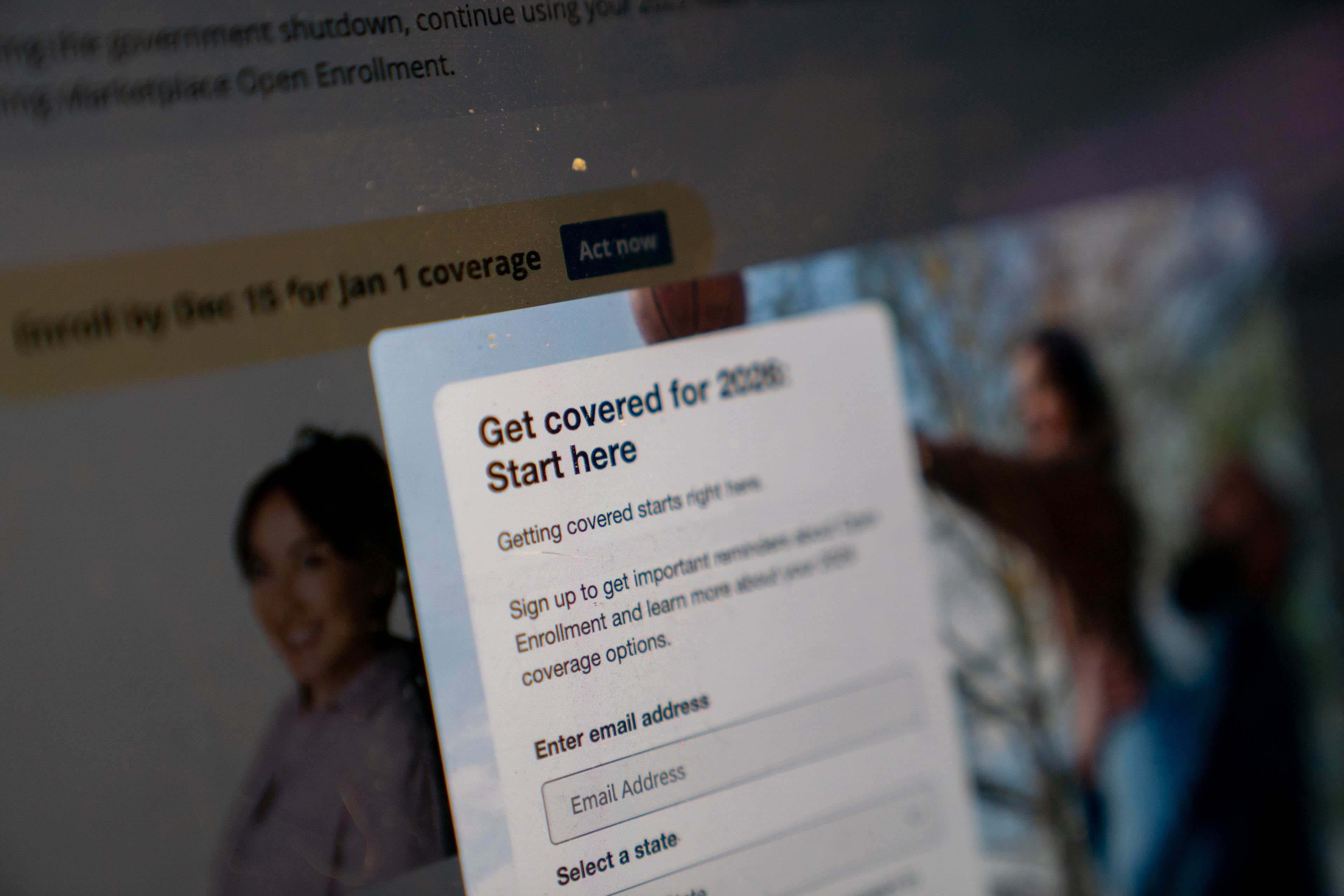
Following the expiration of the enhanced premium tax credits for people with Affordable Care Act (ACA) Marketplace plans, a new KFF follow-up survey of the same Marketplace enrollees KFF surveyed in 2025 finds half (51%) of returning enrollees say their health care costs are “a lot higher” this year compared to last year, including four in 10 who specifically say their premiums are “a lot higher.”
Choose which emails are best for you.
Sign up here
During the presidential campaign, President Biden proposed to lower the age of Medicare eligibility from 65 to 60. This analysis uses claims data for covered medical services from both large employer plans and traditional Medicare to illustrate the potential spending effects of using Medicare payment rates in lieu of higher rates paid by employer plans for people 60-64 who shift from large employer plans to Medicare.
This analysis for the Peterson-KFF Health System Tracker illustrates the potential for employer savings if the age of Medicare eligibility were lowered to 60, as proposed by President Biden during the 2020 campaign.
A new KFF issue brief explores several potential policy options that would help close the Affordable Care Act’s "coverage gap," including providing further new incentives for states to expand Medicaid, creating a new "public option" or extending ACA Marketplace premium subsidies to low-income people who don’t currently qualify for federal help.
This issue brief examines some of the other options policymakers may consider to extend coverage to people in the gap, including increased fiscal incentives for states, a narrower public option, and making people with incomes below the poverty level eligible for enhanced ACA premium subsidies.
Private insurance companies are expecting to pay out $2.1 billion in rebates to consumers this fall, the second highest amount ever issued under the Affordable Care Act, according to a new KFF analysis.
A new KFF analysis estimates 5.1 million people nationally fall into the Affordable Care Act’s “family glitch” that occurs when a worker receives an offer of affordable employer coverage for themselves but not for their dependents, making them ineligible for financial assistance for marketplace coverage.
This analysis estimates that 5.1 million people fall into the Affordable Care Act's "family glitch," which occurs when a worker receives an offer of affordable employer coverage for themselves but not for their dependents, making them ineligible for financial assistance for marketplace coverage. It explores the demographic characteristics of this group, including state-level estimates.
The increase in the uninsured rate in recent years, as well as loss of coverage during the pandemic, has led to attention on the consequences of being uninsured. The need for medical care to test, treat, or prevent COVID-19 has also highlighted the potential consequences of uncompensated care for uninsured people. Uncompensated care costs occur because, although people who are uninsured use less care than people with coverage, most who are uninsured have limited income or resources and cannot afford the high cost of medical care, if and when they do need or use health care.
This brief estimates the level of public funding that was paid to help offset providers’ uncompensated care costs for the uninsured in 2017. To conduct the analysis, we rely on several secondary data sources including government budget appropriations and expenditure data for major public programs that provided funds to cover the cost of care for the uninsured, as well as analyses of secondary data sources completed by others.
The American Rescue Plan (ARP) Act signed into law earlier this month includes a number of provisions aimed at making health coverage more accessible and affordable amid the public health and economic crises created by the COVID-19 pandemic. Join KFF at a web briefing to explain these changes and their expected impact on consumers, insurance marketplaces, and states.
© 2026 KFF