Affordable Care Act

About the ACA

Promotional image for KFF video How Affordable is the Affordable Care Act

Did the Affordable Care Act Make Health Care More Affordable?

The expiration of the ACA’s enhanced premium tax credits at the start of 2026, combined with rising insurer premiums, put a spotlight on health care affordability that extends beyond Marketplace enrollees. KFF’s Cynthia Cox examines the ACA’s record and the broader underlying question it raises: what’s a fair price for Americans people to pay for health care?
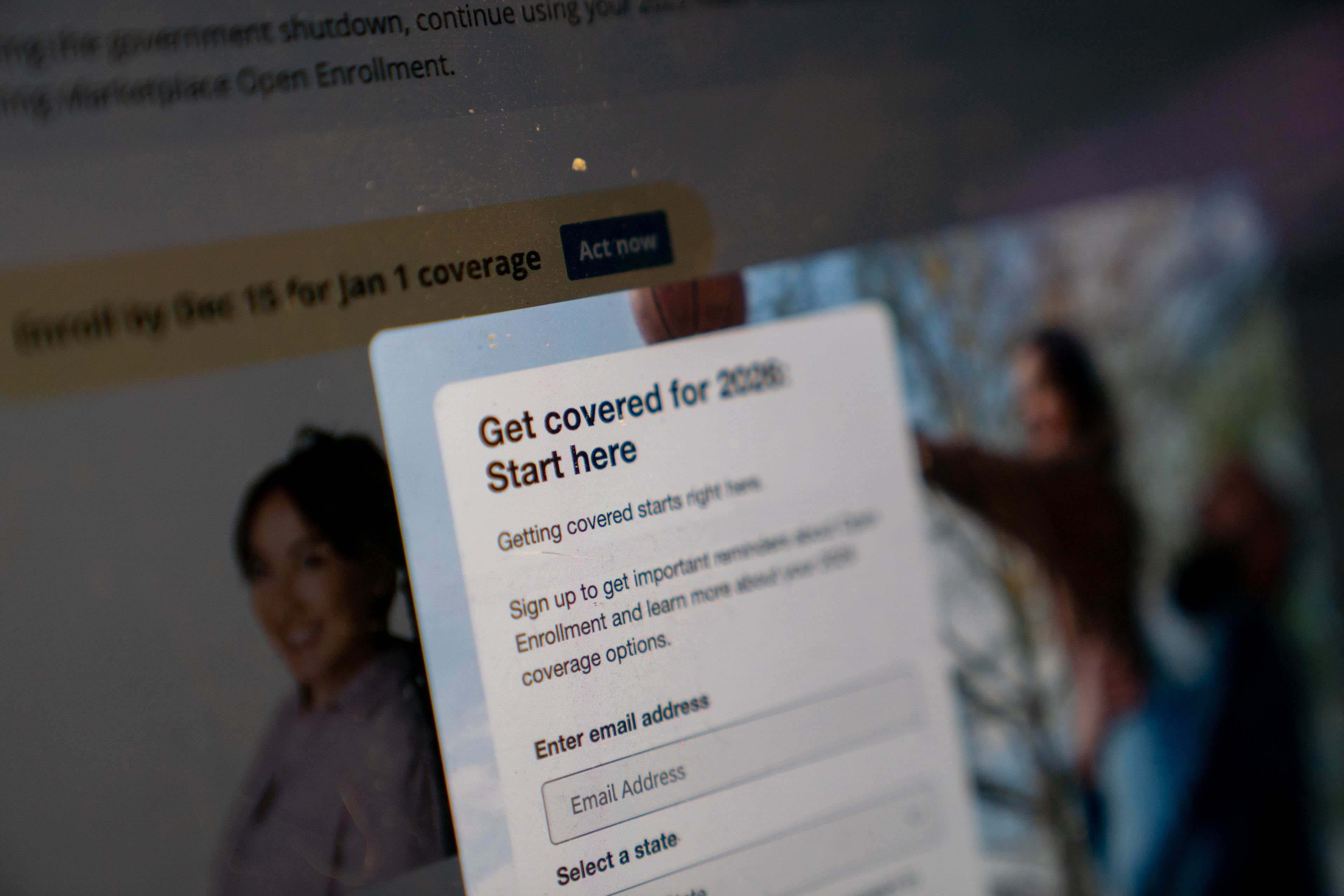

The ACA MarketplaceS

In Preliminary Rate Filings, ACA Marketplace Insurers Largely Propose Double-Digit Premium Increase For 2027, Following a Steep Climb This Year 

ACA Marketplace insurers are proposing a median premium increase of 14% for 2027— indicating a likely second consecutive year of double-digit increases, according to a new analysis of preliminary rate filings in 16 states and DC. If these increases hold, typical premiums for insurers participating in the ACA Marketplaces would jump by more than one-third between 2025 and 2027.

The Average Marketplace Deductible Grew by About $1,000 Per Person in 2026, With More Enrollees Shifting to Higher-Deductible Plans as Enhanced Tax Credits Expired

The average Affordable Care Act (ACA) Marketplace deductible experienced the steepest increase in history—growing by 37% or over $1,000, from $2,759 in 2025 to $3,786 in 2026 as enhanced premium tax credits expired, according to a new KFF analysis. After the enhanced tax credits ended, many Marketplace shoppers shifted toward lower-premium, higher-deductible plans.

Stay informed.

Stay informed.

https://js.hsforms.net/forms/embed/292449.js

Filter

2,341 - 2,350 of 2,780 Results

  • State Marketplace Profiles: New York

    Other Post

    Final update made on September 30, 2013 (no further updates will be made) Establishing the Marketplace After the New York State legislature failed to pass exchange legislation, Governor Andrew Cuomo (D) signed Executive Order 42 on April 12, 2012, to establish the New York Health Benefit Exchange.1  In August 2013, the state announced that the online marketplace would be called NY State of Health.2  Structure: The Executive Order establishes the New York Health Benefit Exchange…

  • State Exchange Profiles: Alaska

    Other Post

    Final update made on December 4, 2012 (no further updates will be made)  Establishing the Exchange On July 17, 2012, Governor Sean Parnell (R) announced that Alaska will not create a state-run health insurance exchange, and instead will allow the federal government to operate an exchange in the state.1 While a bill establishing an exchange was introduced in the 2011 legislative session and reconsidered in 2012, it failed to pass. Prior to the announcement that the…

  • State Marketplace Profiles: Nevada

    Other Post

    Final update made on September 26, 2013 (no further updates will be made ) Establishing the Marketplace On June 16, 2011, Nevada’s Governor Brian Sandoval (R) signed SB 440 into law establishing the Silver State Health Insurance Exchange.1  In March 2013, the state announced that the online marketplace would be called Nevada Health Link. Structure: The legislation defines Nevada’s Exchange as a quasi-governmental organization. Governance: The Marketplace is governed by a 10-member board, including three ex officio, non-voting…

  • State Exchange Profiles: Vermont

    Other Post

    Final update made on July 24, 2013 (no further updates will be made) Establishing the Exchange On May 26, 2011, Governor Peter Shumlin (D) signed into law HB 202, a far-reaching health reform law that puts the state on a path toward establishing a single-payer health care system.1  As an interim step, the law created the Vermont Health Benefit Exchange to meet the requirements of federal health reform. The state plans to put into place…

  • State Exchange Profiles: South Carolina

    Other Post

    Final update made on December 10, 2012 (no further updates will be made) Establishing the Exchange On November 15, 2012, Governor Nikki Haley (R) informed federal officials South Carolina would default to a federally-operated health insurance exchange.1 This decision was largely based on findings from the South Carolina Health Planning Committee which had concluded the state cannot implement a state-based exchange as required by the Affordable Care Act (ACA) and should instead encourage the establishment of…

  • State Marketplace Profiles: Kentucky

    Other Post

    Final update made on November 11, 2013 (no further updates will be made) Establishing the Marketplace On July 17, 2012, Governor Steven L. Beshear (D) issued Executive Order 587 establishing the Kentucky Health Benefit Exchange (KHBE) after the Supreme Court ruled to uphold the Affordable Care Act (ACA).1  In May 2013, the state announced that its online Marketplace would be called kynect. Prior to the Executive Order, the Kentucky Cabinet for Health and Family Services led Marketplace…

  • State Exchange Profiles: Wisconsin

    Other Post

    Final update made on December 11, 2012 (no further updates will be made) Establishing the Exchange  On November 16, 2012, Governor Scott Walker (R) notified federal officials that Wisconsin would default to a federally-facilitated health insurance exchange.1 After initial efforts to develop a state-based health insurance exchange, Governor Walker announced in July 2012, he would not take any action to implement federal health reform until after the November elections.2 In 2011, Walker had issued an executive order…

  • State Exchange Profiles: Wyoming

    Other Post

    Final update made on December 11, 2012 (no further updates will be made)  Establishing the Exchange On November 14, 2012, Governor Matt Mead (R) acknowledged Wyoming would default to a federally-operated health insurance exchange for 2014, with the possibility of moving to a state-run exchange in the future.1 Governor Mead had signed HB 0050 into law in 2011 establishing the Wyoming Health Insurance Exchange Steering Committee to study the feasibility of creating a health insurance…

  • State Marketplace Profiles: Connecticut

    Other Post

    Final update made on September 27, 2013 (no further updates will be made)  Establishing the Marketplace On July 1, 2011, Governor Dan Malloy (D) signed SB921 (Public Act 11-53) into law establishing the Connecticut Health Insurance Exchange.1   Legislation altering the composition of the Exchange Board passed in June 2012.2 3  In December 2012, the Exchange announced that its new name would be “Access Health CT.” Structure: The legislation defines Connecticut’s Health Insurance Exchange as a quasi-governmental organization, specifically "a…

  • State Exchange Profiles: Florida

    Other Post

    Final update made on December 14, 2012 (no further updates will be made) Establishing the Exchange In December 2012, Governor Rick Scott (R) announced that Florida would not be pursuing efforts to implement a state-based health insurance exchange.1 Governor Scott has been a vocal opponent of federal health reform and the state has refused multiple funding opportunities available through the Affordable Care Act (ACA).2 Florida was also the lead plaintiff in a lawsuit brought by 26 states…



