
ACA Marketplace Enrollment Is Down By 3 Million After Big Jump in Premium Payments

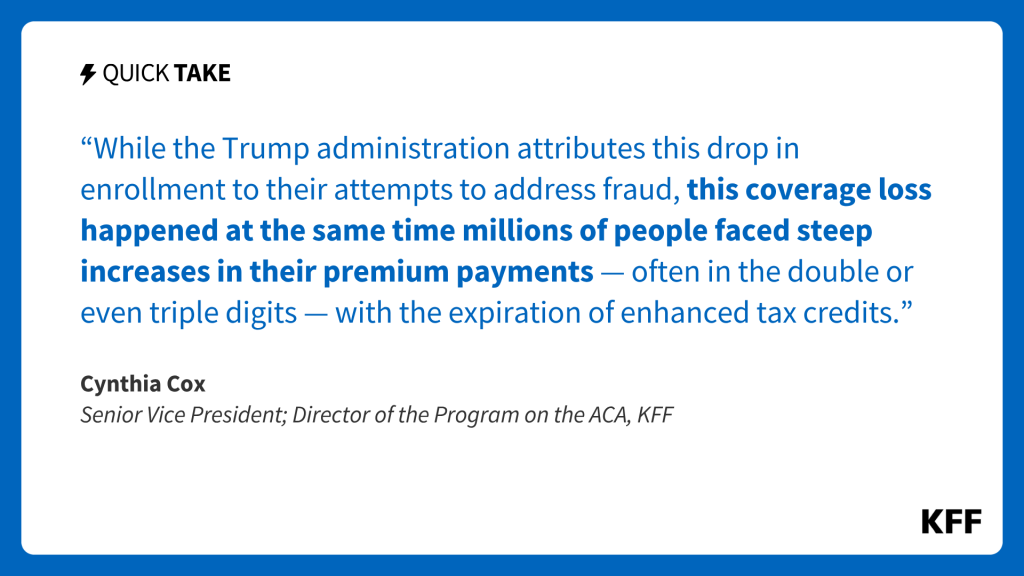
New federal data released Friday, June 26 shows ACA Marketplace Enrollment dropped 13% following the expiration of enhanced premium tax credits at the beginning of this year. Enrollment fell from a high of 22.1 million people in 2025 to 19.2 million people in February 2026. While the Trump administration attributes this drop in enrollment to their attempts to address fraud, this coverage loss happened at the same time millions of people faced steep increases in their premium payments – often in the double or even triple digits – with the expiration of enhanced tax credits.
While we do not yet know how many people have become uninsured, the ACA Marketplaces are often an option of last resort for people who do not have an affordable offer of coverage through their work and are ineligible for Medicare or Medicaid.
The report from Health and Human Services (HHS) contains the first look at 2026 ACA Marketplace effectuated enrollment, which takes into account whether enrollees have made their premium payments. Earlier reports had focused on signups, which were down by about 1 million or 5% from last year, but these data understated the degree of coverage loss. Unlike the signups numbers, effectuated enrollment totals do not include people who initially selected a plan or were automatically reenrolled by the Marketplace but later canceled their coverage or did not make their premium payments and had their coverage retroactively terminated.
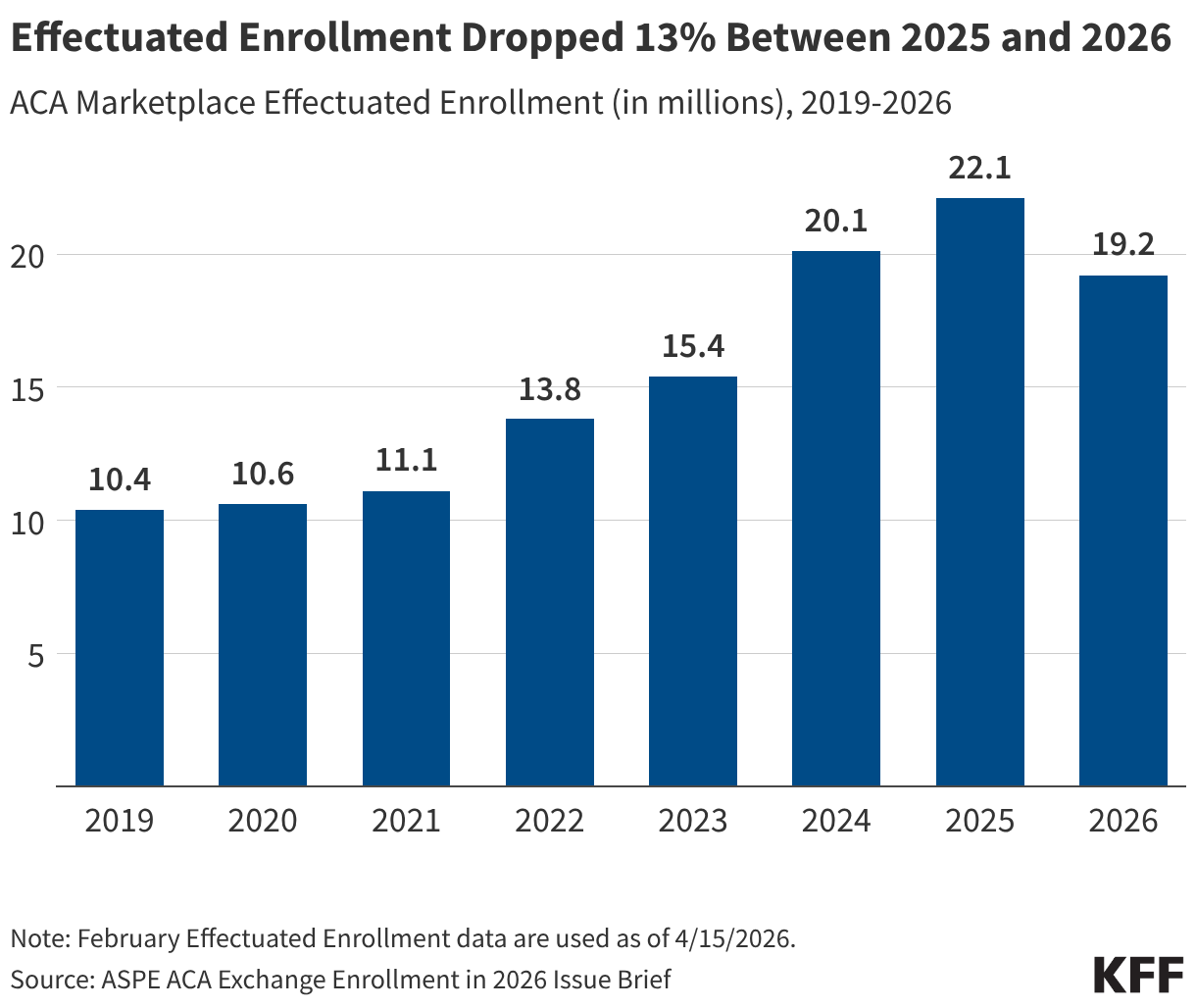
Returning enrollees had a 3-month grace period for nonpayment of premiums, meaning most had until March 31, 2026, to make premium payments before their coverage is retroactively terminated. The HHS report shows February effectuated enrollment measured on April 15, 2026, after the grace period had ended for most enrollees.
This is the first time ACA Marketplace enrollment has dropped since the first Trump administration, and it comes on the heels of several consecutive years of rapid growth and record high enrollment that corresponded with enhanced premium tax credits that lowered monthly premium payments across the board and made ACA enrollees with incomes above four times the poverty level newly eligible for financial assistance that capped their premium payments at 8.5% of income. These enhanced tax credits expired after 2025, leaving ACA Marketplace enrollees facing an average premium payment increase of 114% to keep the same plan. Earlier signup data indicates that many ACA enrollees switched to bronze plans with higher deductibles. The net results are that premium payments increased 58% and deductibles increased 37%, or over $1,000 per person.
A KFF survey that followed ACA Marketplace enrollees from 2025 to 2026 found that most people who switched plans did so because of costs. Among all returning ACA enrollees, 73% said they worried about their ability to afford emergency care or hospitalizations and about half are worried about affording costs for routine medical visits (49%) or prescription drugs (45%). Over 4 in 10 returning ACA enrollees (44%) said their higher insurance costs had made it harder to afford their basic necessities like groceries, utilities, or rent.
Expectations are that ACA Marketplace enrollment could continue to erode, possibly reaching an average of 17.5 million enrollees by the end of 2026. The KFF survey found that 17% were not confident they could continue to afford their health insurance premiums for the entire year.