Affordable Care Act

The ACA MarketplaceS

In Preliminary Rate Filings, ACA Marketplace Insurers Largely Propose Double-Digit Premium Increase For 2027, Following a Steep Climb This Year 

ACA Marketplace insurers are proposing a median premium increase of 14% for 2027— indicating a likely second consecutive year of double-digit increases, according to a new analysis of preliminary rate filings in 16 states and DC. If these increases hold, typical premiums for insurers participating in the ACA Marketplaces would jump by more than one-third between 2025 and 2027.

The Average Marketplace Deductible Grew by About $1,000 Per Person in 2026, With More Enrollees Shifting to Higher-Deductible Plans as Enhanced Tax Credits Expired

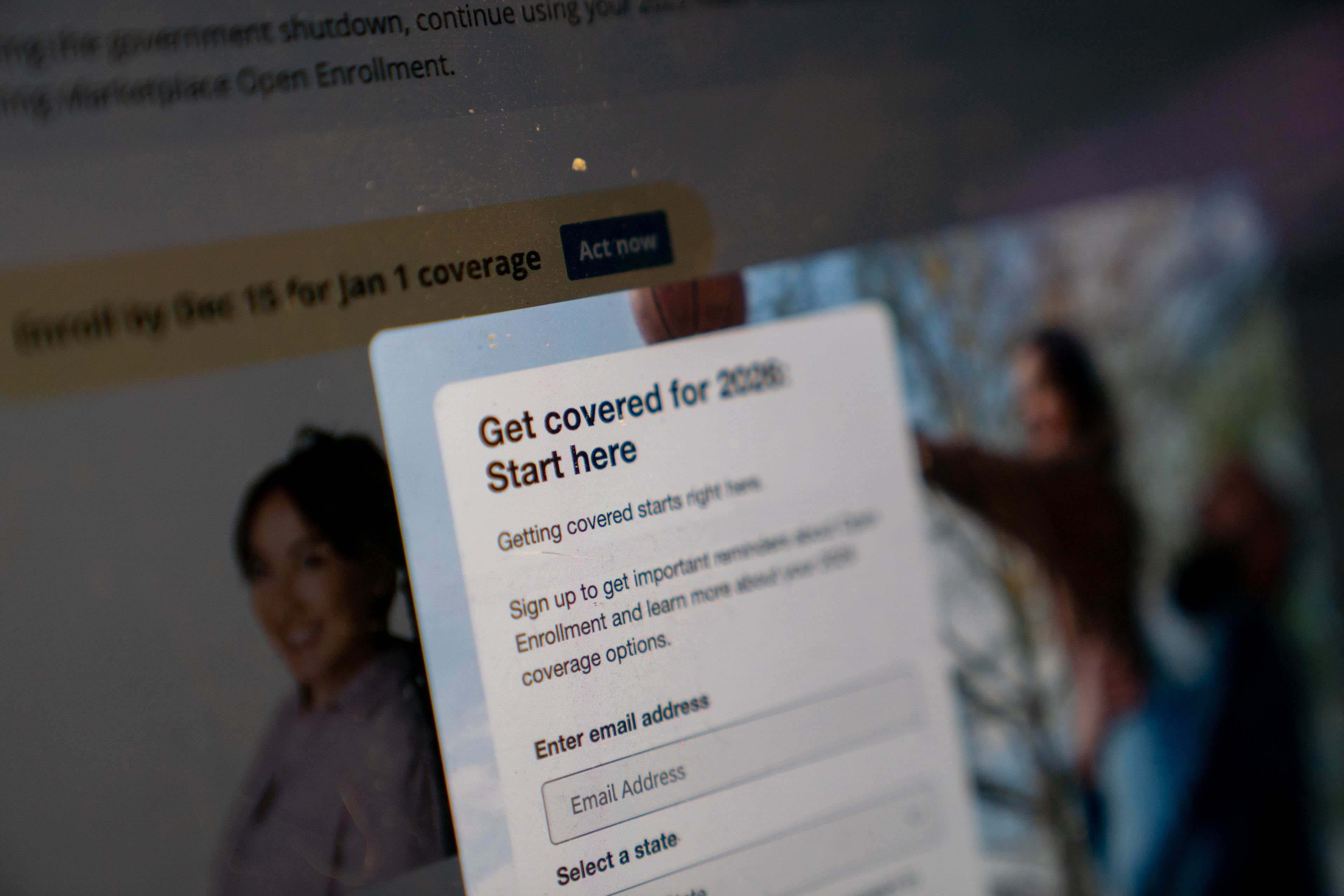
The average Affordable Care Act (ACA) Marketplace deductible experienced the steepest increase in history—growing by 37% or over $1,000, from $2,759 in 2025 to $3,786 in 2026 as enhanced premium tax credits expired, according to a new KFF analysis. After the enhanced tax credits ended, many Marketplace shoppers shifted toward lower-premium, higher-deductible plans.

POLLING on the ACA

Tracking the Public’s Views on the ACA

While overall opinion of the Affordable Care Act has been more favorable than unfavorable since 2017, there remain deep partisan divides. See how public opinion on the ACA has changed from the inception of the law to the present. This interactive tool highlights key moments when views shifted and trends based on party identification, income, age, gender, and race/ethnicity.

Stay informed.

https://js.hsforms.net/forms/embed/292449.js

Stay informed.

https://js.hsforms.net/forms/embed/292449.js

Filter

2,191 - 2,200 of 2,777 Results

  • National and State-By-State Impact of the 2012 House Republican Budget Plan for Medicaid

    Report

    This analysis of the House Budget Plan that was passed in 2012 finds that repealing the Affordable Care Act (ACA) and converting Medicaid to a block grant would trigger significant decreases in federal Medicaid spending and could result in substantial reductions in enrollment and payments to providers compared to current projections. The analysis, conducted by the Urban Institute for the Kaiser Family Foundation’s Commission on Medicaid and the Uninsured, updates a similar study from May…

  • Quantifying the Effects of Health Insurance Rate Review

    Report

    This report from the Kaiser Family Foundation analyzes the effect of government efforts to ensure that insurance premium increases are justifiable and provide value to consumers and small businesses. Rate review programs require insurers in the small group and individual markets to submit proposed rate increase requests to state or federal regulators, who determine if the requests are reasonable. The report finds that one out of every five requests submitted to states in 2011 resulted…

  • Massachusetts’ Demonstration to Integrate Care and Align Financing for Dual Eligible Beneficiaries

    Issue Brief

    Massachusetts is the first state to finalize a memorandum of understanding (MOU) with the Centers for Medicare and Medicaid Services (CMS) to test CMS's capitated financial alignment model for beneficiaries who are dually eligible for Medicare and Medicaid, with enrollment beginning on April 1, 2013. Starting in 2013, CMS will implement a three-year multi-state demonstration to test new service delivery and payment models for people who are eligible for both federal health programs. Massachusetts' demonstration…

  • Medicaid Financing: An Overview of the Federal Medicaid Matching Rate (FMAP)

    Issue Brief

    Since its enactment in 1965, the Medicaid program has used the Federal Medical Assistance Percentage (FMAP) to determine the federal government's share of the cost of covered services in state Medicaid programs. On average, the federal share has been 57 percent. Beginning in 2014, the Affordable Care Act (ACA) establishes highly enhanced FMAPs for the cost of services to low-income adults with incomes up to 138% of the Federal Poverty Level (FPL) who are not…

  • State Demonstrations to Integrate Care and Align Financing for Dual Eligible Beneficiaries: A Review of the 26 Proposals Submitted to CMS

    Report

    The Centers for Medicare and Medicaid Services (CMS) has proposed two models to align Medicare and Medicaid benefits and financing for dual eligible beneficiaries, one capitated model and one managed fee-for-service model. In the spring of 2012, 26 states submitted proposals to CMS seeking to test one or both of these models. CMS is presently reviewing the states' proposals to determine which will be implemented. This background paper examines the contents of the 26 states'…

  • Explaining the State Integrated Care and Financial Alignment Demonstrations for Dual Eligible Beneficiaries

    Issue Brief

    This paper provides an overview of the joint efforts of states and the Centers for Medicare and Medicaid Services (CMS) to develop more integrated ways of paying for and delivering health care to the 9 million people who are eligible for both the Medicare and Medicaid programs. Dual eligible beneficiaries comprise many of the poorest and sickest people covered by either program, and they account for a disproportionately large share of Medicare and Medicaid spending.…

  • A Dose of Reality in the Virtual World of Health IT

    Event Date:
    Event

    The Alliance for Health Reform hosted a September 28 briefing to discuss electronic health records (EHRs), and the progress of the Health Information Technology for Economic and Clinical Health (HITECH) Act. Speakers explored such questions as: How does health information technology fit in the strategy for health care delivery transformation? What role are EHRs playing in care coordination, accountable care organizations and other innovations? What are the special challenges facing solo and small physician practices?…

  • How Small Business Owners Get Health Insurance

    Perspective

    As with any economic policy issue, there has been much discussion of how the Affordable Care Act (ACA) will affect small businesses. But, there’s been very little focus on how the health reform law will affect the owners of those businesses as people. As our recently released Employer Health Benefits Survey shows, small businesses are much less likely than larger businesses to offer health benefits to their workers. Half of businesses with 3-9 workers and…

  • Pulling it Together: How the ACA Can Help The Homeless

    From Drew Altman

    Estimates are that there are approximately 630,000 people who are homeless on any given night in the U.S. -- about two-thirds in shelters and one-third on the street or without real shelter. Several million people are estimated to experience homelessness over the course of a year. About two-thirds are individuals and the balance are in families. These numbers are virtually identical to national estimates we used when I worked intensively on the issue of homelessness in the…



