Affordable Care Act

The ACA Marketplace

2025 KFF Marketplace Enrollees Survey

In 2025, about one in three ACA enrollees said they would be “very likely” to look for a lower-premium Marketplace plan If their premium payments doubled.

Cost Concerns and Coverage Changes: A Follow-Up Survey of ACA Marketplace Enrollees

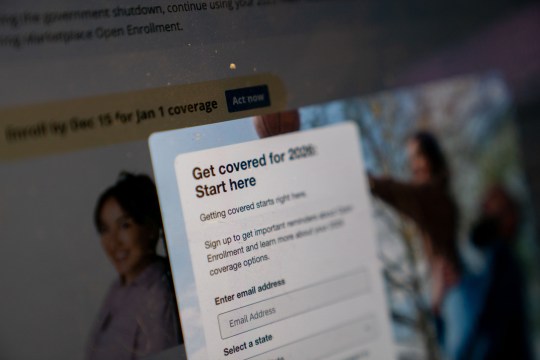
Following the expiration of the enhanced premium tax credits for people with Affordable Care Act (ACA) Marketplace plans, a new KFF follow-up survey of the same Marketplace enrollees KFF surveyed in 2025 finds half (51%) of returning enrollees say their health care costs are “a lot higher” this year compared to last year, including four in 10 who specifically say their premiums are “a lot higher.”

Timely insights and analysis from KFF staff

Subscribe to KFF Emails

Choose which emails are best for you.
Sign up here

Filter

1,281 - 1,290 of 2,769 Results

  • Public Strongly Favors End-of-Life Conversations Between Doctors and Patients, With About Eight in 10 Saying Medicare and Other Insurers Should Cover These Visits

    News Release

    Six in 10 Oppose 'Cadillac Plan Tax' on High-Cost Health Plans Set to Take Effect in 2018, But Cost Savings Argument Can Change Some Opinions Views on the Affordable Care Act Remain Divided: 45% Unfavorable, 41% Favorable As the Centers for Medicare & Medicaid Services prepares to finalize a plan to pay physicians for discussing…

  • What a Break in the Obamacare Battles Could Bring

    From Drew Altman

    Following the Supreme Court’s King v. Burwell decision, the Affordable Care Act could use a break from the intense political heat, though it may not get a long one as the 2016 election season heats up and presidential candidates play to their bases on health care, writes Drew Altman in his latest column for The Wall Street Journal’s Think Tank.

  • The Cost of Care with Marketplace Coverage

    Issue Brief

    This brief and accompanying slides examine cost sharing - deductibles, copayments and coinsurance - in 2015 insurance plans sold on the Affordable Care Act's (ACA) federally-facilitated marketplaces. The analysis looks at out-of-pocket limits, as well as cost sharing for hospital stays, physician visits, emergency room visits, and prescription drugs, for plans across the metal levels (platinum, gold, silver and bronze).

  • Renewals in Medicaid and CHIP: Implementation of Streamlined ACA Policies and the Potential Role of Managed Care Plans

    Issue Brief

    This brief reviews the new renewal requirements for Medicaid and CHIP that are designed to maintain continuity of coverage for eligible individuals. It provides an overview of state implementation of the new renewal policies and considers the potential role managed care plans can play in supporting renewals. Key findings include: some aspects of the simplified renewal policies have not yet been fully implemented due to a range of challenges; some states, including Washington and Rhode Island, have successfully implemented the new policies and achieved high retention rates with more than nine in ten enrollees successfully renewed; and, managed care plans can support renewals by reminding members to renew and providing direct assistance with the renewal process; however, plans identified challenges to supporting renewal.

  • Snapshot of Where Hillary Clinton and Donald Trump Stand on Seven Health Care Issues

    Issue Brief

    Where do the 2016 Presidential candidates, Hillary Clinton and Donald Trump, stand on key health care issues? This snapshot outlines the candidates' positions and policy statements on issues such as health insurance, the ACA, Medicaid, Medicare, the opioid epidemic, prescription drug costs, women's reproductive health, and Zika.

  • “What is CMMI?” and 11 other FAQs about the CMS Innovation Center

    Fact Sheet

    The Center for Medicare and Medicaid Innovation (CMMI), also known as the "Innovation Center," was authorized under the Affordable Care Act with the goals of designing, implementing, and testing new payment and delivery system reform models to address concerns about rising costs, quality of care, and inefficient spending. These FAQs provide an overview of the Innovation Center, as well as details on model performance, beneficiary involvement, and more.

  • Medicaid: What to Watch in 2018 from the Administration, Congress, and the States

    Issue Brief

    Medicaid provides health insurance coverage for about one in five Americans and is the largest payer for long-term care services in the community and nursing homes. Efforts in 2017 to repeal and replace the Affordable Care Act (ACA) and cap federal financing for Medicaid were unsuccessful but help to set the stage for 2018. As 2018 begins, there is a focus on administrative actions using Medicaid Section 1115 demonstration waivers, state actions on Medicaid expansion, and funding for the Children’s Health Insurance Program (CHIP) and other federal health care priorities. Medicaid in 2018 is also likely to continue to be part of both federal and state budget deliberations. Pressures to control the federal deficit may reignite efforts to reduce or cap federal Medicaid spending. In addition, Governors will soon release proposed budgets for state FY 2019 that will need to account for uncertainty around CHIP and Medicaid, changes in the economy and the effects of the recent tax legislation as well as funding for rising prescription drugs and initiatives to combat the opioid epidemic. This brief examines these issues.