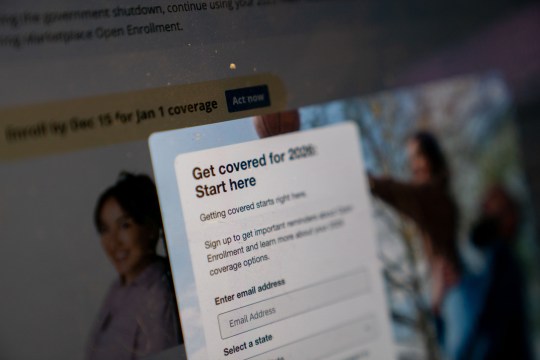
Affordable Care Act

Enhanced Premium tax credits

2025 KFF Marketplace Enrollees Survey

If the amount they pay in premiums doubled, about one in three enrollees in Affordable Care Act Marketplace health plans say they would be “very likely” to look for a lower-premium Marketplace plan.

An image of text is an excerpt form Larry Levitt's quick take which reads, "While the enhanced ACA premium tax credits expire at the end of this year, there is no absolute drop-dead date for extending them. ACA enrollees would welcome premium relief whenever it comes."

There is No Drop-Dead Date for an ACA Tax Credit Extension, But Coverage Losses Will Mount as the Clock Ticks

A discharge petition in the House paves the way for a vote on a three-year extension of the tax credits, which would provide ACA enrollees premium relief whenever it comes. While there is still time to extend the enhanced tax credits, with each passing day, more and more ACA Marketplace enrollees are going to drop their health insurance when faced with eye-popping increases in their premium payments, writes KFF’s Larry Levitt.

Timely insights and analysis from KFF staff

Subscribe to KFF Emails

Choose which emails are best for you.
Sign up here

Filter

1,091 - 1,100 of 2,750 Results

  • Analysis of 2015 Premium Changes in the Affordable Care Act’s Health Insurance Marketplaces

    Issue Brief

    This analysis provides an early look at premium changes for individuals in the health insurance marketplaces, created under the Affordable Care Act (ACA), in major cities across 15 states plus DC. Although premium changes vary across and within states, premium changes for 2015 in general are modest when looking at low-cost plans. On average, individuals will pay slightly less in premiums for the benchmark silver plan in 2015 than in 2014.

  • Connecting Consumers to Coverage: Lessons Learned from Assisters for Successful Outreach and Enrollment

    Issue Brief

    This brief highlights the experiences of Navigators and other Marketplace consumer assistance programs under the Affordable Care Act (Obamacare) in conducting outreach and providing enrollment assistance during the ACA's first open enrollment period. It provides insight into the outreach and enrollment strategies the assisters developed and identifies the keys to successfully overcoming the challenges of the first year. These insights are based on findings from focus groups with assisters in four cities: Miami, Florida; Houston, Texas; Raleigh, North Carolina; and Cleveland, Ohio.

  • Health Care Access and Coverage for the Lesbian, Gay, Bisexual, and Transgender (LGBT) Community in the United States: Opportunities and Challenges in a New Era

    Perspective

    This Policy Insight looks at the challenges and questions surrounding recent policy changes that are expected to increase health insurance coverage and access to care for lesbian, gay, bisexual and transgender (LGBT) individuals and their families, including the impact of the Affordable Care Act (ACA) and the Supreme Court's DOMA decision.

  • Quick Take: An Update on the ACA & HIV: Medicaid Health Homes

    Fact Sheet

    We recently wrote about the different ways in which the Affordable Care Act (ACA) changes pathways to health insurance coverage for people with HIV, and chronicled these specifics, as well as several outstanding questions, in a policy brief.

  • State Exchange Profiles: Missouri

    Other

    Final update made on December 13, 2012 (no further updates will be made)  Establishing the Exchange On November 6, 2012, Missouri voters passed a ballot measure blocking Governor Jay Nixon (D) from establishing an exchange via Executive Order.1 Legislation establishing a state-based health insurance exchange failed in both the 2012 and 2011 legislative sessions.

  • State Exchange Profiles: Montana

    Other

    Final update made on April 19, 2013 (no further updates will be made) Establishing the Exchange In December 2012, Montana’s elected State Auditor Monica Lindeen (D) confirmed that the federal government would operate a health insurance exchange in Montana.

  • State Marketplace Profiles: Michigan

    Other

    Final update made on November 26, 2013 (no further updates will be made) Establishing the Marketplace While Governor Rick Snyder (R) supports the creation of a State-based Marketplace, he acknowledged on November 16, 2012, that without authorizing legislation, he would plan for a State-federal Partnership Marketplace.

  • State Exchange Profiles: Ohio

    Other

    Final update made on March 25, 2013 (no further updates will be made) Establishing the Exchange On November 16, 2012, Governor John Kasich (R) notified federal officials that Ohio would default to a federally-facilitated exchange; however, the state would maintain regulatory control over its insurance industry.

  • State Marketplace Profiles: New York

    Other

    Final update made on September 30, 2013 (no further updates will be made) Establishing the Marketplace After the New York State legislature failed to pass exchange legislation, Governor Andrew Cuomo (D) signed Executive Order 42 on April 12, 2012, to establish the New York Health Benefit Exchange.

  • State Exchange Profiles: Vermont

    Other

    Final update made on July 24, 2013 (no further updates will be made) Establishing the Exchange On May 26, 2011, Governor Peter Shumlin (D) signed into law HB 202, a far-reaching health reform law that puts the state on a path toward establishing a single-payer health care system.