
Early Prenatal Care Use Falls, Gaps Widen for Women of Color, CDC Data Show

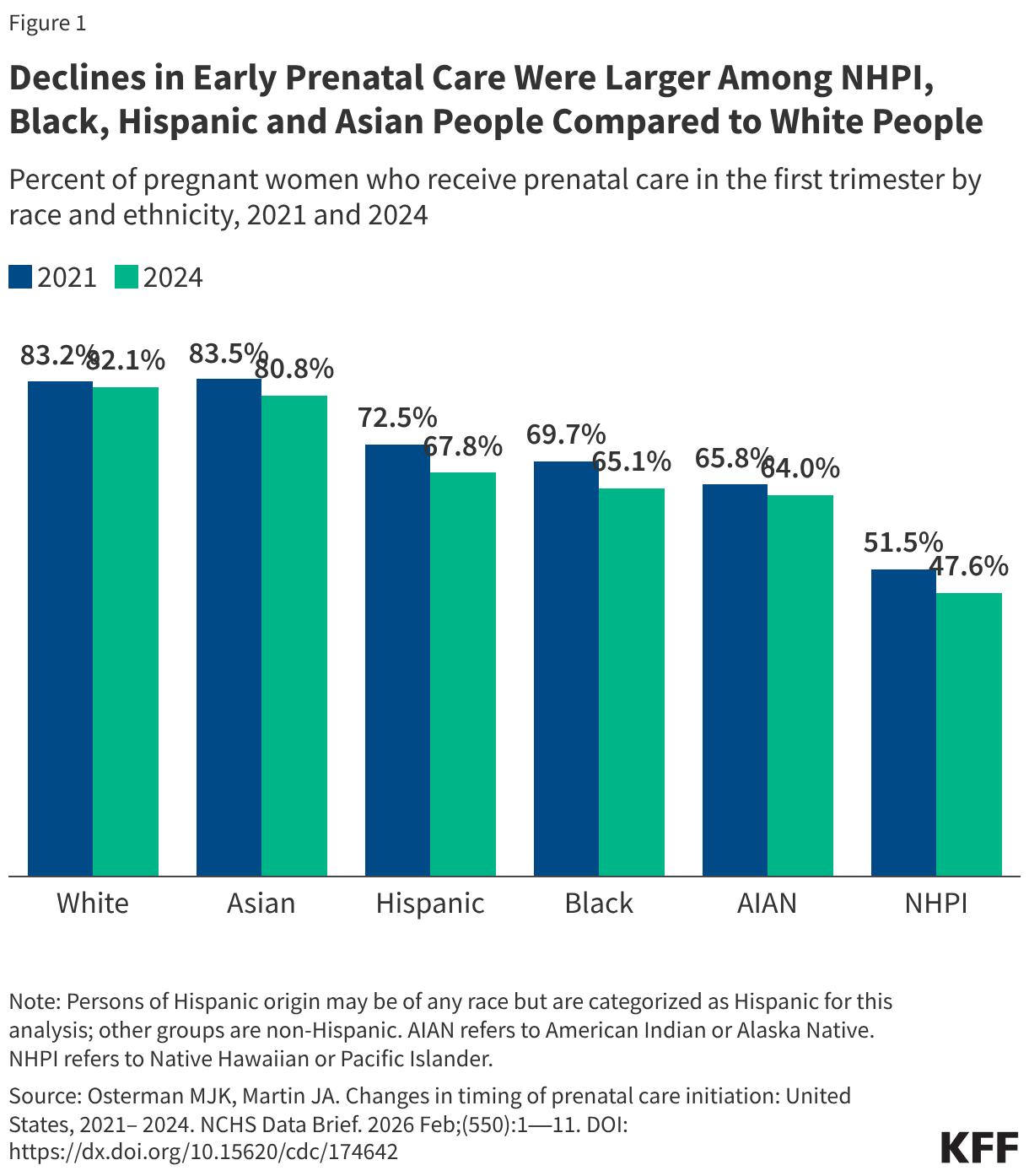
New CDC data show that after increasing between 2016 and 2021, early prenatal care use fell from 78.3% in 2021 to 75.5% in 2024, with the sharpest declines among groups of color. There were particularly large drops among Hispanic (72.5% to 67.8%), Black (69.7% to 65.1%), and Native Hawaiian or Pacific Islander (NHPI) pregnant people (51.5% to 47.6%) (Figure 1). These declines widened existing disparities in receipt of early prenatal care.
Timely prenatal care is important for maternal and infant health. Delayed or missed prenatal care can reduce opportunities to identify complications early and connect individuals to support. These recent trends in prenatal care may worsen existing racial disparities in maternal and infant health in the U.S. that have persisted for decades. Pregnancy-related mortality rates among Black women are over three times higher than the rate for White women. Black, American Indian or Alaska Native (AIAN), and NHPI women have higher shares of preterm births and low birthweight babies. Infant mortality rates among these groups are also higher compared to White people.
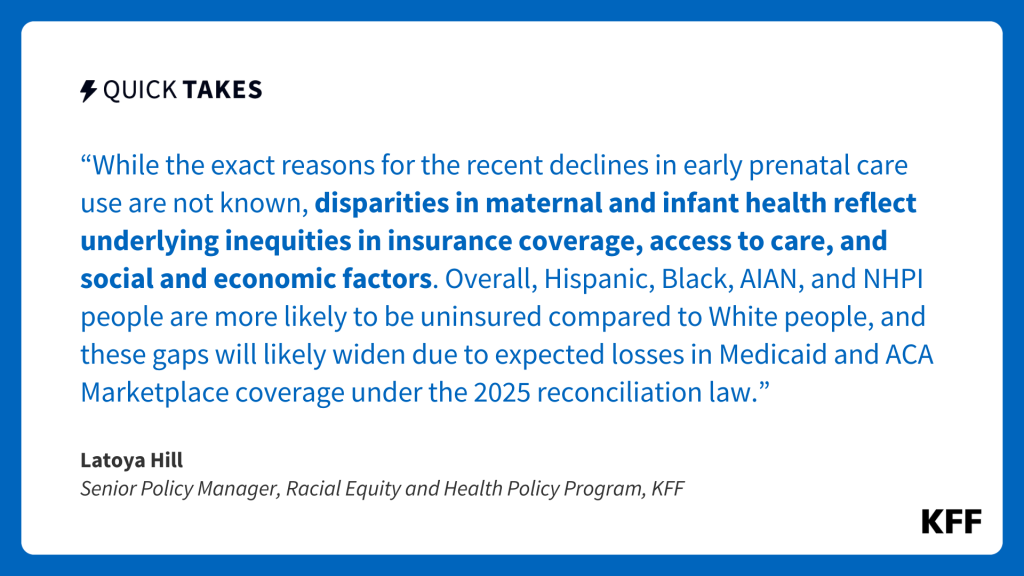
While the exact reasons for the recent declines in early prenatal care use are not known, disparities in maternal and infant health reflect underlying inequities in insurance coverage, access to care, and social and economic factors. Overall, Hispanic, Black, AIAN, and NHPI people are more likely to be uninsured compared to White people, and these gaps will likely widen due to expected losses in Medicaid and ACA Marketplace coverage under the 2025 reconciliation law. Moreover, research finds that, among people with private insurance, Asian, Black, and Hispanic patients spent more out-of-pocket on maternity care than White patients. People of color also face other increased barriers to care including limited access to providers and hospitals and lack of access to culturally and linguistically appropriate care. Several areas of the country, particularly in the South, which is home to a large share of the Black population, have shortages of obstetrics providers. AIAN women also are more likely to live in communities with lower access to obstetric care. Beyond these barriers, research and news reports have raised attention to the effects of provider discrimination during pregnancy and delivery. Moreover, the current immigration policy environment and increased enforcement activity have sharply increased fears among immigrants, leading to increased reluctance to access care.
Bipartisan legislation introduced into Congress would eliminate out-of-pocket expenses for maternity care, which could help alleviate some barriers to prenatal care. Other Congressional efforts such as the Momnibus package of bills seek to address systemic barriers with the goal of improving maternal and infant health outcomes, but have not garnered enough bipartisan traction for passage.