
Abortion Recedes as a Motivator for Democratic Voters Even As Abortion Rights Prevail in Most Ballot Initiatives

For the first time since the Supreme Court overturned Roe v. Wade, abortion was not a major motivator for Democratic voters heading to the polls, but that doesn’t mean that the issue stopped mattering. This year, other issues dominated, and in states where abortion rights were already secure, far fewer Democratic voters said the ballot measure was driving their decision to turn out than said so in 2024. Yet, voters sided with abortion rights in three of the four states where it was on the ballot.
In the first two national elections after the Dobbs decision, abortion was among the most motivating issues for Democratic voters. More than one third of Democrats said it was the single most important factor to their 2022 midterm vote, and a similar share said the same in 2024, AP VoteCast surveys of voters in each election found. Across those two elections, a majority of voters sided with abortion rights in 14 of the 16 statewide votes (Florida’s measure won a majority but fell short of the 60% it needed to pass).
This year, economic worries, the war in Iran, and dissatisfaction with President Trump were the dominant issues motivating voters and the focus of congressional campaigns in competitive races across the country. A large-scale survey of midterm voters from NORC showed that only about one in ten voters nationally named abortion as one of the most important issues facing the country (8% of Democrats, 9% of Republicans). However, measures to protect abortion access in Nevada and Virginia passed by wide margins, and Missouri voters rejected an attempt to repeal the protections they approved in 2024. Only in Idaho, where Republicans outnumber Democrats by more than two to one (60% to 25% of the electorate), did a measure to protect abortion rights fail, leaving the state’s abortion ban in place.
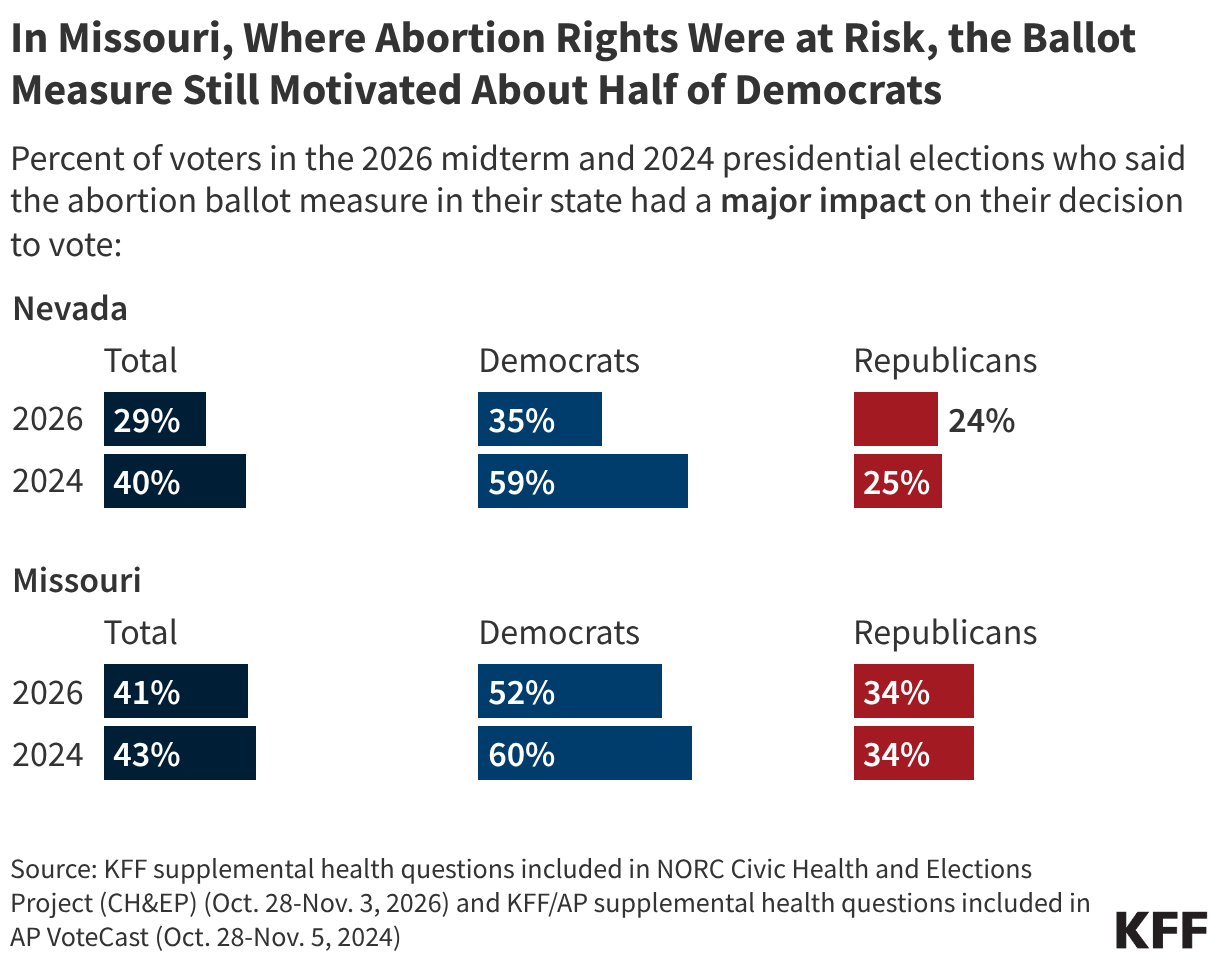
In states where abortion was on the ballot, KFF added supplemental questions about the measures’ impact on voters’ decision to turn out to NORC’s Civic Health and Elections Project survey in 2026 and to AP VoteCast in 2024. Nevada’s Question 6, which enshrines reproductive rights in the state constitution, passed for the second time, as Nevada requires for voter-initiated constitutional amendments. About a third (35%) of Democratic voters in the state said the measure had a “major impact” on their decision to vote this year, down from about six in ten (59%) two years earlier. Among all Nevada voters, the share saying it had a “major impact” fell from four in ten to about three in ten. In Virginia, the impact of the amendment on the decision to vote looked similar. While voters there overwhelmingly voted to enshrine the protections already in state law, only about a third of Democratic voters said the measure had a major impact on their turnout.
In Missouri, the dynamic was different. Two years after adding abortion protections to their constitution, Missouri voters faced a measure that would have repealed those protections and added new restrictions. There, the share of voters who said the measure had a major impact on their decision to vote held steady (41%, compared with 43% in 2024). About half of Democratic voters (52%) said the same, compared with six in ten two years earlier. When abortion access is directly threatened, the issue still brings voters to the polls.
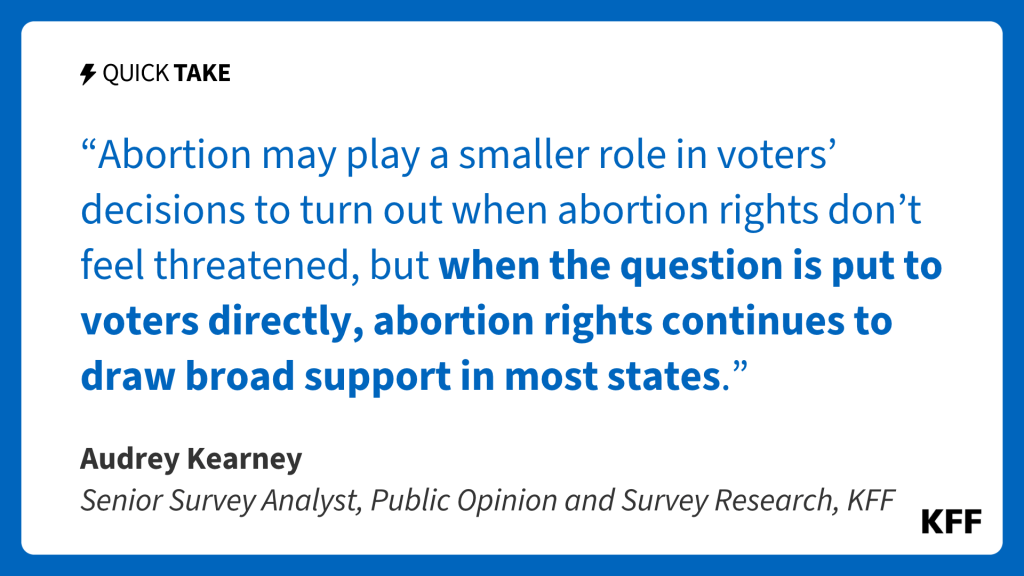
Abortion may not have been the main issue that brought Democratic voters to the polls in 2026, but support for abortion rights remains robust, with about two-thirds of midterm voters nationally saying abortion should be legal in all or most cases. With more states where abortion is legal writing protections into their constitutions, and many states with abortion bans offering no legal pathway for citizen-initiated constitutional amendments, future votes may look less like the high-stakes ones following Dobbs. Abortion may play a smaller role in voters’ decisions to turn out when abortion rights don’t feel threatened, but when the question is put to voters directly, abortion rights continue to draw broad support in most states.