Satellite Sessions and Press Briefings – XV International AIDS Conference

Published: Jun 29, 2004

Kaiser Family Foundation Sessions and Press Briefings XV International AIDS Conference, 2004

Satellite Session: Resource Tracking and Priority SettingUNAIDS is hosting this panel that will feature the work of the UNAIDS Consortium on Resource Tracking. The session will highlight the importance of tracking global HIV/AIDS financial information, review the methodological approaches used to track HIV/AIDS resource flows; and determine gaps in HIV/AIDS financial information and coverage as well as strategies for moving forward. Jennifer Kates, Director of HIV Policy for the Kaiser Family Foundation will moderate the session.– Sunday, July 11 – Satellite Meeting – Room D, 9:30-11:30

Satellite Session: The Power of the Media in HIV Prevention: Hype or Help? Recent Evaluations of Three Media-Based HIV Prevention CampaignsThe Kaiser Family Foundation is co-hosting this panel with YouthNet/Family Health International, MTV U.S. and MTV International with the support of the UNAIDS Interagency Task Team on Young People (IATT/YP). The session will review recent evaluations of three of the leading public education campaigns that focus on HIV/AIDS – loveLife (South Africa), MTV International’s Staying Alive (Europe, Latin America, Asia, and Africa), and MTV USA’s Be Safe/Fight For Your Rights: Protect Yourself (U.S.A.). All three campaigns use the media extensively to build awareness and educate as well as connect individuals to services. The Kaiser Family Foundation is a primary partner in each of the campaigns.– Monday, July 12 – Satellite Meeting – Room E, 18:00-20:00

Leadership Program/Press Availability: Showcasing Media Partnerships – The Global Media AIDS InitiativeThe Kaiser Family Foundation and the BBC World Service Trust are co-organizing this session to highlight the work of the Global Media AIDS Initiative, an initiative of the UN, UNAIDS and the Kaiser Family Foundation under the auspices of UN Secretary-General Kofi Annan. Kathleen Cravero, Deputy Director of UNAIDS will moderate this session which will feature organizers of media campaigns underway around the world, focusing on efforts in India, Russia, and China.– Tuesday, July 13 – Leadership Program – Room O, 10:30-12:00; to be followed immediately by press availability with panel participants, 12:15-13:00 – Location TBD, Media Center.

Press Briefing: The Global Media AIDS Initiative – New HIV/AIDS Public Education CampaignsThe Global Media AIDS Initiative will announce new media efforts to address HIV in Russia, India, and China and new resources made available to all media companies to combat HIV/AIDS. Participants at the press conference will include: Peter Piot, Executive Director, UNAIDS, Kathleen Cravero, Deputy Executive Director, UNAIDS, Matt James, Senior Vice President at the Kaiser Family Foundation, Bill Roedy, President, MTV Networks International, and Richard Gere.– Tuesday, July 13 – Press Conference – Location TBD – Media Center 12:15-1:00

Poster Session: Love Them Enough to Talk About Sex: Implementing a Campaign Targeted at Helping Parents Talk to their Adolescents about HIV, Sex and Other Reproductive Health IssuesThis poster session will focus on the role of parents in youth HIV prevention programs, using lessons learned from the “Parents’ Campaign” of loveLife. loveLife is South Africa’s national HIV prevention program for youth.– Wednesday July 14, 2004, 12:00 – 14:00, Hall 3 Track E

Satellite Session: Towards an HIV-Free Generation: Lessons and Experiences From Large-Scale Youth HIV/AIDS Prevention Programming ResearchHosted by the UN Foundation, Kaiser Family Foundation, the African Youth Alliance and the UN Interagency Task Team on HIV/AIDS and Young People, this session will review leading prevention efforts, address ways to scale up prevention efforts, and ways to measure the effectiveness of prevention programs.– Tuesday, July 13 – Satellite Meeting – Room J, 20:15-22:15

Leadership Session: At the Crossroads: Accelerating Youth Access to HIV/AIDS InterventionsHosted by Inter-agency Task Team on HIV/AIDS and Young People in partnership with the Kaiser Family Foundation and Family Health International, this session will examine the role of health service access and the importance of a supportive cultural, social and political environment for delivery of HIV/AIDS prevention, treatment and care programmes for adolescents and youth.– Wednesday, July 14 – Meet the Leaders – Room N, 14:00-15:30

loveLife Exhibition Booth:

loveLife is South Africa’s national HIV prevention program for youth. Organized under the auspices of a national advisory board of leading South Africans, loveLife combines a high-powered media campaign with nationwide adolescent sexual health services, and community-level outreach and support programs for youth. Staffed by young people who are actively involved in the loveLife program, they will offer substantive information about the program as well as share publications and video presentation of the program including PSAs, and Internet hook-up to the loveLife website. loveLife receives funding from the Kaiser Family Foundation, the Bill & Melinda Gates Foundation, The Global Fund for HIV/AIDS, TB and Malaria, and the South African Government.– Booth number 144, Sunday July 11 – Thursday July 15.
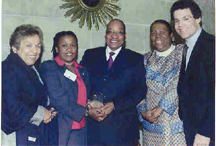
Mercy Makhalemele Awarded Prestigious 2004 Mandela Award for Health and Human Rights

Published: Jun 29, 2004

Prestigious Mandela Award for Health and Human Rights Awarded to First South African Woman to Publicly Campaign Against the Stigma of HIV/AIDS

WINNERPHOTOGRAPH.jpg

(From left to right: Dr. Donna Shalala, President of the University of Miami and Former Secretary of Health and Human Services; Mercy Masias Makhalemele, Award Recipient ; Jacob Zuma, South Africa Deputy-President; Naledi Pandor, South African Minister of Education; Dr. Drew Altman, Kaiser Family Foundation President)

The 2004 Nelson Mandela Award for Health and Human Rights was awarded to Mercy Makhalemele at special ceremony in Johannesburg on July 6, 2004. The Award, established by the Henry J. Kaiser Family Foundation in 1993 at the behest of Nelson Mandela, annually recognizes outstanding commitment and leadership in the effort to improve the health and health care of disadvantaged South Africans.

Ms. Makhalemele is recognized for her courageous and dedicated personal efforts to break the stigma of HIV/AIDS in advancing the rights of people affected by HIV/AIDS to treatment, care and support. Ms. Makhalemele in 1993, was the first African woman to publicly declare her HIV positive status after being infected by her husband and losing her infant child to the disease. Since then Ms. Makhalemele has played a leading role in all national efforts to mobilize appropriate levels of care and support for families affected by HIV/AIDS, and efforts to secure universal access to AIDS treatment. Ms. Makhalemele was a founding member of the National Association of People Living with AIDS and the Treatment Action Campaign, and she serves on the National Advisory Board of the national loveLife HIV-Youth campaign.

Announcing the Award, Kaiser Family Foundation president, Dr. Drew Altman said: “Mercy Makhalemele has displayed incredible personal courage in defying the public stigma associated with HIV/AIDS to advance the rights of all affected by the epidemic.”

“Her efforts are all the more exceptional because she has never sought the limelight or any credit for herself, while also having to deal with terrible personal tragedy,” he added.

A statement from Mr. Mandela’s office said: “Mr. Mandela is very pleased to recognize Mercy Makhalemele’s extraordinary personal courage and sacrifice in the struggle against HIV/AIDS. The public stigma associated with HIV/AIDS is a major barrier in effectively preventing and managing the epidemic and Mr. Mandela urges all South Africans to heed the selfless example of Mercy Makhalemele in fighting the epidemic.”

The 2004 Mandela Award was presented at a special ceremony in Johannesburg by former secretary, U.S. Health and Human Services, Donna E. Shalala.

Nominations for the Award are reviewed by a distinguished selection committee and are subject to approval by Mr. Mandela.

The Award will entitle the recipient to travel to the United States to work on issues aimed at improving the health of South Africans. An additional contribution of $10,000 will also be made to an organization designated by the recipient in support of efforts benefiting goals and objectives of the Award.

Previous South African recipients of the Award include Rt. Rev. Desmond Tutu (1997 Honorary Award), Justice Edwin Cameron and Professor Jerry Coovadia (2000), Professor James McIntyre and Dr. Glenda Gray (2002), and the Treatment Action Campaign (2003).

More information about the Nelson Mandela Award for Health and Human Rights.

Poll Finding

Seventeen Magazine and Kaiser Family Foundation Release Survey of Teens About Birth Control and Protection

Published: Jun 29, 2004

As part of an on-going public information partnership called SexSmarts, seventeen and the Kaiser Family Foundation conduct nationally representative surveys of teens 15 to 17 on issues related to their sexual health. The latest in the series examines their knowledge and attitudes about birth control and protection among adolescents. It covers a variety of issues related to contraception decision-making among adolescents, including how much they know about different methods and personal use among those who are sexually active.

Survey

Toplines

Poll Finding

Seventeen Magazine and Kaiser Family Foundation Release Survey of Teens About Birth Control and Protection — Survey

Published: Jun 29, 2004

As part of an on-going public information partnership called SexSmarts, seventeen and the Kaiser Family Foundation conduct nationally representative surveys of teens 15 to 17 on issues related to their sexual health. The latest in the series examines their knowledge and attitudes about birth control and protection among adolescents. It covers a variety of issues related to contraception decision-making among adolescents, including how much they know about different methods and personal use among those who are sexually active.

Survey (.pdf)

The New Medicare Drug Benefit:  Potential Effects of Pharmacy Management Tools on Access to Medications

Published: Jun 29, 2004

The New Medicare Drug Benefit: Potential Effects of Pharmacy Management Tools on Access to Medications

This report describes the pharmacy benefit management tools that will be available to private plans administering the new Medicare drug benefit, including formularies, the definition of categories and classes, and cost sharing requirements. The authors conclude that substantial flexibility given to plans to design management tools could have significant implications for beneficiaries’ access to needed medications and out-of-pocket spending.

Issue Brief (.pdf)

The New Medicare Prescription Drug Law:  Issues for Dual Eligibles with Disabilities and Serious Conditions

Published: Jun 29, 2004

The New Medicare Prescription Drug Law: Issues for Dual Eligibles with Disabilities and Serious Conditions

The new issue paper discusses the challenges the new Medicare drug program faces in meeting the needs of dual eligible individuals with disabilities, who tend to have extensive, complex and varying needs. The brief examines four key questions about how the new benefit will serve dual eligibles with disabilities and profiles some individuals from this population for whom prescription drugs are vital.

Issue Paper (.pdf)

Issues Surrounding the “Clawback” or State Contributions Towards Medicare Drug Coverage:  A Conference Call Discussion

Published: Jun 1, 2004

Issues Surrounding the “Clawback” or State Contributions Towards Medicare Drug Coverage: A Conference Call Discussion

As part of the Medicare Prescription Drug, Improvement, and Modernization Act (MMA) of 2003 signed into law last year, Congress included a financing provision that requires a monthly payment from each state to the Medicare program beginning in January 2006. MMA’s clawback provision will recapture most of the savings that states would realize when Medicare assumes prescription drug costs for dual eligibles.

The Kaiser Commission on Medicaid and the Uninsured and the National Association of State Medicaid Directors are sponsoring a conference call to discuss the clawback’s implications on states, the federal government, and low-income Medicare beneficiaries, as well as to answer questions.

The conference call-in number is (800) 353-6469. Password: KCMU. Please call a few minutes early to secure a line (let the phone ring) to get through to the call.

Agenda

Speaker Biographies

Formula for Determining Monthly State Clawback Payments

Barbara Edwards’ Presentation

Issue Brief – The “Clawback:” State Financing of Medicare Drug Coverage

Issue Brief – Medicaid Prescription Drug Spending and Use

Medicaid Prescription Drug Spending and Use

Published: Jun 1, 2004

This issue paper provides the latest data and trend analysis on Medicaid prescription drug spending and utilization. In 2002, Medicaid programs spent $30 billion for prescribed drugs.

Issue Paper (.pdf)

U.S. Government Funding for Global-HIV/AIDS Through FY 2005

Published: Jun 1, 2004

Policy Brief: U.S. Government Funding for Global HIV/AIDS Through FY 2005

To help understand U.S. budget trends and priorities for global HIV/AIDS, the Kaiser Family Foundation has prepared a new policy brief, “U.S. Government Funding for Global HIV/AIDS Through FY 2005.” It provides detailed data on funding through FY 2004, and for the FY 2005 budget request. FY 2004 marks the first year of funding for the President’s Emergency Plan for AIDS Relief (PEPFAR), a five-year $15 billion initiative to address HIV/AIDS, TB, and malaria in the developing world.

Policy Brief (.pdf)

Olmstead at Five:  Assessing the Impact

Published: Jun 1, 2004

This report examines the impact of Olmstead v. L.C. five years after the United States Supreme Court’s 1999 landmark decision. The analysis brings together new research with a synthesis of research undertaken over the past five years, to help policymakers and program administrators understand the meaning of the Americans with Disabilities Act for health programs in Olmstead’s aftermath.

Report (.pdf)

Related Olmstead Materials