
Workers Now Pay $7,471 on Average Annually for Family Health Coverage, Up 9% or $621 from 2025, Benchmark Employer Health Benefits Survey Finds
Average Total Family Premiums, Including Employer’s Share, Rose 5% To $28,303
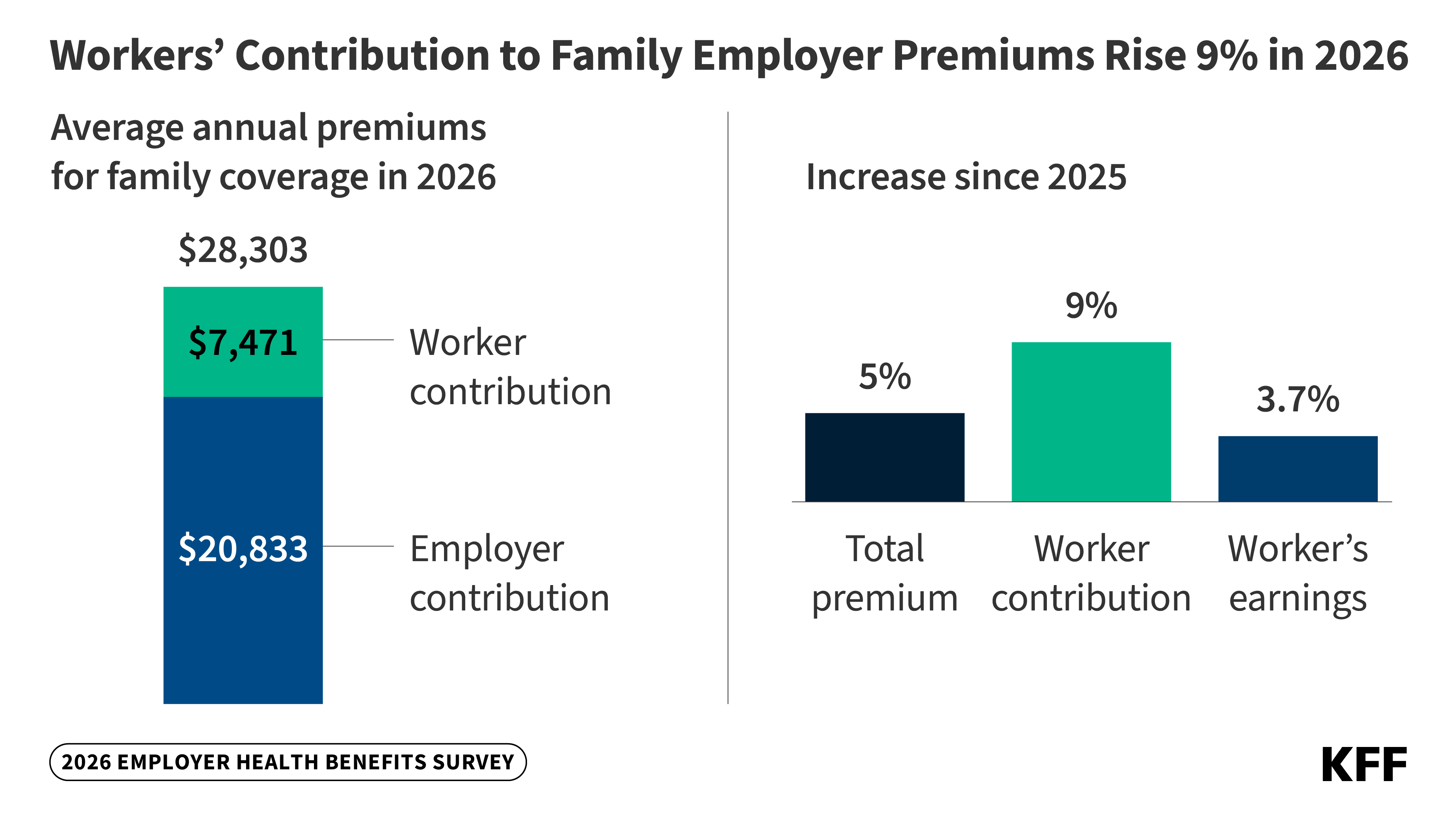
Workers are paying on average $7,471 annually toward the premiums for employer-sponsored family health benefits this year, which is up 9%, or $621, from 2025, per KFF’s annual benchmark health benefits survey of large and small employers.
The burden of family premiums hits particularly hard for workers at small firms with less than 200 workers. On average, covered workers in small firms are contributing $9,687 annually toward family coverage this year. That’s $2,847 more than workers in large firms with at least 200 workers.
Including the employers’ share, total annual premiums for family coverage now average $28,303, up 5% or $1,310 from 2025. Over the same period, wages rose 3.7% and general inflation rose 2.7%, though inflation has been higher in recent months.
Since 2021, family premiums and workers’ contributions have risen at similar rates (28% and 26%, respectively) and are comparable to the increase in wages (27%) and inflation (24%) over the same period.
Among large firms with 200 or more workers, most say that they increased costs for workers to address higher projected health costs, including by increasing the share of premium that workers pay (44%) and by increasing deductibles or other cost-sharing for most services (21%).
“We have been hearing a lot about Affordable Care Act and Medicaid cuts. Now add a 9% increase in what workers with employer coverage paid toward family premiums in 2026 to the reasons voters are so concerned about their health care costs,” KFF President and CEO Drew Altman said.
Almost 157 million Americans under age 65 rely on employer-sponsored coverage, and the 28th annual national survey of more than 1,900 employers with at least 10 workers provides a detailed picture of the trends affecting it.
Among this year’s key findings:
- Average deductible nears $2,000. Among workers who face an annual deductible for single coverage, the average this year stands at $1,955, similar to the $1,886 average in 2025. Covered workers at small firms face much larger average deductibles than workers at larger firms ($2,624 vs. $1,772).
- Limited GLP-1 coverage for weight loss. About one in five (18%) large firms cover GLP-1 drugs specifically for weight loss, often with restrictions such as requiring participating in a lifestyle program or meeting with a clinician. Most who currently cover the drugs for weight loss say it has had either a significant (29%) or moderate (27%) impact on their prescription drug spending. Few employers who don’t cover the drugs for weight loss say that they are either very (1%) or somewhat (13%) likely to begin offering them in the next year.
- In-vitro fertilization coverage. About a quarter (27%) of large firms provide coverage for in-vitro fertilization (IVF) services, unchanged from 2024.
- Mail-order prescription drug alternatives. A third (33%) of employers with at least 50 workers offer enrollees access to lower-cost mail-order generic drugs through venders such as GoodRx, Single-Care, or Mark Cuban Cost Plus. In addition, 9% participate in an international prescription drug purchasing service, such as ScriptSourcing or CanaRx, to access discounted maintenance medications from outside the U.S.
- Drug rebate and utilization information. About half (49%) of large firms say that they get sufficient information about rebates and other payments paid by drug manufacturers to their insurer, administrator, or pharmacy benefit manager (PBM). Two-thirds (65%) say that they get sufficient information about drug utilization.
- On-site and near-site clinics. A quarter (24%) of employers offering health benefits with at least 50 workers provide health services by contracting with clinics either on site or near their site. These clinics treat both work-related and non-work-related conditions.
- Few employers help workers buy ACA coverage. Despite media and policy interest, about one in ten employers (11%) not offering health benefits are using Individual Coverage Health Reimbursement Arrangements (ICHRAs) to help workers purchase coverage through the Affordable Care Act (ACA) Marketplaces or elsewhere on the individual market.
The complete 2026 Employer Health Benefits Survey is now available online, along with a summary of findings, key charts, and an interactive tool highlight premiums over time for different sizes and types of employers.