
The Business of Health with Chip Kahn
Is AI Better for Patients?
June 2, 2026
Audio
About this Episode
Episode 6, AI Series: Is AI Better for patients? What is changing on the ground? Chip talks with Dr. Patrick Conway, Chief Executive Officer of Optum, a health services and technology business under parent company, UnitedHealth Group. They discuss how to ensure the health care industry’s use of AI serves patients first, particularly when the same company bears financial risk and builds the AI that decides who gets care. They also discuss whether use of AI can make value-based care the dominant payment framework, after two decades of policymaker support for the model.
The Host
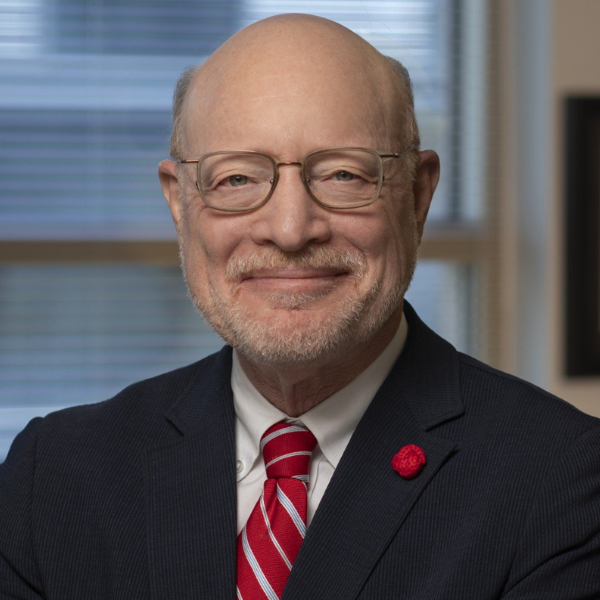
Charles N. Kahn III is a senior visiting fellow at KFF. He is also a visiting senior fellow at the American Enterprise Institute and a nonresident senior scholar at the University of Southern California’s Schaeffer Center for Health Policy & Economics. He serves as co-chair of the international Future of Health collaborative.
Guest
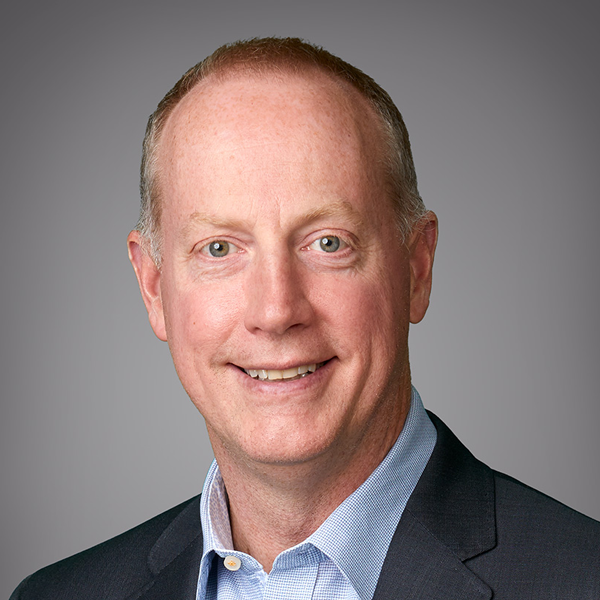
Dr. Patrick Conway is the Chief Executive Officer of Optum. He served previously as CEOs of Optum Health, Optum RX, and Care Solutions at Optum. Before joining Optum, Dr. Conway was president and chief executive officer of Blue Cross and Blue Shield of North Carolina. He also previously served as Deputy Administrator for Innovation and Quality at the Centers for Medicare and Medicaid Services and as director of the Center for Medicare and Medicaid Innovation and the agency’s Chief Medical Officer. Before joining CMS, he oversaw clinical operations and quality improvement at Cincinnati Children’s Hospital Medical Center.
Transcript
AI Usage Disclosure: This transcript was created with assistance from AI tools. It was reviewed and edited by KFF Staff.
Chip Kahn: Now we move from the health system actually deploying AI inside its hospitals to the health care company doing it across the full stack. One organization bearing the financial risk for care, delivering that care, building the AI that informs coverage decisions, and running the analytics that tie it all together. My guest today is Dr. Patrick Conway, CEO of Optum. No one else in American health care has occupied all four of Patrick’s positions. Regulator at CMS; payer at Blue Cross, North Carolina; pharmacy benefit operator at Optum Rx; and now the head of Optum itself. He designed the value-based payment models. Now he runs the platform meant to deliver them at scale. UnitedHealth is spending at least $1.5 billion on AI. But Patrick will walk us through what is changing on the ground: prior authorizations cleared in seconds; claims are adjudicated while the patient is still in the exam room; and, a true outcomes orientation. At the heart of this conversation, two questions sit alongside the proof points. First, when the same company bears financial risk and builds the AI that decides who gets care, how do you ensure the technology serves the patient first? And second, after two decades of policymaker support for value-based care, particularly in Medicare, can integration and AI finally make it the dominant payment framework? Below all of this sits the test each episode in this series returns to: is the patient better off? Not in the aggregate, but when receiving care in the examination room or the hospital bed. Let’s get started. Patrick Conway, welcome to KFF’s The Business of Health with Chip Kahn.
Patrick Conway: It’s great to be here, Chip.
Chip Kahn: This is great. Such a pleasure. We’ve worked together over the years and known each other for a long, long time and it’s just great to have you here. Before we get into AI and healthcare, although I think this question may touch on that, you were one of the key people that is responsible for designing value-based care and value-based payment models at CMS. Later, you ran the North Carolina Blue Cross plan and now you run the largest integrated health services company within the largest private health insurer in the world. What have you seen from the inside at Optum that you could not see from your earlier vantage points?
Patrick Conway: So, a few thoughts, Chip, and appreciate you having me in the discussion. At a high level, and then I’ll come back to the different stages. You need predictability, you need incentives aligned with total cost of care, quality and experience. And you need the ability to innovate and drive care at the front line on behalf of patients. So then let me take you through the stages that you alluded to and reflect on them. I started in CMS, I was in government twice, the second time through 2011, and then ran the CMS Innovation Center after serving as Chief Medical Officer. As you remember, we had almost zero percent of payments in value-based care models tied to total cost of care quality experience. At that time, you’re launching the ACO program, you’re launching these new CMMI models. The question was, would people participate? Participation went up, we got to over 30% participation by the end of 2016, ahead of schedule. It was a target President Obama had set. Then you’ve seen phases in the public sector, okay, now let’s move to two-sided risk. Now let’s do mandatory models when necessary. Now let’s figure out what’s working and expand those models, and you know, iterate on models. So that’s sort of the public sector side. You know, as I moved into the private sector, at Blue Cross, North Carolina, we actually went from almost 0% of payments in those kinds of models to 70 plus percent in about 18 months. And it was built on some of the lessons—I didn’t plan this out—but from the Innovation Center of partnering, of sharing data, of predictability, of saying, you know, fee for service is not what we want to do. We want to move to this value-based care model that’s integrated. And then at Optum, as you allude to, I’m sure we’ll talk more about this, you know, we have the ability of having the people, resources, and technology to deliver value-based care at scale. So, we serve millions of people across the country. Hospitalizations go down, most models in the high teens, less hospitalizations, unplanned ER visits go down, total cost of care improves significantly, quality 4-star plus in the vast majority of models and NPS or patient experience usually in the 80s to 90s so very high in these models. And I know you like data and stories I’ll share. You know, you see a 91-year-old in her home—this is a visit I went on—used to be hospitalized the year before, 10 plus times. Now has a primary care doc, a nurse care team, people have helped her with food delivery, helped modify her home, addressing her physical, mental, social, and financial needs. Now been hospitalized 0 times and hugs the doctor when she walks in the door. Not me, I am a doctor, but it was a real doctor with me, from our team. And that’s what it’s about, right? That’s better care for patients. So, when we get it right, it delivers exactly what we want for our own loved ones in the health system.
Chip Kahn: So, I think you just described the secret sauce. But how do you scale that, and how does this kind of pay-for-performance, value-based care become the prominent dominant payment scheme?
Patrick Conway: It’s interesting, this week I was in D.C. and the West coast so saw much of the country, and Massachusetts. Dr. Oz talked about this on a panel about, you know, he wants value-based care to be the model in the U.S. He wants 100% of patients and people in accountable care relationships. By the way, this is a bipartisan idea. It’s been across administrations. The good news is I think we’re getting much closer. So, you have over 50% of patients nationally in these models. It’s heading towards 50% and sort of two-sided risk models. So, I think we’re moving. You know then I think how do you get there? It’s going to be public private collaboration. It’s going to be continuing getting the incentives and the various payment incentives right. But that’s not all you need. You also need the technology, the clinical practices, the workforce, which you know is often organizations of a certain scale and capability to deliver those services. We may talk about rural today. That’s something we think about a lot now. How do we scale these models to rural settings as well so that we at Optum are serving the whole population. And you know, it’s not going to be one organization including Optum. It’s going to be a set of public private sector actors that are all moving in the same direction.
Chip Kahn: I have a feeling technology is going to be part of this. So, let’s now go to AI and UnitedHealth Group is spending a great deal on AI. You’ve got hundreds and hundreds of use cases that I understand you’re focused on and trying to operationalize. How is that investment going and what is the evidence that it will be transformative? How are you going to make it transformative?
Patrick Conway: Look, we think AI is going to completely transform our business. You know we talk about if we don’t transform and disrupt ourselves, somebody else will. So then let me describe; we’re now scaling use cases. So, I think we’re at the sort of next phase of the journey. I’ll put them in categories. You’ve got what I’ll call administrative type functions. So, think, call, claim other things. How do you make the system work better? We take about 300 million calls in UnitedHealth Group. We think that could be 150 million or less in the next 12 to 18 months. So many of these investments we think will get an in-year return and then a long-term return. Let’s go to another area. Products and services. So, Optum Real, which is real time settlement of claims. The payer agrees what they’re going to pay, based on what we’ve digitized and used AI on, the benefits, the provider, we’ve pulled the clinical data and made sure we’ve met all the criteria. I think 99 plus percent approval at the point of care. And the patient knows what their copay is and can settle that right away. It’s how the system should work. So, we’re scaling that across payers and providers. You know, also things like ambient listening combined with AI technology. So, the clinician could just practice and then it’ll automatically or autonomously code for them so they’re not spending as much time with documentation. One of the stats I loved: some of this work has saved over 2 million minutes of clinician documentation time just in our system. So let them get back to patient care. I know, you know, I’m still a practical physician. I use the EHR on weekends in the hospital. and you want to focus on the patients, right? Last clinical, I just, I know I’ll try not to be too long winded, but the clinical example, I’ll give that I think we’re in the early stages of. My first week as an attending. I finished residency at Boston Children’s. I go to Children’s Hospital Philadelphia. I get a patient who had been referred all around America, people trying to figure out the diagnosis, about a thousand-page chart. I get to page 487 and I’m like, oh my gosh, this kid has a rare metabolic disorder. Which ended up being the case. That took hours of reading. In an era of AI, that should be queued up to me or any other clinician anywhere in the country. You know, the nurse practitioner in rural America. So instead of two years, that child’s diagnosis may be done in minutes. That’s the kind of potential impact the technology could have.
Chip Kahn: On the paperwork side, in a sense, the sort of rift between providers and payers. What can it do with prior authorization? I know that you’re applying it there and you’re trying to cut back on the number of times that prior auth is required. What do you see the developments there that are going to bridge some of these gaps we have right now?
Patrick Conway: First, as you alluded to, we are both across UnitedHealthcare and Optum, eliminating prior authorization whenever possible. So, decreasing the prior authorization burden, if you will. And then we’re standardizing and using electronic tools. So let me give you a couple examples. At Optum Rx, our pharmacy business, we once again connected all those benefits using the pharmacy rails into providers. The median prior authorization team had been eight hours, sometimes days or weeks for medicine, we got it down to less than 30 seconds. So, it’s auto approved, by the way, if the clinician, the prescriber, you need one more piece of information, which is usually why prior authorization gets caught up because you don’t have all the documentation. It tells them right then so they can enter the information and get it approved. So that’s how a system should work. We’re also doing that for medical as well through Optum Insight. So, you get approval rates that are very high immediately and they’re in the clinical workflow, which you know, that was prior auth’s original intent, right? Get the right treatment to the right patient. That we can all stand behind. But we have to have a system that makes it fast, standardized, and seamless for the patient and the clinician.
Chip Kahn: In terms of your 91-year-old patient example, how broad based is that in terms of having that integrated platform, at least in your system right now? I mean, are most of the patients getting that total coordination integration or is it just being experimented with? Where are you with that?
Patrick Conway: Yeah, so in our Optum Health platform, integrated value-based care, we serve about 20 million patients today. It’s, by the way, across about 100 payers. It’s national, so it’s large scope. You know, as you alluded to, there’s obviously more Americans in our health care system so there’s more room for growth or expanding the model. But our integrated value-based care platform is impacting millions and millions of people all across the country. And to be clear, Medicare Advantage and duals are the most in that platform. But we also serve Medicaid and commercial on the platform. It’s across all lines of business. As I said, sometimes people forget sometimes we actually serve about 100 payers. So, it’s UnitedHealthcare and all the big nationals, but also regional blues and other health plans as well.
Chip Kahn: Are you using data to locate those patients? What kind of systems do you have?
Patrick Conway: We’re an evolution, transformation, whatever verb you want to use as well. So, we do, and I think those are getting better over time. So, let me try to give you an example. In our various clinics and specialties, we’re trying to make sure we match demand, so patient demand for appointments and things like that to supply. So, we get people to the right clinician quick enough. Actually, mental and behavioral we haven’t talked about yet today, very important. We have about 4,000 mental and behavioral health clinicians. So, psychiatrists, therapists and others. Obviously huge demand. We use technology to try to match that demand to the supply and including through virtual care, also in person, but a large percentage virtual. The last thing I’ll say on sort of clinical pathways in our Optum Insight, Optum Real business, and Optum Health. As we think about guiding patients, we’re increasingly saying, you’ve got a patient with a clinical need. How do we navigate them to the right place? That could be an Optum clinician, that could be a hospital, that could be wherever the right place is. So how to use data and technology and partnerships to sort of find that clinical need earlier and then guide them to the best clinical pathway for them.
Chip Kahn: You know, you’re big. In a sense, there are a lot of people within the whole umbrella, where it’s the same company bearing the risk for the care that bills the AI that informs the coverage decisions. How do you ensure that AI serves the patient first and is seamless for the provider? And what does your sort of AI review board or however you process things, actually do to give confidence to the answer?
Patrick Conway: We do have an AI review board that reviews the technology and its principle is sort of patient quality safety first. Since I’ve been at Optum, I’m in my seventh year now in all the various businesses, and I’ve run different businesses over time, now I just started my second year as CEO of Optum. We always start with a patient story. So, you center on the patient, the clinical first. So, we actually did it yesterday, our monthly business review. It was a child with multiple chronic conditions that we care for in the home. And we care for her almost every day of her life because we have a big home health hospice business as well. You know, that’s why you do the work. Then as you do, you take that principle into AI and you’re always clinical first. As I said, we’re using it for clinical approvals, automatically. You know, if it’s changing direction of care or saying we don’t think the therapy is needed. We have a principle that a clinician must review that—a human doctor, nurse practitioner, or other—the appropriate clinician. Because where we are now on the paradigm, we think that’s important that a clinician has the final say on approvals, auto approval by the technology for anything that is a redirection of care. We think that final decision, aided by AI and technology, but should be made by a clinician.
Chip Kahn: With that principle though, and not focusing on one, United or other companies. There is litigation, legislative activity in this whole area around AI-driven coverage decisions. How do you engage? And in some ways, you just did it. But public concern about AI being used to limit access. How do you assure people? And maybe also what kind of guardrails or public policy do you think are appropriate here?
Patrick Conway: Yeah, so first on us, I’d go back to the principles. I said, so what’s the review of the technology overall for patient quality first? And then I think principles like I described, auto approval, making the system faster, the technology can enable that. Redirection of care, or saying that, you know, this treatment is not approved, we think a clinician, you know, typically a doctor, has the final say. Then how do we assure people? I think it’s around transparency. I don’t know if we’re going to talk about Optum Rx today, but I’ll just—we put out the culmination of a series of work on Monday that is 100% transparency, 100% rebate pass through, 100% transparency down to the group purchasing organization, cost-based reimbursement for all drugs, 100% of independent pharmacies. They actually—Buddy Carter, who, you know, did a positive tweet about Optim Rx that’s, you know, you don’t see that every day.
Chip Kahn: Right.
Patrick Conway: I think it’s the same in AI. If we provide transparency, that builds trust. And so, one of our principles is providing that transparency to build trust. Sorry, last thing I’ll say here, because you alluded to a couple different ways. The health care system has many broken, fragmented parts. You actually need scale, whether you’re a UnitedHealth Group or a health system or public private partnerships to address people’s physical, mental, pharmacy, social needs at scale. I’d almost flip this question on its head sometimes. Individual niche solutions may solve individual niche problems. But if you want to make health care better for millions and millions of people, you actually need the capabilities, the assets, the people, the technology to do that. And that often comes with scale to deliver those outcomes.
Chip Kahn: Yeah, I think what you just articulated is really important and there are a lot of naysayers about…I’ll use the consolidation word. But at the end of the day, if you can’t do most of what the patient needs in some kind of system, then the patient’s not going to get what they need. Fragmentation is a problem. I mean, there’s no question about it.
Patrick Conway: Totally. Look, to bring it to the clinical: I was down at Kelsey-Seybold [Clinic] a while back, which is one of our clinics systems in Houston and they have a product that actually the network is more open than you might imagine. I said, well, how do you keep people coming to Kelsey-Seybold? And they’re like, well, they love us and we do everything. We got primary care, we got specialty care, we got ambulatory surgical centers, we got mental health. And to your point, you need the scale and set of capabilities to do that. And actually, the data proves it out. They’re lower cost by far. Their quality results are through-the-chart positive, and their experience results are very positive. I mean, sometimes you can’t make this up. I’m not going to name the person because I don’t know if you want me to, but I met with senior officials in Massachusetts yesterday and he had been to one of our ambulatory surgical centers. And you’re a little nervous when that happens because you’re like, oh, he was like, he was like, no, it was amazing. Like, it was the best health care experience I’ve ever had. It was patient centered, it was organized. You guys had transferred my primary care record to the ASC [ambulatory surgery center]. I mean, that’s what you want for patients and that is the benefit of some level of scale capabilities, technology to support that level of care.
Chip Kahn: So, let’s move from the patient side to the physician side. You know, there’s some data out there that maybe you can even give us the number of the total physicians that you employ. But Optum docs, I understand, run 34% below industry average in terms of burnout, which is, which is a really incredibly positive number. What is different about a doctor’s day inside your model? And how are you keeping them in the race and not burn out?
Patrick Conway: You do your research. I’m impressed. You know that stat, that is the right stat. We basically try to support them in the clinical care and remove the barriers. And then let me describe. We use ambient listening powered by AI to help them with documentation. We use AI and technology to queue up, have you thought about these clinical decisions? Have you thought about these Star gap closures? So, it’s helping them manage. I mean, you know, I still practice. You’re managing a kid or an adult with 10 plus chronic conditions and many medications. It is a recipe for, on one end of the spectrum, errors or safety errors. On the other end of the spectrum, you know, making sure you address every care gap and address all their needs. We’re supporting them with the latter. Give you some other tangible examples. I live in Massachusetts. I interact with our Atrius physicians a fair bit. They were struggling as an independent. Now they’re expanding, they’re expanding services. They have the technology to do what they need to do. They’ve got home health and hospice and the whole care paradigm, ambulatory surgical centers to serve patients. The last story I’ll tell: It’s actually the flip with a 91-year-old story with one of our geriatricians who do those visits often. She said to me, you know, I was going to retire. She was older in her career and she said, and then I found this and I love it. She was like, I was doing 15-minute office visits, burnt out, could never do everything I wanted. And now I get to drive around and see four or five people in their home and do a visit for an hour, hour and a half. She’s like, this is amazing. Like I love it and I don’t plan to retire anytime soon. So, I mean that you give physicians the ability to practice or nurse practitioners or other clinicians and just deliver amazing clinical care. That’s why they went into medicine, that’s why I went into medicine. And you do the opposite and you create barriers or paperwork or other things, then you end up burning people out. So, we’re trying to do the former.
Chip Kahn: So how much is AI, contributing on this clinical side to diagnostics and are we headed to automated decision-making in this at all? And where’s the accountability? I know you talked a bit about it, but could you put more emphasis on it?
Patrick Conway: Yeah, I think AI is going to be a huge accelerator. So, there’s even a study came out I think, yesterday or the day before, on sort of physicians using AI and various tools. And it’s a very high percentage now what they’re generally, I use it by the way in my clinical practice as well, it’s used as an aid, a support system. And I think that in today’s paradigm that’s the way it should be used. So, if it’s diagnosis, what are the various diagnosis to consider? I like data and stories as you’ve heard. Our care at home model, we broke patients into various cohorts. So, you’ve got a 40-year-old disabled patient versus a 92-year-old patient versus an oncology patient. So, you’re queuing up the right information based on AI technology for that specific patient. It also becomes much more personalized. As you know, patients are starting to use AI to help guide their journey. I think that’s good. It’s giving them information and clinicians are using AI. So, I think it becomes much more personalized, if you will, to get the exact right care for that individual patient in front of you.
Chip Kahn: You’ve committed to pretty significant cost reductions from AI in ‘26 and argued that capitation and generative AI together can bring about value-based care. And this is where we get into the rural side, to rural communities. If you were right and obviously if you’re saving money, some of that’s sort of coming out of the payments and the volume. What happens to the independent physician, that local community hospital, and the smaller players in that market?
Patrick Conway: A couple things. I grew up in Texas, I certainly understand rural health care. With a doc that, you don’t do this anymore, did one year internship, hung a shingle, delivered us, did minor surgery, my entire medical records, like five pages. You don’t see that much anymore, handwritten. We need to support these hospitals and clinicians. Then let me describe that. So, we actually serve a little north of 8 out of 10 hospitals and health systems in the country in some way, usually in a lot of their back-office functions. A ton of those are in rural America. We’re committed to that; we’re committed to doing more of it. We even through our UnitedHealth Group foundation are talking about how we invest even more in rural, both as a business and a foundation. For those independent docs, as you alluded to, we often are given a physician number and people include contracted employed. Employed is actually a smaller percentage of the number. The vast majority are contracted, which means they’re not employed by us. We’re offering them tools, technology, and contractual arrangements to allow them to participate in value-based care. As you know, as a small doc practice, that’s very hard on your own. And many of those are in rural areas and we want to expand those and even more in rural areas. So, the rural hospitals, we support many of them now and we’re having these kinds of conversations. How do we use AI and technology to help you be more efficient, help you get the right patients in your door. Also, you know, when patients need to transfer, go somewhere else. How do we make that process as simple and fast and efficient as possible?
Chip Kahn: Can we go into a little bit more depth, and maybe beyond what you’re doing in terms of rural health care? We have in the OBBA [One Big Beautiful Bill Act ] very large Medicaid reductions and frankly from at least my perspective, we have a small little rural program. And the administration’s made it clear they don’t want to use that money for helping directly to providers. So, there’s going to be a gap and it’s not going to come all at once. It’s going to be over the next few years. But that gap is going to be really significant in terms of those rural hospitals that are very dependent on Medicaid and Medicare. And the Medicaid numbers that they’re paid is going to come down. Do you have a view as to how that should be dealt with? How we can mitigate that at all or…?
Patrick Conway: Look, it’s a major issue. My hypothesis is we’re going to need public and private sector to sort of fill in because gaps, if you will, and partner in rural America. We’ve talked to the current administration about this. You know, rural health has actually generally been bipartisan over time. Certainly something we care deeply about. Look, I think you’re going to have to fill in with technology data supports. I think payment models you’re going to have to think of slightly differently. So, give you an example. You know, in the Innovation Center, we had this rural hospital model in Pennsylvania that basically tried to support them if they wanted to become a smaller sort of inpatient surgical footprint and more of an ER and a community footprint, they could do that and gave them the glide path. In Vermont, we did this all-payer ACO model which also tried to support the rural hospitals. So, I’d look to some of the state-based work as well, not just those two generally that have said, you know, we need a system of care in this state that includes rural and urban and how do we make that system function as best as possible?
Chip Kahn: I mean, something’s got to be done. It’s not going to get better by itself.
Patrick Conway: Exactly. And you know, we read about the alternative, right, where you now have a desert where, you know, I have to drive two and a half hours to deliver my child. You know, to deliver a baby. That’s obviously not optimal. You know, there in a given state, I’d literally map that out to figure out, you know, where do I have those kinds of significant access concerns? How do I as a state support something in that area, even if it’s a smaller physical footprint, not a whole hospital, but some ability to do the more emergent and basic care? And I’d include childbirth, it’s a specialty, but it’s an important specialty that is incredibly important at the time you’re delivering a child. So how do you have that spread out with access uniformly, including to rural areas.
Chip Kahn: You brought up the Rx and you talked about the refinements that you all were making in your pharmacy benefit management function. What role will AI play on the pharmacy side? I know in Utah they’re back and forth about an experiment of having scripts refilled using AI. What’s your view on that?
Patrick Conway: Yeah, so I’d put in categories again. So one, we are using AI for auto approval, like I said now, the median is less than 30 seconds. So, I mean, you know, we literally had a very senior person in our company. It was like, it worked on my phone, like it was ordered and approved, you know, all done. And that’s how it’s supposed to work and that is how it works. So median less than 30 seconds for auto approval. The other place we’re using AI, this cost-based reimbursement for all drugs, all pharmacies across America. One of the challenges before was the data to try to get there. So how do you sort of, you know, you got thousands and thousands of drugs, thousands of pharmacies. So, we actually had an AI technology pricing platform it was part of the solution to allow us to move to a cost-plus type of arrangement for all drugs, all pharmacies. And the feedback we’ve gotten from independent community pharmacists is very positive. Actually, a rural issue as well. You know, if you’re a rural independent community pharmacy, we can support you in a sustainable cost-plus model. We won’t have a pharmacy desert in that area, as an example. The last area I’ll put in is a large part of our Rx business is also the pharmacies. So, think infusion, specialty pharmacy, home delivery. We actually have these community pharmacies that are integrated care for mental and behavioral. So, think schizophrenia, substance use disorder, really cool model, partner with FQHCs and community health centers. The data there is similar to some of the clinical realms. You know, how do we get the nurse to the right patient? How do we make sure this, you know, right drug, right patient, right time, affordably, right dose, you know, how do we make sure that happens every time using AI and technology. So those are some of the ways we’re using it in the Rx space.
Chip Kahn: One of the other issues that comes up, and there have been some Wall Street analysts on this, talking about whether AI in terms of the clinical area will save money or reduce spending immediately. And the issue is, I think, really characterized by one of our earlier interviews with Elad Walach from Aidoc, where their technology now is so good that even if they have a CT scan that was ordered for a certain purpose, they can find out a lot of other stuff about that patient. So, as we apply AI to whether it’s population health or whether it’s specific procedures or diagnostics, you’re going to be finding things you didn’t see before. So where do you fall out on this notion that at least at the beginning it’s going to find more disease, which will have to be dealt with before we get to the longer-run benefits of finding things earlier? You, know, where do you fall out on this?
Patrick Conway: Yeah, look, I go back to first principles. There will be instances where AI finds something earlier. I would argue that’s unequivocally a good thing if it improves health. You know, so if you’re improving health, that’s our first principle goal—health care outcomes and quality and experience. And over the long term, most of those things will have a cost, return as well. There was actually. I’m looking, I got books above me. Somebody wrote in one of their books about this. You may remember this, when we did the diabetes prevention program in CMMI, I actually had to approve. The actuary said, well, it does improve in quality. It does. You know, it clearly saves lives. By the way, in our 10-year window that we use for everything in D.C., it may increase cost. And we actually said we still want to expand it nationally because the goal of Medicare should be to improve life and health outcomes. And, by the way, a 10-year window is pretty arbitrary, and so we approved it and expanded, as you know. Look, the reason I share a story is similar here. Anything we can do, or anybody in the health system can do to improve quality of life, health outcomes, morbidity, mortality, we should do, because that’s what our population that we serve wants. And the vast majority of those things do have a financial return over some time period. Some of them will be longer, some of them will be shorter. But we need to invest in health.
Chip Kahn: You know, one of the dilemmas in the whole area of pay-for-performance is that, you know, obviously it usually has a pricing angle, and it has some kind of volume angle, but it also includes some kind of metrics. But those metrics are usually structural or process.
Patrick Conway: We worked on this.
Chip Kahn: We did, and it was the best you could do at the time. But we’re sort of stuck with a system that at best, I could say, is not dynamic and may not even be relevant to the services that are being provided. It’s really about compliance now. Do you think that AI can—and obviously we have all the data—AI can break the logjam here.
Patrick Conway: I do. I was smiling because we did work on it and you’re right, we did the, you know, Medicare stars, which we put in when I was at CMS. It was the best for the time. It was. It needs to evolve faster to more outcome-oriented measures, to measures that actually matter. And you know, the current administration agrees with that by the way, as do we. So, I do actually think AI and technology may be the final breakthrough, if you will, because one of the biggest limits before, as you know, was the data. Well, I don’t have the outcomes data, I don’t have the clinical data. Oh, it’s too expensive to collect, you know, so we’re just going to rely on claims data because that’s what we have, you know, or a process metric that we happen to have. That was what you had at the time, but now you’re in an era with the AI technology that you should be able to have the data. It should not be costly to collect. You should actually know the health outcomes. And so, I do think it opens up the health outcome and quality measures to be much more meaningful and actually have that parsimonious set we’ve talked about for so long in the various areas that are the measures that matter.
Chip Kahn: You know, as we close out our conversation, Patrick, there are a lot of doomsayers about AI, generally, as well as those who look at it as making the future brighter. In terms of AI and health care sort of generally, is there anything that keeps you up at night that worries you about where we’re headed?
Patrick Conway: Look, what’s kept me up at night through various…actually, I fall asleep in about two seconds, but if anything kept me because I probably don’t get enough sleep, although I’m trying to get back. But if anything kept me up at night, I’ve had the blessing, if you will, to work at places like CMS and UnitedHealth Group and Optum that serve millions and millions of people. And then what would keep me up or worry me? There’s somebody falling through the cracks. And actually, when I work clinically in the hospital, I work at a safety net hospital in Boston. I see those people that fell through the cracks, didn’t get the mental health care they needed, didn’t get the home-based care they needed, didn’t get basic preventative care. So that’s what keeps me up or worries me. I’m an optimist. I actually think AI is one of the keys to solving that problem, because one of the challenges as a clinician, you don’t see the patient not in front. You see the patient in front of you. And we literally train clinicians that way. But in population health or value-based care, you have got to care for the whole population. To do that, you’re going to need AI and technology to help you see and understand that whole population and serve their physical, mental, pharmacy, social, financial needs across their life trajectory. And that I think AI and technology are the key to. And what gives me hope is when I’ll, go out and see this care. I’ve got to end with one story that I hope you keep in the podcast.
Chip Kahn: We’ll keep it. We’re going to keep it all though.
Patrick Conway: Yeah, it’s not AI, but it’s caring. So, I’m in Lafayette, Louisiana, and I like to do visits, so I show up at this house and the nurse walks from across the yard and I’m like, are you his neighbor? And she says, yeah, I’ve cared for him. You know, when I was a single mother, he helped me help repair my house, he helped do other things. I’m a hospice nurse. He was going into hospice. There was no question I was going to care for him. And we walk into the home and his caregiver, these are these nurses employed by us, the caregivers employed by us watch from the backyard. You can’t make this up. I care for him 50 hours a week because he’s my neighbor. You know, I work. LHC is the business. It’s one of our home health hospice businesses. And the emotion in that room was palpable. And then you walk out and the nurse says, do you have a minute for an elevator speech? Do you know what an elevator speech is? I’m like, of course I do. She gives a speech about hospice and about how it’s important to care for people at birth. It’s just as important at the end of life. And that she cares for their physical, mental, social, pharmacy, their whole holistic needs. That’s when you know you got it right. And we do support her with technology as well. To bring it back to your AI topic. But it’s not just technology, it’s the caring of a clinician like that and giving them the tools and the technology so they can do their best work.
Chip Kahn: Thanks, Patrick, for a great conversation. I really appreciate your time. And I certainly learned a lot today and I know our audience will appreciate it also.
Patrick Conway: Well, thank you. I’m a learner, too.
Chip Kahn: Great.
SERIES
This weekly podcast features insightful conversations between host Chip Kahn and his guests, who discuss the business of health care, connecting the dots between the health care business, policy, and patients.
The podcast’s first series on AI in health care illuminates how AI is changing health care, and features guests who are deploying this technology, managing its consequences, and designing policy around it.