LGBT People Experience Widespread Concerns and Challenges When it Comes to Health Care Affordability
Introduction
Costs associated with health care and other household expenses weigh heavily on LGBT adults and health care affordability is poised to be a significant issue for all voters as we approach the 2026 midterm elections. This data note highlights the health care affordability challenges facing LGBT adults, a growing population that faces health related disparities, including related to both mental and physical health. At the same time, LGBT adults are a lower income group compared to non-LGBT adults. Findings from KFF Health Tracking Polls show that LGBT adults face more widespread concerns with affording basic necessities, including health care, compared to non-LGBT adults.
Findings
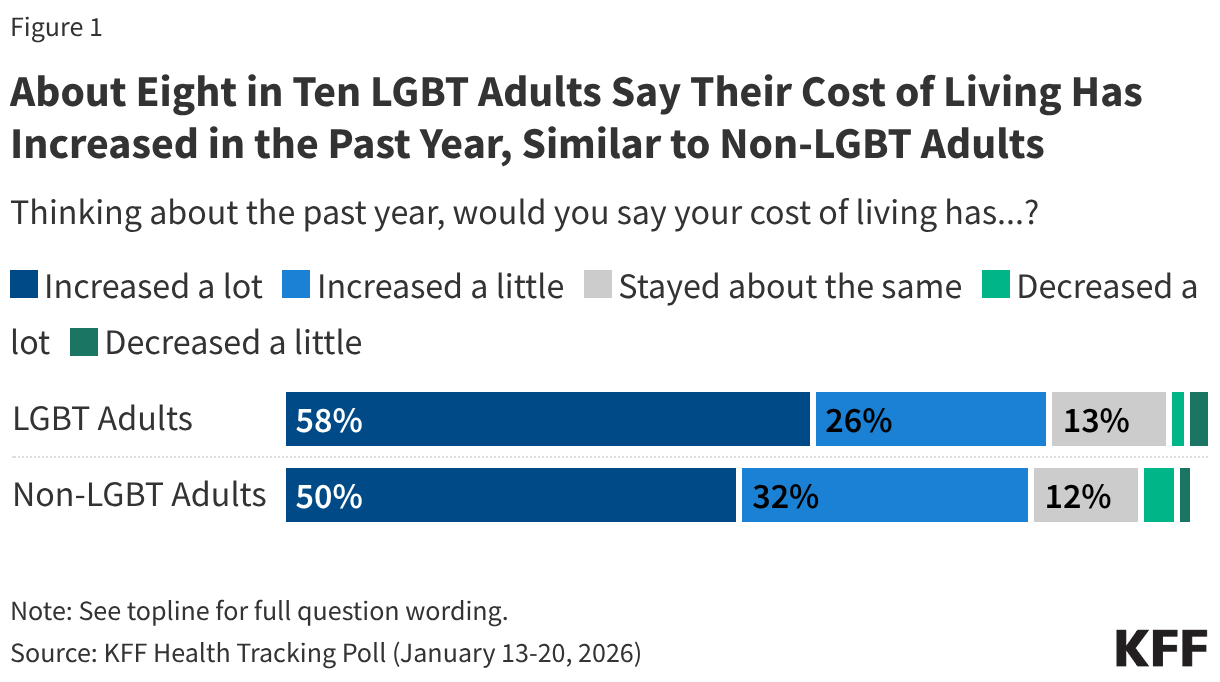
LGBT people, like the public overall, worry about the economy, with eight in ten (83%) LGBT adults saying their cost of living has increased in the past year, including more than half (58%) who say it has increased “a lot.” These are similar to the concerns among non-LGBT adults, 82% of whom say their cost of living has increased, including half who say it has increased “a lot”. Very small shares of both groups say their cost of living has “decreased” (4% of LGBT and 5% of non-LGBT adults). About one in ten LGBT and non-LGBT adults say their living expenses have remained stable over the past year (13% and 12%, respectively).
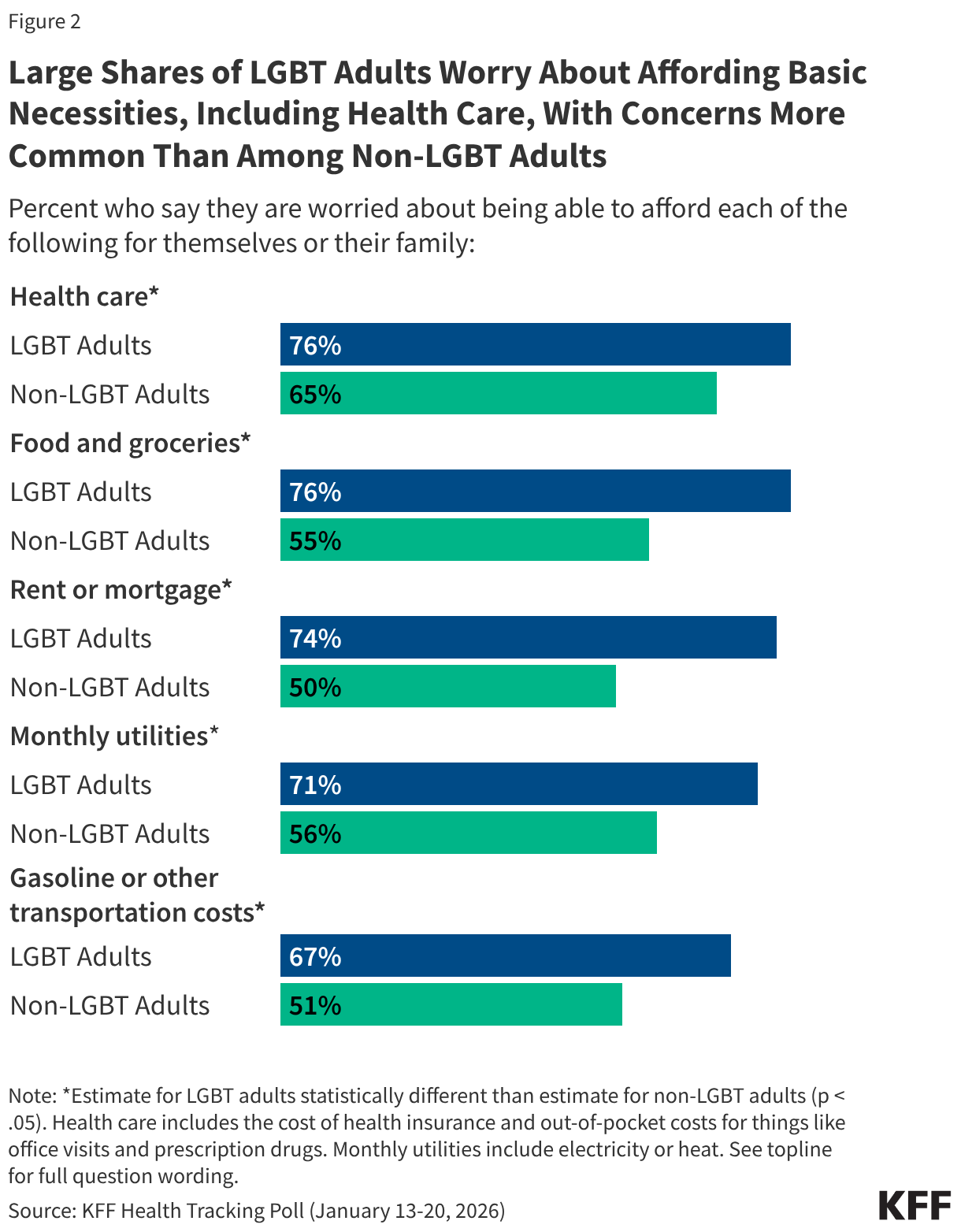
Large majorities of both LGBT adults and non-LGBT adults worry about being able to afford health care for themselves and their family, with health care topping the list of economic worries for non-LGBT adults. However, LGBT adults have broader and more pronounced concerns related to affording basic necessities across multiple categories. Three-quarters of LGBT adults (76%) say they worry about paying for health care, including the cost of health insurance and out-of-pocket costs for things like office visits and prescription drugs. This ranks similarly to their financial worries related to other household expenses like food and groceries (also 76%), rent or mortgage (74%), and monthly utilities (71%). In each case, these concerns are more widespread than those of non-LGBT adults, likely reflecting LGBT adults’ lower incomes. Cost-concerns related to gas and transportation were somewhat lower for LGBT adults (67%) compared to other household expenses but still outpaced worries among non-LGBT adults (51%). However, the survey was conducted prior to the recent rise in gas prices in the wake of the Iran war.
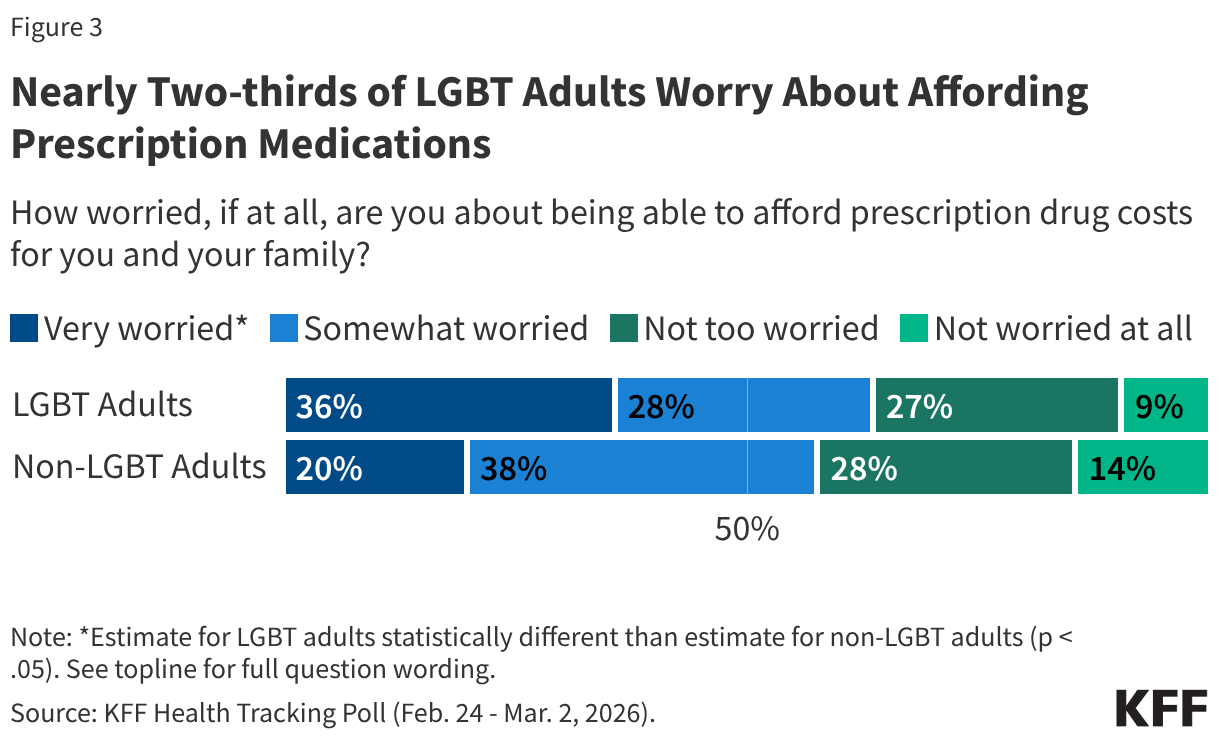
When asked specifically about prescription medication costs, nearly two-thirds of LGBT adults (64%) say that they are worried about being able to afford prescription drug costs for themselves and their family, similar to the share of non-LGBT adults (58%). However, LGBT adults are more likely to say they are “very worried” about these costs than non-LGBT adults (36% v. 20%).
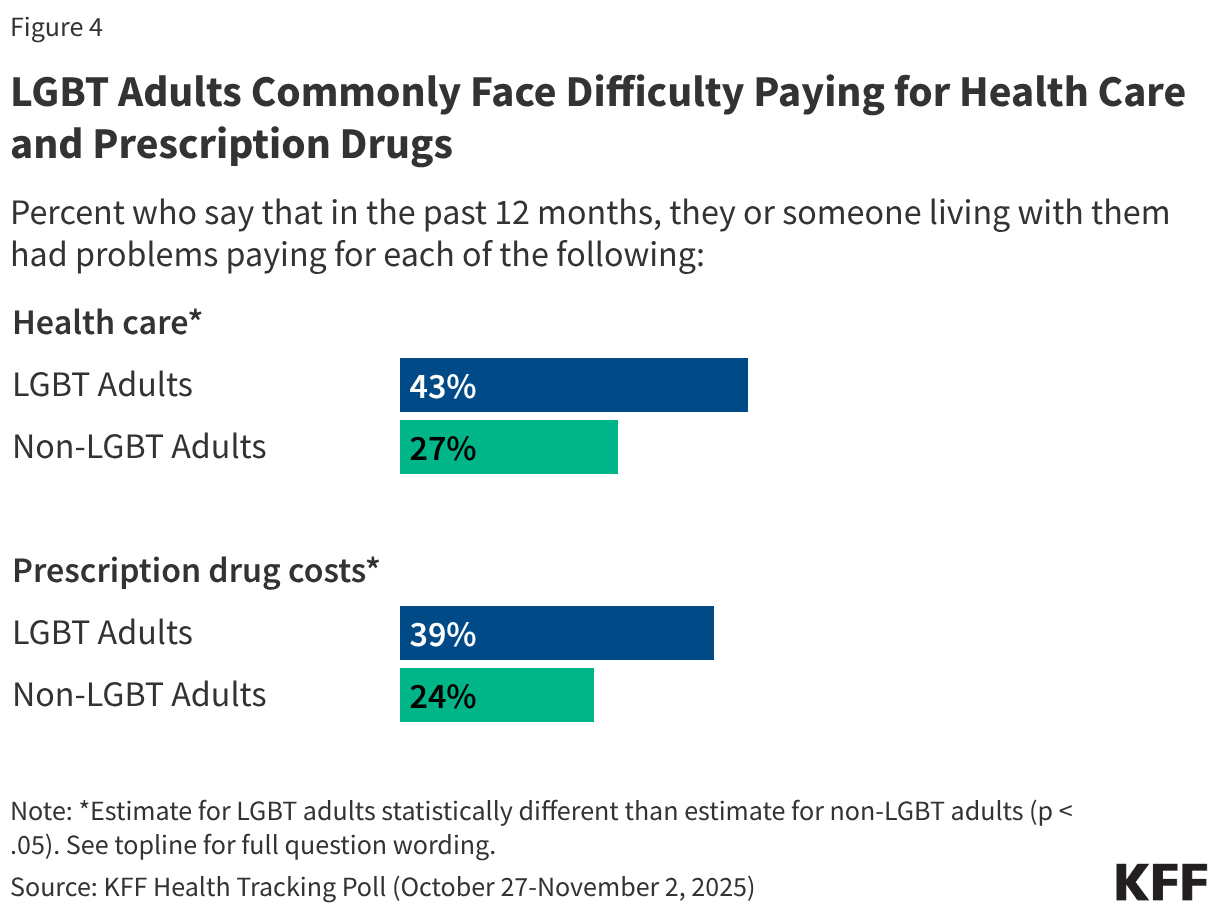
In addition to reporting worries related to health care affordability, LGBT adults commonly report facing difficulty with these expenses in their day-to-day lives. Four in ten LGBT adults (43%) report problems paying for health care, and a similar share (39%) say they had problems affording prescription drugs in the past year. In both cases LGBT adults report experiencing these difficulties at higher rates than non-LGBT adults.