The Midterms Lurk Behind Every Health Policy Move Now
Look for the midterms to play a role in every health policy decision until November, as both Republicans and Democrats maneuver for advantage with voters. That’s the case with two recent Trump administration moves to strengthen the hand of Republicans in the midterm elections. Democrats start out with a significant advantage on health in the midterms, but rather than cut and run to other issues, Trump wants Republicans to try to erode that advantage where they can.
One example is the shake-up at Health and Human Services, surrounding Secretary Robert F. Kennedy, Jr. with a new cadre of advisers, deposing others and installing the Director of the National Institutes of Health as Acting Director of the Centers for Disease Control & Prevention at the same time. This augments a controversial secretary with administration appointees placed there to deliver on policies the administration wants Republicans to trumpet, such as their initiatives to lower drug costs, including “most favored nation” (MFN) drug pricing and Trump Rx. Keeping the secretary in place rather than replacing him also appeases Make America Healthy Again (MAHA) supporters in the Republican base and may appeal to other voters who support MAHA ideas.
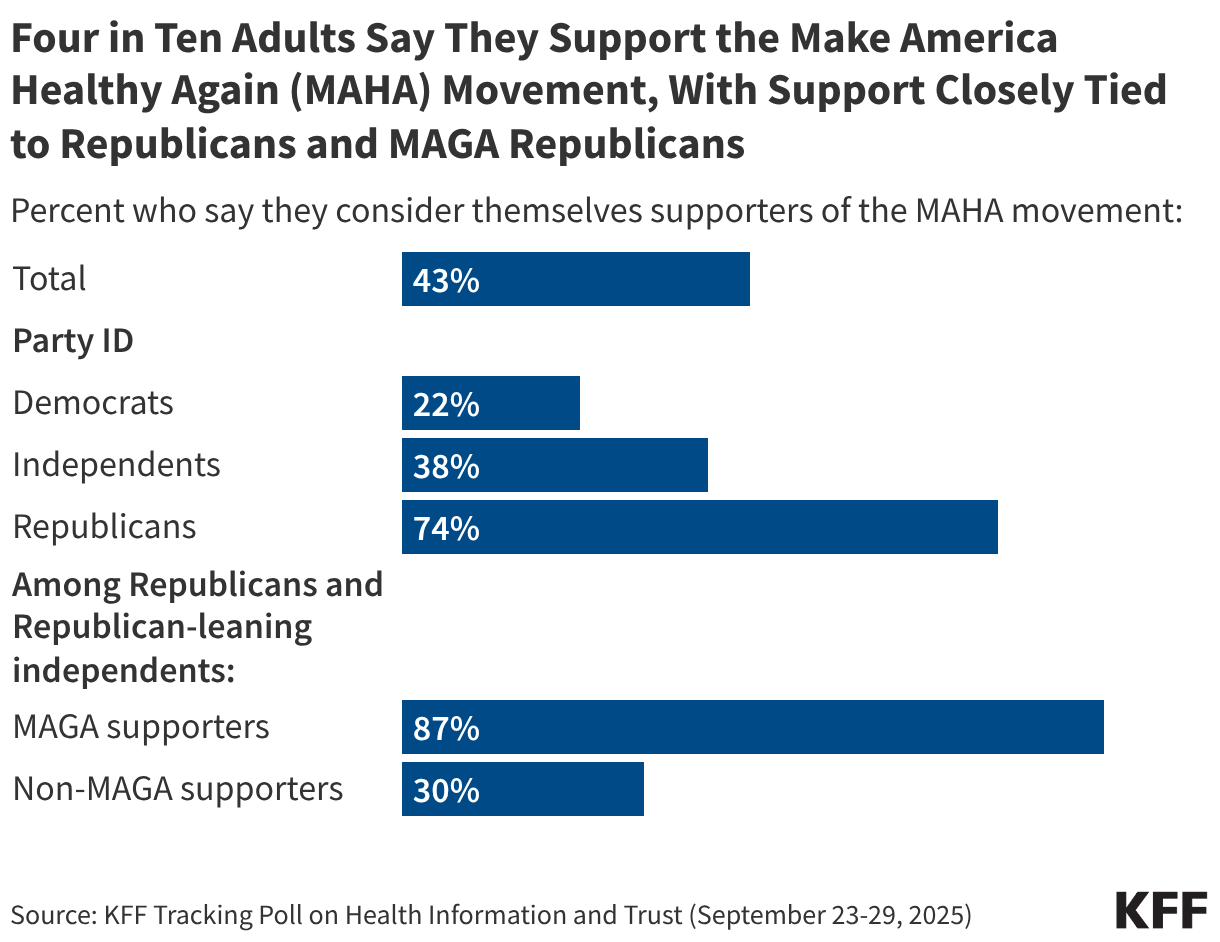
Four in 10 adults say they are MAHA supporters—the amorphous cause RFK Jr. champions—including 22% of Democrats and 38% of Independents. We don’t know if many of them will vote in the midterms for that reason, but some may if they feel strongly about MAHA-related issues or a candidate who champions them. Make America Great Again (MAGA), Independent and Democratic MAHA adherents almost certainly have different elements of MAHA-ism they care about, from vaccines to healthier food to environmental chemicals, to general distrust of government—and not all of these issues will be in play in the midterm races they vote in. Anti-vax views can be strongly held but notably, 31% of MAHA adherents disapprove of RFK Jr.’s handling of vaccines. The secretary sometimes takes heat from the more extreme MAHA groups for not going far enough, but overall, he holds down a lot of the MAHA flank for Trump and Republicans while the newly installed advisors pursue policy deliverables.
Saying the quiet part about underlying political strategy out loud as he often does, Trump recently linked the drug cost policies he wants to advance directly to the midterms, calling on Republican candidates to emphasize efforts to bring down drug costs as a midterm campaign message. It’s an effort to play offense and blunt attacks from Democrats focusing on affordability and rising premiums, especially in the Affordable Care Act (ACA) Marketplaces. Politically, the goal for Trump and Republicans is not to “win” the health care issue but to erode the Democratic advantage on it by talking a lot about drug costs and villainizing drug companies. (Lately, adding insurance companies to the mix of villains as well.) Of course, Democrats also have advanced drug cost policies they can talk about if they choose to fight on that terrain rather than health care affordability generally.
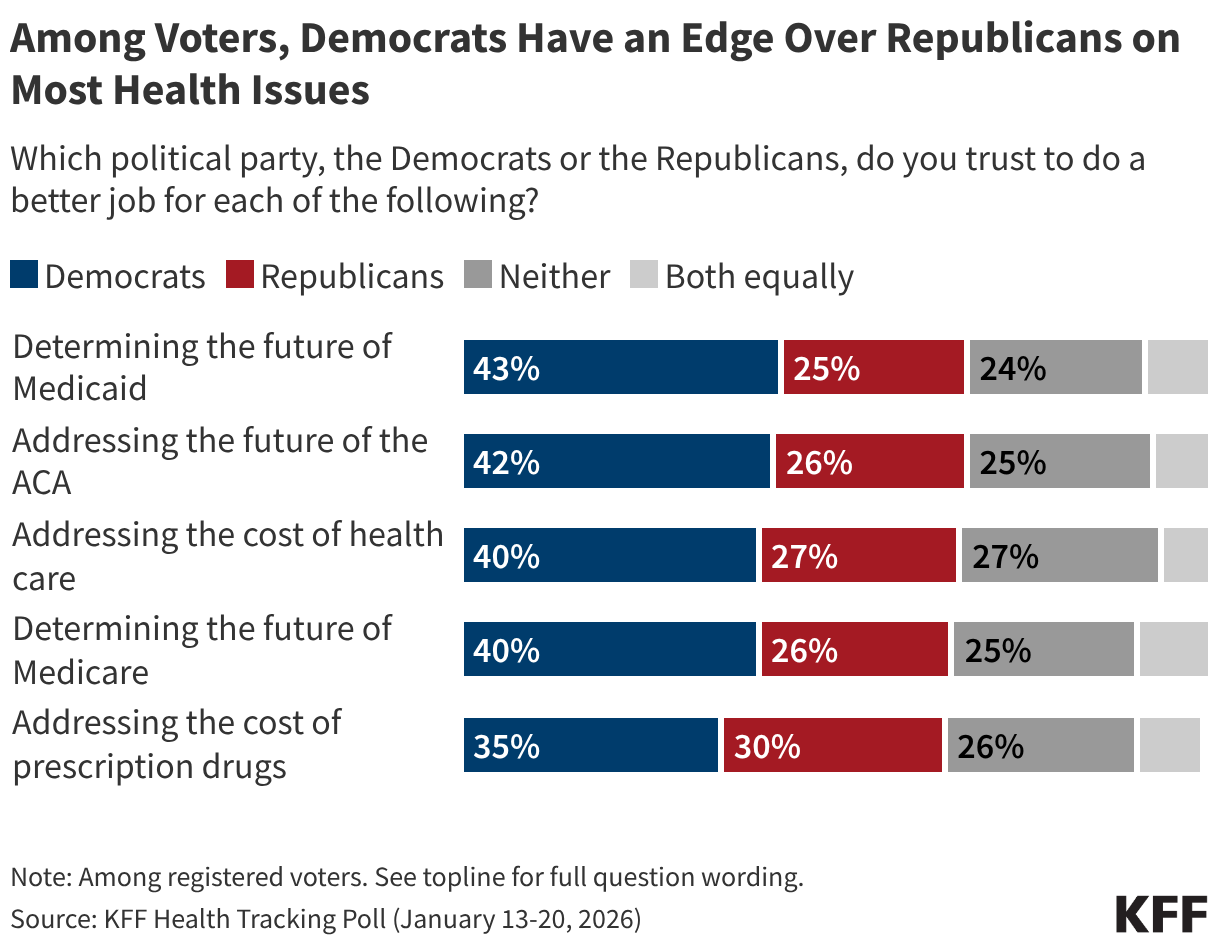
Overall, as the chart shows, Democrats still have a sizable advantage on health heading into the midterm campaigns, including a modest one on drug costs despite the administration’s initiatives. Their primary strategy is to link health care costs to the public’s broader concerns about affordability at a time when paying for health care has emerged as voters’ top economic worry.
It remains to be seen if Republican candidates in close races will want to go head-to-head with Democrats on health care, despite Trump’s urging them to do so. They may feel they have other cards to play, and some will not want to highlight decisions they made to cut Medicaid and double people’s ACA premium payments in a general election.
Policies have declared and undeclared purposes. We analyze the pros and cons of policies like Trump Rx or MFN when the primary purpose of the policy is to signal to voters that “I care about your drug costs” and “I am doing something about it.” The political strategy behind them is usually undeclared but almost everything in health policy between now and November will be substantially about the midterms.