A Note on How the War in Iran May Affect Health Care in the Midterms
Recently, we saw health care costs rise to the top of the public’s list of economic worries, ahead of food, housing, utility costs and the cost of gas. I have long argued that voters see health primarily as a dimension of their economic concerns and that polls that rank it separately miss the mark, but we have seldom seen it at the top of the list of economic worries. It was propelled there by the debate about extending the ACA tax credits and the media attention that gave to health care affordability generally. Expect gas prices to rise and health care costs to fall on the list of affordability worries while the war in Iran lasts. Then health costs will return to the top or near the top of the list of economic worries when President Trump decides to declare the major hostilities over, the Strait of Hormuz is open, and gas prices come down.
The war may cost Republicans some votes with independents and some MAGA Republicans opposed to foreign and “forever” wars, who may stay home and not vote, but health care costs have staying power as one of the top voter concerns. That’s especially true for independent voters. Democratic voters traditionally care a lot about health, but about eight in 10 independent voters whose votes may be more up for grabs now say health care costs will impact their interest in voting and the party they vote for. More than four in 10 independent voters say it will have a “major impact” on their vote. Seventy-six percent of independents, and even 43% of Republicans and 38% of MAGA supporters, also say Trump is not focusing enough on domestic affairs like addressing the cost of living.
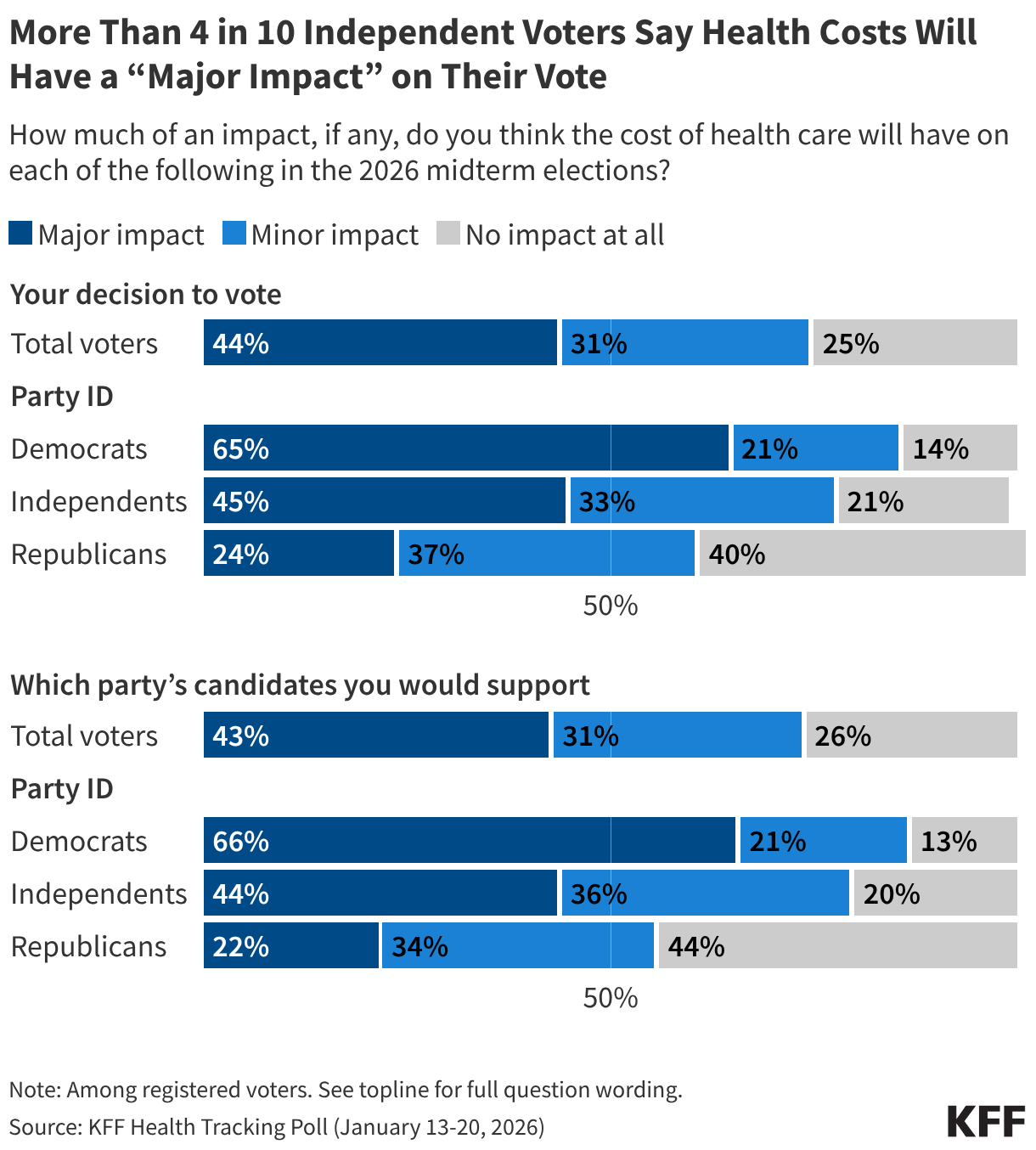
Strong majorities of Democrats (62%) and independents (58%), and almost half of Republicans (46%) are also pessimistic about their health care costs, expecting them to increase in the next year. Health care costs always go up, but this feels like more than the usual pessimism, fueled now by broader affordability worries.
The struggles that enrollees in the ACA Marketplaces are having paying for their health care will also continue to bring more attention to health care affordability throughout the year. Our most recent survey showed that millions are not only dropping coverage and switching to higher deductible plans, but more than half say they are struggling to pay for food and other basic household expenses because of their new, higher health costs.
The war will likely have an impact on the midterms, which could be amplified for critics of “forever wars” if there is a follow-on action in Cuba. But expect the bread-and-butter issues to dominate again by the time the midterms roll around, with the affordability of health care solidly in the mix.