Public Opinion

Health Costs

A Preview of the Role Health Care May Play in the 2026 Election

Ahead of the 2026 midterm elections, this KFF issue brief examines the role health care has played in previous elections and what that may suggest about its potential role in 2026. KFF polls have consistently found that the cost of health care is an important part of voters’ economic concerns.

Poll: Prescription Costs Regulation, Affordability and TrumpRx

KFF’s Health Tracking Poll finds that most Americans (59%) are worried about affording prescription drugs and support more regulation of prescription drug pricing (72%). Looking ahead to the midterm elections, the Democratic party currently holds the advantage for who voters trust to address health costs, including prescription drugs.

ACA Marketplace Survey Feature Image - Website

Survey: ACA Enrollees’ Cost Concerns and Coverage Changes

This follow-up survey of adults who had ACA Marketplace insurance in 2025 examines enrollees' cost concerns and coverage changes after the expiration of the enhanced premium tax credits. It finds half of returning enrollees say their health care costs are “a lot higher” and most expect to cut back on basic household expenses to afford coverage.

Health Information and Trust

Dashboard: Polling on Health Information and Trust

Drawing on KFF’s poll findings, this interactive dashboard tracks the public’s trusted sources for health information, attitudes toward vaccines, and use of news, social media, and AI for health-related information.

Recent Polls

The Public’s View of Immigration Enforcement in Health Care Settings

Amid reports of Immigration and Customs Enforcement (ICE) at hospitals and President Trump’s reversal of policy protecting “sensitive locations” like hospitals, KFF’s Health Tracking Poll finds that a majority of the public say they are concerned about the Trump administration’s actions in health care settings.

Knowledge and Views of Medication Abortion

This KFF Health Tracking Poll finds that many, including women of reproductive age, remain unfamiliar with key facts about mifepristone. Fewer than half of all adults say they believe abortion pills are safe now, compared to over half of all adults two years ago. This poll explores awareness and perception of the recent FDA review of the medication, and support for policies aimed at restricting it.

KFF-Washington Post Survey Explores Parents’ Trust In, and Confusion About, Childhood Vaccines

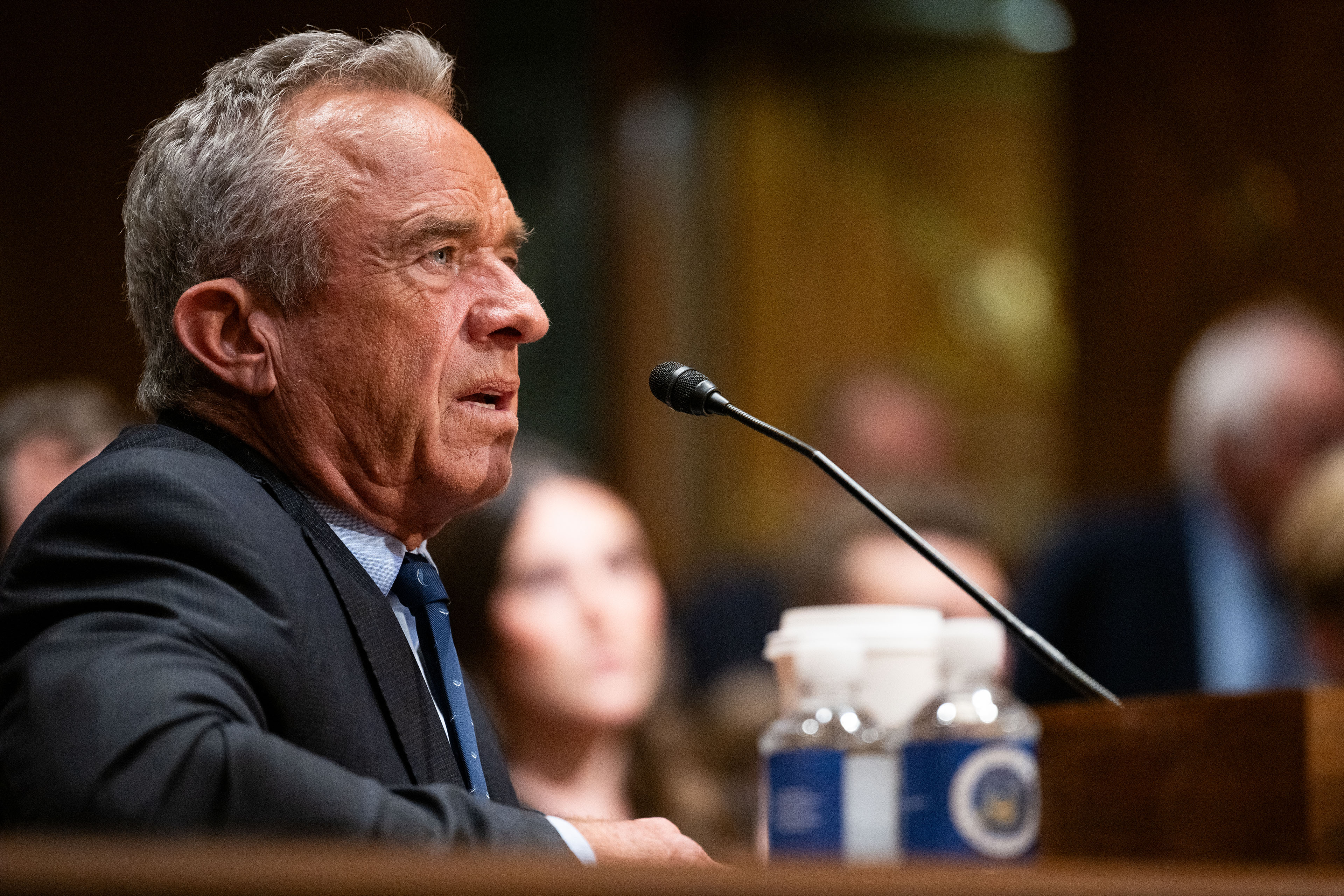
The KFF-Washington Post partnership Survey of Parents explores experiences and views pertaining to childhood vaccines. The Survey of Parents also sheds light on school vaccination requirements, views on federal health agencies and policy changes, and the views of parents with children diagnosed with autism spectrum disorder. This poll comes as the Trump administration revamps federal policies, and HHS Secretary Robert F. Kennedy Jr. continues to question the childhood vaccine schedule.

KFF/New York Times Survey of Immigrants

KFF-New York Times Survey: Immigrants Report Rising Fear, Negative Economic and Health Impacts, and Changing Political Views During the First Year of President Trump’s Second Term

The 2025 Survey of Immigrants, a partnership between KFF and The New York Times, takes an in-depth look at the experiences of immigrants during the first year of President Trump’s second term, including their worries related to increased immigration enforcement, their health and economic wellbeing, and the political views and preferences of immigrant voters. The survey paints a portrait of families under strain — where fear of detention and economic instability are negatively impacting immigrants’ health and reshaping immigrant families’ daily lives and views of U.S. political parties.

Read the News Release | Explore The New York Times’ Reporting

the essentials

Health Tracking Poll

Our signature survey project provides up-to-date data on the public’s health care views, knowledge, and experiences.

Survey Question Finder

Search all KFF polls since 1992 by keyword and date to find full question wording and results.

Health Information and Trust Tracking Poll

The Health Information and Trust Tracking Poll is part of KFF’s Health Information and Trust Initiative, which tracks health misinformation and analyzes its impact on the public.

Polls in Health Policy

This chapter of our digital “textbook” explores why surveys are essential for understanding health policy issues. 

Subscribe to KFF Emails

Choose which emails are best for you.
Sign up here

Filter

741 - 750 of 1,832 Results

  • How Health-Care Bills Hinder Millions of Americans

    From Drew Altman

    In this column for The Wall Street Journal’s Think Tank, Drew Altman examines the problems many Americans with health insurance are having paying medical bills based on a new Kaiser-New York Times Survey, and discusses why the issue of the adequacy of insurance coverage is gaining traction.

  • How Health-Care Bills Hinder Millions of Americans

    News Release

    In his latest column for The Wall Street Journal’s Think Tank, Drew Altman examines the problems many Americans with health insurance are having paying medical bills based on a new Kaiser-New York Times Survey, and discusses why the issue of the adequacy of insurance coverage is gaining traction. All previous columns by Drew Altman are online.

  • The Burden of Medical Debt: Results from the Kaiser Family Foundation/New York Times Medical Bills Survey

    Report

    To date, there has been little research providing a quantitative look at the causes of medical bill problems and the impacts they have on people’s families, their finances, and their access to health care. To fill this gap, the Kaiser Family Foundation and The New York Times conducted an in-depth survey with 1,204 adults ages 18-64 who report that they or someone in their household had problems paying or an inability to pay medical bills in the previous 12 months.

  • How High Drug Prices Weigh on the Sickest Americans

    From Drew Altman

    In this column for The Wall Street Journal's Think Tank, Drew Altman explores the data behind public concern about prescription drug costs and highlights that the people most in need are the most burdened by the problem.

  • Bernie Sanders, Hillary Clinton, and Medicare for All

    News Release

    In his latest column for The Wall Street Journal’s Think Tank, Drew Altman explores the differing positions of presidential candidates Hillary Clinton and Bernie Sanders on a single payer or Medicare-for-all health care system and whether Democratic voters consider it an important factor in the 2016 primaries. All previous columns by Drew Altman are online.

  • Bernie Sanders, Hillary Clinton, and Medicare for All

    From Drew Altman

    In this column for The Wall Street Journal’s Think Tank, Drew Altman explores the differing positions of presidential candidates Hillary Clinton and Bernie Sanders on a single payer or Medicare-for-all health care system and whether Democratic voters consider it an important factor in the 2016 primaries.

  • Kaiser Health Tracking Poll: December 2015

    Feature

    The ACA’s third open enrollment will come to a close at the end of January and the December Kaiser Health Tracking Poll finds that only 7 percent of the uninsured correctly identify this as the deadline to enroll in coverage. With Democratic presidential candidates debating the idea of Medicare-for-all, which involves creating a national health plan in which all Americans would get their insurance through an expanded version of the Medicare program, most Democrats like the idea, but very few say the issue will drive their votes in the 2016 elections. As the U.S. Senate voted to repeal the Affordable Care Act (ACA) earlier this month, more of the public views the health care law unfavorably than favorably (46 percent vs. 40 percent). In addition, the public remains divided over what Congress should do next with the law, with 35 percent supporting repeal, 14 percent supporting scaling back the law, 18 percent who say they would like to see it implemented as is, and 22 percent who say they want the law expanded.