Medicare

NEW AND NOTEWORTHY

What to Know About Medicare Coverage of Telehealth

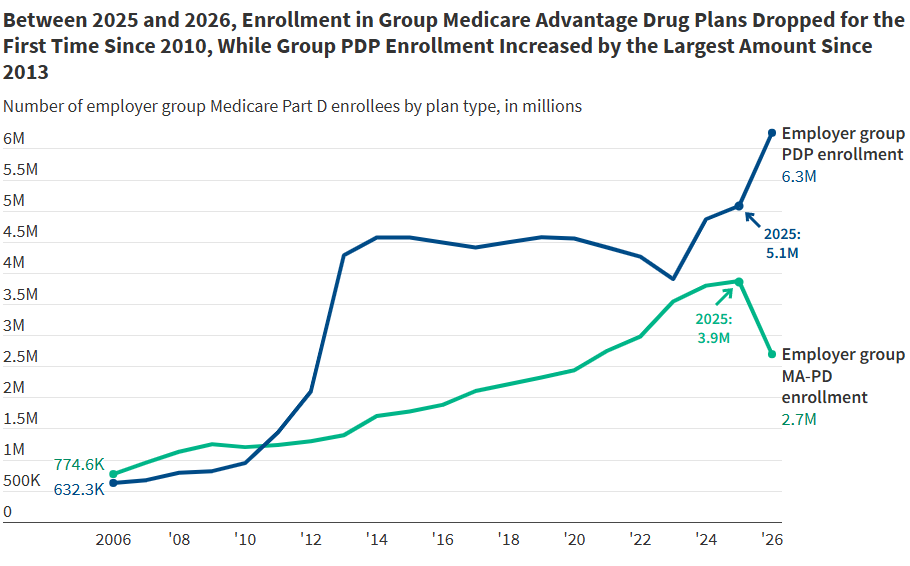
Congress has repeatedly extended pandemic-era flexibilities around Medicare coverage of telehealth, but most such flexibilities remain temporary. This brief answers key questions about the current scope of Medicare telehealth coverage, including both temporary and permanent changes adopted through legislation and regulation, and future policy considerations.

Changes to the Medicare Advantage Program Enhance Some Consumer Protections But Roll Back Others

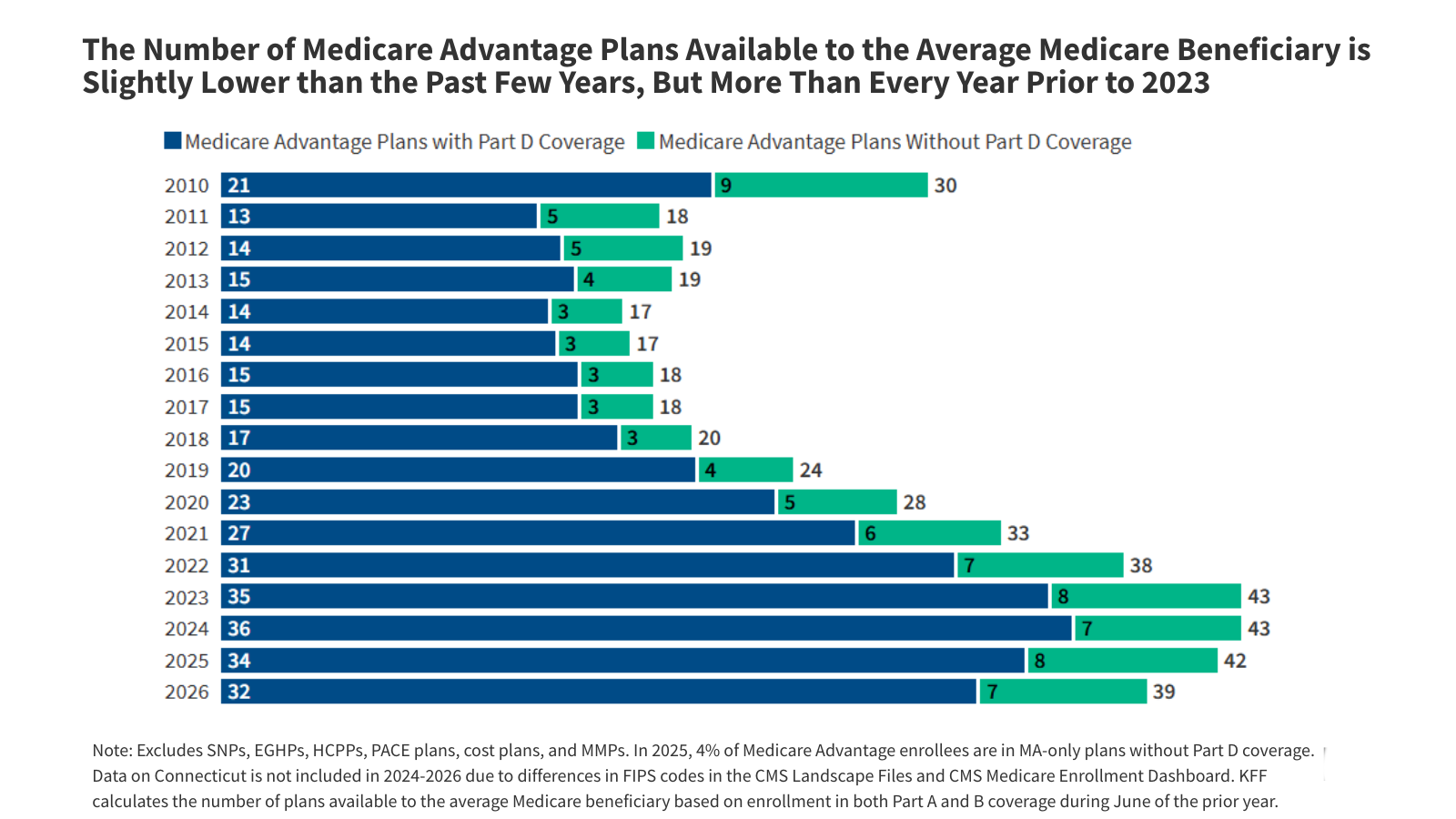
CMS recently finalized policies as part of the 2027 Medicare Advantage final rule that both enhance consumer protections and roll back changes to the Medicare Advantage program that were intended to protect consumers. These changes have gotten less attention than payment issues and changes to the star ratings system, which also affect plan payments, but could have implications for Medicare beneficiaries.

Examining the Potential Impact of Medicare’s New WISeR Model

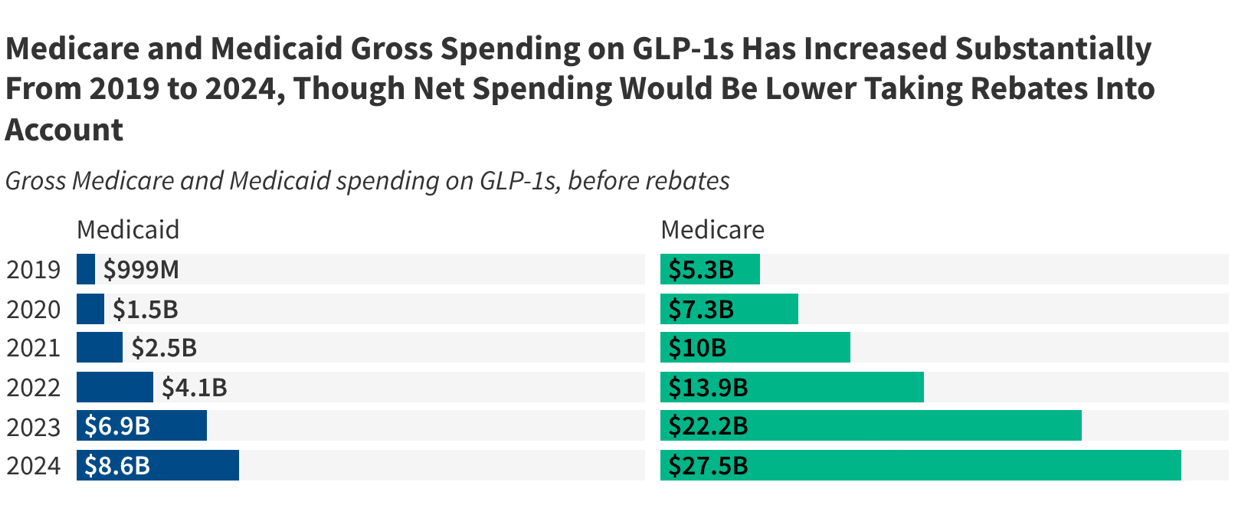
A federal initiative to establish new prior authorization requirements in traditional Medicare, called the Wasteful and Inappropriate Service Reduction (WISeR) model, is likely to have only modest impact in its first year.

State Profiles for Dual-Eligible Individuals

This data collection draws on Medicare and Medicaid administrative data to present national and state-level information on people who are covered by both Medicare and Medicaid, referred to as dual-eligible individuals (also known as dually-enrolled beneficiaries).

Data Visualization

The Facts About Medicare Spending

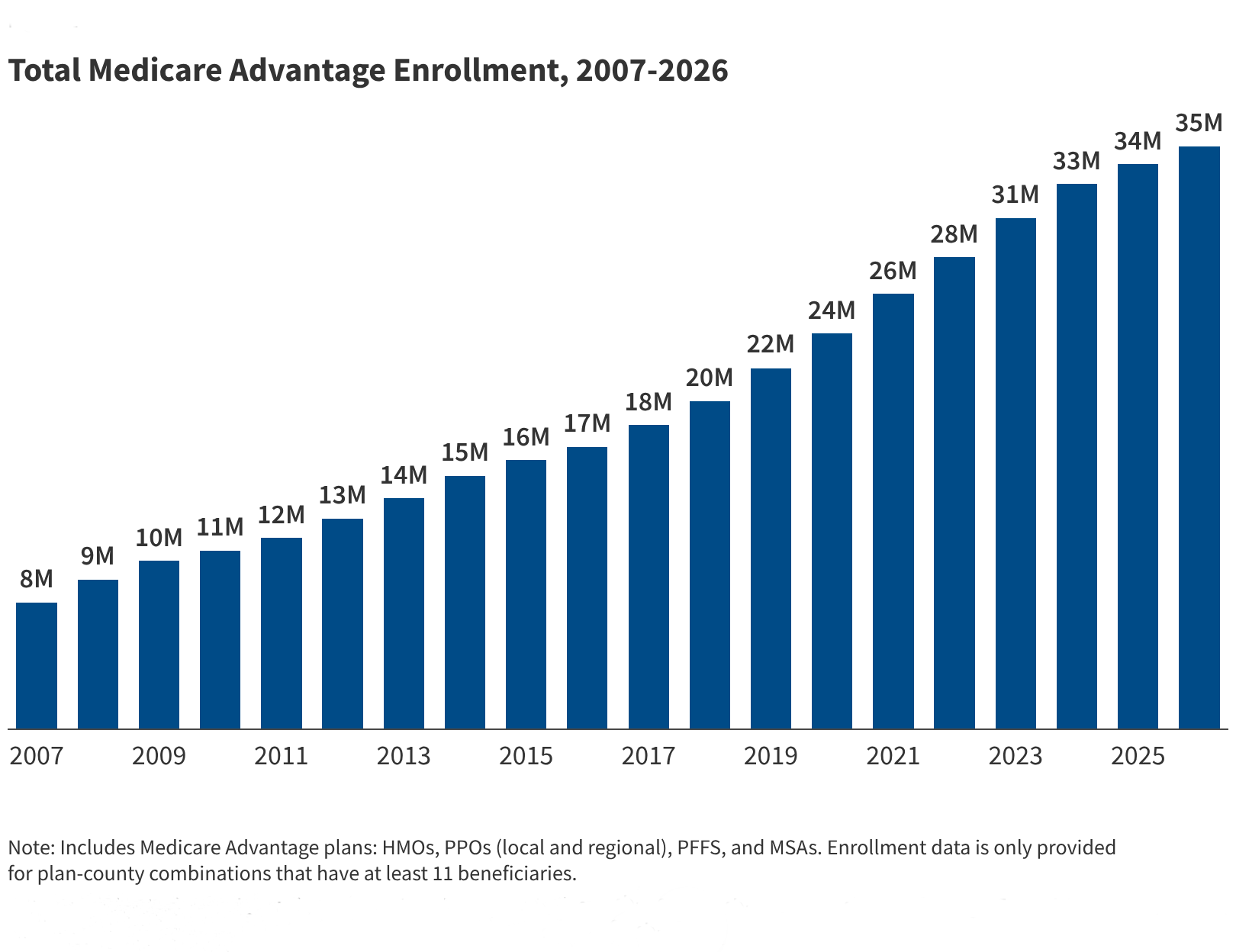
This interactive provides the facts on Medicare spending. Medicare, which serves 67 million people and accounts for 12 percent of the federal budget and 21 percent of national health spending, is often the focus of discussions about health expenditures, health care affordability and the sustainability of federal health programs. u003cbru003eu003cbru003eExplore data on enrollment growth, Medicare spending trends overall and per person, growth in Medicare spending relative to private insurance, spending on benefits and Medicare Advantage, Part A trust fund solvency challenges, and growth in out-of-pocket spending by beneficiaries.u003cbru003eu003cbru003eu003ca href=u0022https://www.kff.org/medicare/issue-brief/faqs-on-medicare-financing-and-trust-fund-solvency/u0022 data-type=u0022linku0022 data-id=u0022https://www.kff.org/medicare/issue-brief/faqs-on-medicare-financing-and-trust-fund-solvency/u0022u003eRelated:u003ca href=u0022https://www.kff.org/medicare/issue-brief/faqs-on-medicare-financing-and-trust-fund-solvency/u0022u003e FAQs on Medicare Financing and Trust Fund Solvencyu003c/au003eu003c/au003e

Read More

Subscribe to KFF Emails

Choose which emails are best for you.
Sign up here

Filter

1,041 - 1,050 of 1,596 Results

  • Medicare Part D Data Spotlight: A First Look at Part D Plan Offerings in 2012

    Report

    This data spotlight examines the stand-alone Part D drug plan options available to Medicare beneficiaries in 2012. Medicare beneficiaries will, on average, be able to choose from 31 stand-alone Medicare Part D prescription drug plans to choose from, a new Kaiser analysis finds. Average premiums would increase by 4 percent from 2011 to 2012 if beneficiaries remain with their current plans during the open enrollment period, which begins October 15 and December 31. That represents…

  • Analysis of Medicare Prescription Drug Plans in 2011 and Key Trends Since 2006

    Report

    This report presents findings from an analysis of the Medicare Part D marketplace in 2011 and changes in drug coverage and costs since 2006. It presents key findings related to Medicare drug plan premiums, the subsidy for low-income beneficiaries, the coverage gap, benefit design and cost sharing, formularies, and utilization management, based on data from CMS for all plans participating in Part D. The analysis was conducted jointly by Jack Hoadley and Laura Summer of Georgetown…

  • Inside Deficit Reduction: What it Means for Health Care

    Event Date:
    Event

    After much heated debate on the U.S. debt limit, the Budget Control Act of 2011 was passed on August 2, 2011, containing more than $900 billion in federal spending reductions over 10 years. The law also established the 12-person “super committee” charged with finding more than $1 trillion in additional savings. What exactly is called for in the law? What are the implications for health care programs, including Medicare, Medicaid, CHIP and the Patient Protection…

  • Medicare Advantage 2011 Data Spotlight: Medicare Advantage Enrollment Market Update

    Issue Brief

    This data spotlight examines enrollment trends in Medicare Advantage plans in 2011 and finds that, despite concerns about the effects of the 2010 health reform payment reductions on private Medicare Advantage plans, enrollment continued to rise this year. Additionally, Medicare Advantage enrollees are paying lower premiums, on average, than they did in 2010. Preferred Provider Organizations gained more enrollees than any other plan type, while enrollment in Private Fee-for-Service plans continued to decline. A companion…

  • Firm Perspectives on the Medicare Advantage Market

    Issue Brief

    Based on interviews with senior executives at 14 large firms, the issue brief finds that insurers anticipate continuing to offer Medicare Advantage plans in 2012, in part because of a Medicare demonstration project that will award bonus payments to plans based on their quality standards. A companion issue brief examines trends in Medicare Advantage enrollment in 2011. The analysis was conducted by researchers at Mathematica Policy Research, Inc. and the Kaiser Family Foundation. Issue Brief…

  • Medicare Advantage 2011 Data Spotlights

    Report

    Now Available: 2012 Medicare Advantage Spotlight: Plan Availability and Premiums The Kaiser Family Foundation has issued a series of data spotlights and issue briefs examining the Medicare Advantage plan options available in 2011 and trends affecting the Medicare Advantage marketplace. These analyses were prepared by researchers at Mathematica Policy Research, Inc. and the Kaiser Family Foundation. Medicare Advantage Enrollment Market Update Firm Perspectives on the Medicare Advantage Market Plan Availability and Premiums

  • Special Needs Plans: Availability and Enrollment

    Report

    Special Needs Plans are a form of Medicare Advantage plan authorized to provide a managed care option for beneficiaries with significant or relatively specialized care needs, including Medicare beneficiaries who are dually eligible for Medicare and Medicaid, beneficiaries living in nursing homes or other institutions, and beneficiaries with severe chronic or disabling conditions. This data spotlight examines availability and enrollment trends for Special Needs Plans, which account for a small share of enrollment today but…

  • Medicare Part D 2011 Data Spotlight: The Coverage Gap

    Report

    This data spotlight examines the availability of gap coverage in the private Medicare Part D drug plans offered to beneficiaries in 2011, the first year of the phase-out of the gap, as required under the 2010 health reform law. The changes for 2011 include a 50 percent discount on brand-name drugs purchased during the gap in coverage, reducing an enrollee’s potential out-of-pocket costs in the gap from about $3,600 to $1,800. The analysis was conducted…

  • Understanding The Effects of The Medicare Part D Coverage Gap in 2008 and 2009

    Report

    This Kaiser Family Foundation study examines how the coverage gap in Medicare’s drug benefit known as the “doughnut hole” affects Medicare beneficiaries and their prescribing patterns. Based on actual claims data from 2008 and 2009, before the 2010 health reform law began to close the gap, the study finds that most Part D enrollees with high drug costs who fall in the gap one year are likely to do so in future years. Enrollees who…

  • Proposed Models to Integrate Medicare and Medicaid Benefits for Dual Eligibles: A Look at the 15 State Design Contracts Funded By CMS

    Issue Brief

    This brief summarizes 15 states' preliminary proposals to better coordinate care for people who are in both the Medicare and Medicaid programs. The design contracts, funded by the federal Center for Medicare and Medicaid Innovation (CMMI), are an outgrowth of new efforts under the health reform law to develop service delivery and payment models that integrate care for the nation’s nearly 9 million "dual eligibles," whose medical needs and health care costs typically exceed those…