Medicaid

new and noteworthy

Medicaid: What to Watch in 2026

Medicaid: What to Watch in 2026

In this brief, KFF explores how state fiscal pressures are likely to converge with the implementation of the 2025 reconciliation law to affect Medicaid coverage, financing, and access to care over the next year, especially leading up to the midterm elections.

Medicaid Watch

Featuring policy research, polling and news about how Medicaid is changing, and the impact of those changes due to the tax and spending cuts law

Medicaid and work

Tracking Medicaid Work Requirements:
Data and Policies

To implement Medicaid work requirements, states will need to make important policy and operational decisions, implement needed system upgrades or changes, develop new outreach and education strategies, and hire and train staff, all within a relatively short timeframe. The information tracked here can serve as a resource to understand Medicaid work requirements and state options, gauge readiness, and track implementation of the requirements.

understanding medicaid

5 Facts: Provider Taxes

All states except Alaska cover some state Medicaid costs with taxes on health care providers. This brief uses data from KFF’s 2024-2025 survey of Medicaid directors to describe current practices and the federal rules governing them.

5 Facts: Medicaid and Hospitals

Absorbing reductions in Medicaid spending could be challenging for hospitals, particularly for those that are financially vulnerable. This brief provides data on the reach of Medicaid across hospitals, patients, and charity care.

5 Facts: Medicaid and Immigrants

Confusion persists about immigrants’ eligibility for federal programs. This brief helps readers understand how current Medicaid policy affects immigrants as well as the potential impacts of policy changes under the Trump administration.

5 Facts: Medicaid and Rural Areas

Approximately 66 million people live in rural areas – about 20% of the U.S. population. Nearly 1 in 4 of them have Medicaid, a higher share than in urban areas (24% vs 21%).

5 Facts: Nursing Facilities

The substantial Medicaid savings in the reconciliation bill that has been passed by the House could have major implications for nearly 15,000 federally certified nursing facilities and the 1.2 million people living in them.

2025 Medicaid Home Care survey

Payment Rates Ahead of 2025 Reconciliation Law

This issue brief describes Medicaid payment rates for home care and other workforce supports that are in place in 2025, before the majority of the 2025 reconciliation law provisions start taking effect.

Home Care Support for Family Caregivers in 2025
number of responding states, including DC, that allow payments for family caregivers by type of home care program and type of caregiver.

This issue brief describes the availability of self-directed services and supports for family caregivers in Medicaid home care in 2025, before most provisions in the reconciliation law take effect.

States’ Management of Home Care Spending

This issue brief describes the mechanisms states are currently using to limit Medicaid spending on home care and their plans for adopting new mechanisms in state fiscal year (FY) 2026.

Waiting Lists for Medicaid Home Care, 2016 to 2025
A Look at Waiting Lists for Medicaid Home- and Community-Based Services from 2016 to 2025

This data note provides new information about waiting lists in Medicaid home care before many of the provisions in the 2025 reconciliation law go into effect.

Eligibility and coverage
  • Eligibility, Enrollment, and Renewal Policies

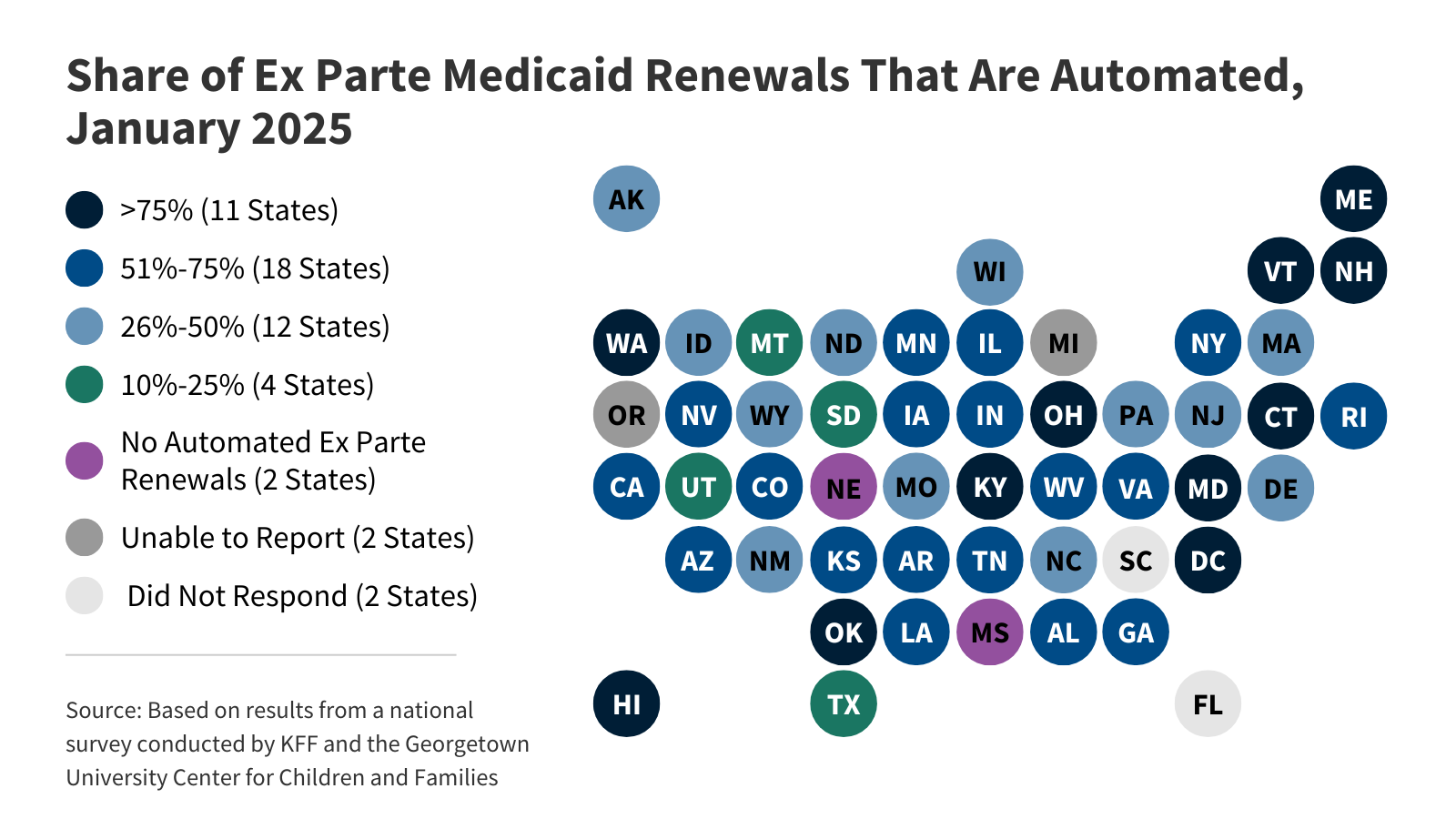
    KFF's survey findings capture state actions that seek to improve the accuracy and efficiency of Medicaid and CHIP enrollment and renewal processes, as of January 2025.
  • Seniors and People with Disabilities

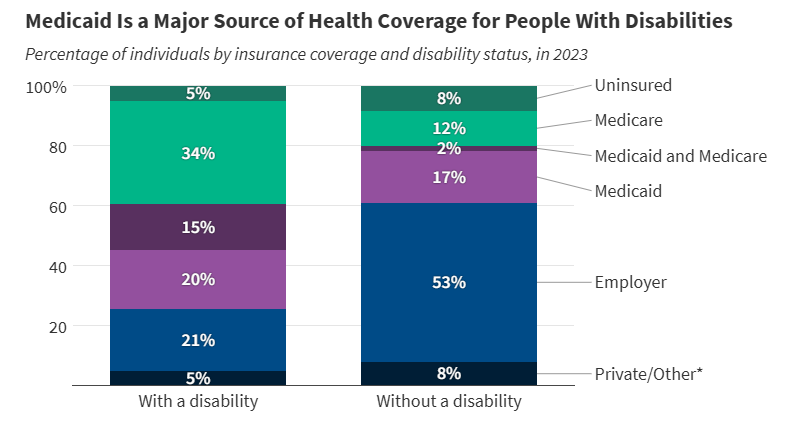
    More than 1 in 3 people with disabilities (15 million) have Medicaid (35%). In comparison, only 19% of people without disabilities have Medicaid.
  • Children with Special Needs

    Amid debates about proposed cuts to federal Medicaid spending, this brief analyzes key characteristics of children with special health care needs and explores how Medicaid provides them with coverage.
  • People With Intellectual and Developmental Disabilities

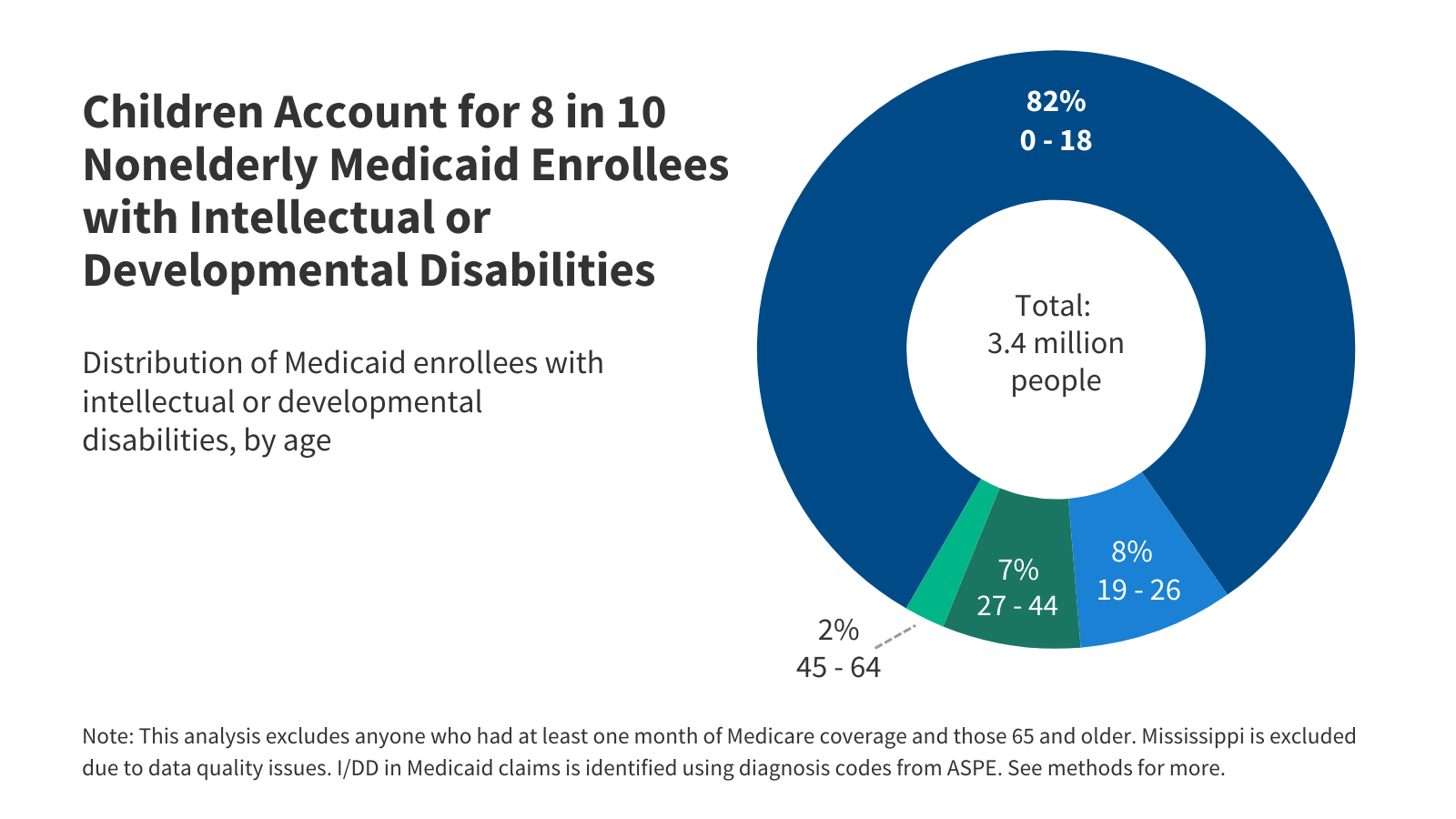
    Among the estimated 8 million people with intellectual and developmental disabilities (I/DD), over three million have Medicaid coverage.
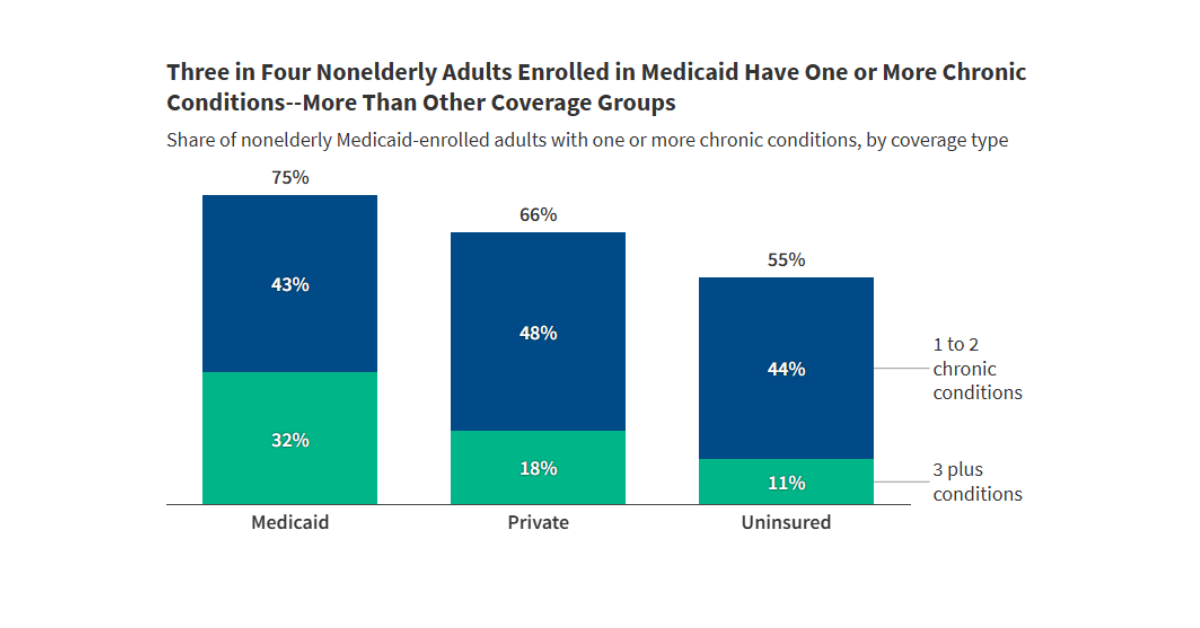
  • Adults with Chronic Conditions

    Among working age adults enrolled in Medicaid, approximately three quarters have one or more chronic conditions, and nearly one-third have three or more.

Subscribe to KFF Emails

Choose which emails are best for you.
Sign up here

Filter

2,671 - 2,680 of 2,684 Results

  • Talking With Kids About Tough Issues

    Report

    Talking With Kids About Tough Issues is a national campaign to support parents by Children Now and the Henry J. Kaiser Family Foundation. This guide for parents offers practical, concrete tips and techniques for talking easily and openly with young children ages 8 to 12 about tough issues: sex, HIV/AIDS, violence, drugs and alcohol.

  • The Four Americas:  Government and Social Policy Through the Eyes of America’s Multi-racial and Multi-ethnic Society

    Poll Finding

    The Four Americas: Government and Social Policy Through the Eyes of America's Multi-racial and Multi-ethnic Society This report is the first of a series of surveys conducted jointly by The Washington Post/Kaiser Family Foundation/Harvard University examining public knowledge, values and beliefs on major issues and challenges facing our nation, such as race, poverty, reducing the…

  • The Impact of the “Medigrant” Plan on the Federal Payments to States

    Report

    The Impact of the "Medigrant" Plan on the Federal Payments to States The analysis examines the conference agreement plan for the redistribution of federal funds under a block grant for the Medicaid program. It also discusses the implications of the reductions in federal spending for beneficiary coverage.

  • Medicaid and the Elderly

    Other Post

    Long-Term Care Spending In 1993, Medicaid spent $25.5 billion for long-term care services for elderly beneficiaries (Figure 5). This represents 58 percent of the $44 billion Medicaid spent on long-term care services for all population groups. The majority of spending was for care delivered in nursing facilities (84 percent) and ICFs-MR (2 percent).

  • Medicaid and the Elderly – Policy Brief

    Issue Brief

    Medicaid and the Elderly September 1995 Medicaid is a crucial health financing program for the elderly population, providing assistance to over 1 in 10 Americans age 65 or older. Nearly four million elderly people receive Medicaid assistance with medical and long-term care expenses.

  • Medicaid and Managed Care – Policy Brief

    Issue Brief

    Medicaid and Managed Care June 1995 This year, Medicaid will finance health and long-term care services to more than 35 million low-income Americans. In its role as a purchaser of health services for low-income families, Medicaid increasingly relies on managed care to deliver care.

  • Managed Care and Low-Income Populations: A Case Study of Managed Care in Tennessee

    Report

    TennCare represents one of the most ambitious state-level efforts to restructure Medicaid and expand insurance coverage to the uninsured. The case study shows that the rapid change caused considerable confusion for patients, providers, and health plans. The TennCare experience provides early insights into the issues that states will face as they move to enroll more of their low-income populations into managed care arrangements.