Affordable Care Act

ACA Open Enrollment

9 Things to Watch for the 2027 ACA Open Enrollment Period

9 Things to Watch for the 2027 ACA Open Enrollment Period 

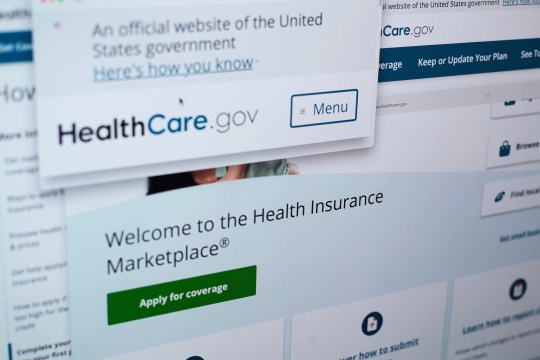
ACA Marketplace Open Enrollment is here—and this year comes with major changes. Marketplace premiums are up 13% on average, more insurers are leaving the Marketplaces than entering, and there is narrower eligibility for health insurance subsidies. Learn more about what to watch.


Health Insurance Marketplace Calculator

The Health Insurance Marketplace Calculator, updated with 2027 premium data, provides estimates of health insurance premiums and subsidies for people purchasing insurance on their own in health insurance exchanges (or “Marketplaces”) created by the Affordable Care Act (ACA).

About the ACA

Promotional image for KFF video How Affordable is the Affordable Care Act

Did the Affordable Care Act Make Health Care More Affordable?

The expiration of the ACA’s enhanced premium tax credits at the start of 2026, combined with rising insurer premiums, put a spotlight on health care affordability that extends beyond Marketplace enrollees. KFF’s Cynthia Cox examines the ACA’s record and the broader underlying question it raises: what’s a fair price for Americans people to pay for health care?

Stay informed.

Stay informed.

Filter

651-660 of 2,431 results

  • Report and Video Highlight Health Coverage Struggles, Other Economic Concerns of Working Families

    Event Date:
    Event

    This report and video from the Kaiser Family Foundation's Commission on Medicaid and the Uninsured (KCMU) illustrate the financial struggles of many families in the United States and show the central role of health care costs and coverage in a household's economic stability. The report, Snapshots from the Kitchen Table: Family Budgets and Health Care, is based on interviews with 27 families from six cities across the U.S.. It finds pervasive uncertainty over job security…

  • Pulling It Together: Predictions

    Perspective

    I usually don’t make predictions, unless they are backed up by the kind of statistical modeling we often produce.  But here are three predictions I am confident about that form the basis of this latest column. GROUP HEALTH INSURANCE PREMIUMS WILL CONTINUE TO RISE AT HISTORICALLY MODERATE LEVELS, AT LEAST FOR THE NEXT FEW YEARS.  One reason for this is the lingering effect of the recession.  Employers will have little trouble attracting workers in the…

  • Health Care and the Economy in Two Swing States: A Look at Ohio and Florida

    Poll Finding

    Two new surveys by NPR, the Kaiser Family Foundation and the Harvard School of Public Health examine the pocketbook problems facing people in Ohio and Florida -- two presidential swing states -- including their struggles with gas prices, getting and keeing a well-paying job and affording health care. The surveys, , also take an in-depth look at the impact of medical bills on family finances and health care, and provide insights into the way health…

  • National Health Insurance — A Brief History Of Reform Efforts In The U.S.

    Issue Brief

    This policy brief provides an overview of health reform efforts in the United States over much of the last century, from New Deal-era calls for government-subsidized health coverage to the creation of Medicare and Medicaid in the 1960s and the failed attempt at universal coverage in the early 1990s. Issue Brief (.pdf)

  • Medicaid as a Platform for Broader Health Reform: Supporting High-Need and Low-Income Populations

    Issue Brief

    Medicaid is the health insurance safety net for nearly 60 million of the nation's poorest and sickest individuals. It provides access to a comprehensive scope of benefits with limited cost-sharing that is geared to meet the health needs and limited resources of the low-income, high-need populations it serves, populations for whom private coverage is often not available, not affordable or inadequate. This paper, based on years of research and analysis from the Kaiser Commission on…

  • Health Care and the Middle Class: More Costs and Less Coverage

    Report

    This analysis paper examines the availability, affordability and stability of the health insurance coverage of the American middle class, defined as those with incomes of $44,000 to $88,000 for a family of four. It also addresses the growing burden of health care costs for the middle class, the adequacy of today's health insurance plans to protect them from large medical bills, and the difference both make as individuals and families make health care decisions for…

  • Explaining Health Reform: Medicare and the New Independent Payment Advisory Board

    Issue Brief

    This brief describes how the new board created under the 2010 health reform law is expected to limit the growth in Medicare spending over time. Starting in 2014, if projected per capita Medicare spending exceeds targets set in the law, the board must recommend ways to reduce Medicare spending, while maintaining quality and access to care for beneficiaries. The board’s recommendations automatically take effect the next year unless Congress adopts an alternative plan to achieve…

  • Pulling it Together: The “Third School” for Controlling Health Care Costs?

    Perspective

    For as long as I have been in the field, there have been two dominant schools of thought about how to control health care costs. One school, The Regulators, believed that the best way to slow increasing costs was to control the total resources going into the health care system: putting limits on the supply of medical professionals, technology and facilities; setting payment rates; or putting enough purchasing power in the hands of government to…

  • Summary of Coverage Provisions in the Patient Protection and Affordable Care Act

    Issue Brief

    This short summary describes the health coverage provisions contained in the final version of the Affordable Care Act signed into law in March 2010, including the individual mandate requirements, expansion of public programs, health insurance exchanges, changes to private insurance and employer requirements.