Affordable Care Act

The ACA MarketplaceS

In Preliminary Rate Filings, ACA Marketplace Insurers Largely Propose Double-Digit Premium Increase For 2027, Following a Steep Climb This Year 

ACA Marketplace insurers are proposing a median premium increase of 14% for 2027— indicating a likely second consecutive year of double-digit increases, according to a new analysis of preliminary rate filings in 16 states and DC. If these increases hold, typical premiums for insurers participating in the ACA Marketplaces would jump by more than one-third between 2025 and 2027.

The Average Marketplace Deductible Grew by About $1,000 Per Person in 2026, With More Enrollees Shifting to Higher-Deductible Plans as Enhanced Tax Credits Expired

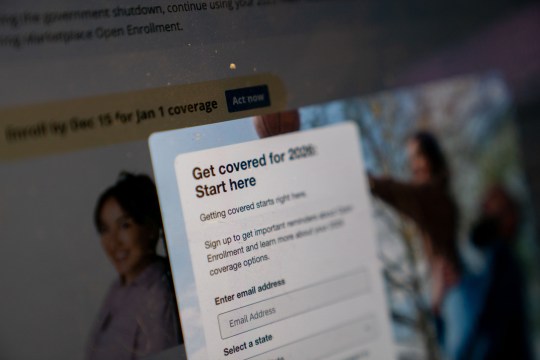
The average Affordable Care Act (ACA) Marketplace deductible experienced the steepest increase in history—growing by 37% or over $1,000, from $2,759 in 2025 to $3,786 in 2026 as enhanced premium tax credits expired, according to a new KFF analysis. After the enhanced tax credits ended, many Marketplace shoppers shifted toward lower-premium, higher-deductible plans.

POLLING on the ACA

Tracking the Public’s Views on the ACA

While overall opinion of the Affordable Care Act has been more favorable than unfavorable since 2017, there remain deep partisan divides. See how public opinion on the ACA has changed from the inception of the law to the present. This interactive tool highlights key moments when views shifted and trends based on party identification, income, age, gender, and race/ethnicity.

Stay informed.

Stay informed.

https://js.hsforms.net/forms/embed/292449.js

Filter

2,731 - 2,740 of 2,777 Results

  • President Obama’s Campaign Position on Health Reform and Other Health Care Issues

    Issue Brief

    During the 2008 Presidential campaign now President Barack Obama announced a comprehensive health care reform proposal and laid out his positions on a number of other key health care issues. The two documents below summarize these campaign policies and positions. They were prepared by the Kaiser Family Foundation with the assistance of Health Policy Alternatives, Inc., and are based on information compiled from Obama's campaign Web site, speeches, campaign debates and news reports. They are…

  • The Fraying Link Between Work and Health Insurance: Trends in Employer-Sponsored Insurance for Employees, 2000-2007

    Report

    This analysis shows that employer-sponsored coverage began declining after 2000 due to an economic downturn that saw rising unemployment, declining family incomes and more workers moving into temporary work, part-time work and other employment arrangements where health benefits were not provided. Employer-sponsored coverage continued to decline after 2003 despite improvements in the economy and slower growth in health care costs. The decline in coverage was due both to falloffs in the share of employees with…

  • Low-Wage Workers and Health Care

    Poll Finding

    This brief is based on a survey conducted this summer by The Washington Post, the Kaiser Family Foundation, and Harvard University to focus on the experiences and challenges facing the lowest paid members of the American workforce. Low-wage workers rate "getting more affordable health insurance" as the top priority for the federal government to improve people's financial situation. Sixty-two percent of low-wage workers find it "very" or "somewhat" difficult to afford health care and health…

  • Findings of Kaiser Health Tracking Poll: Election 2008 — October 2008

    Poll Finding

    This document contains the key findings from the October Kaiser Health Tracking Poll: Election 2008 poll. The poll involved a nationally representative random sample of 1,217 adults ages 18 and older, including 1,115 adults who say they are registered to vote, who were interviewed by telephone between October 8 and 13, 2008. The margin of sampling error for the full sample is plus or minus 3 percentage points and plus or minus 4 percentage points…

  • Kaiser Health Tracking Poll: Election 2008: October 2008

    Poll Finding

    The final Kaiser Health Tracking Poll: Election 2008 finds more people are reporting problems with health care bills, and paying for health care retains a solid hold on the public’s list of their top economic concerns. About one in three Americans now report their family has had problems paying medical bills in the past year, up from about a quarter saying the same two years ago.  Almost one in five (18%) of Americans report household…

  • Toplines: Kaiser Health Tracking Poll: Election 2008 — October 2008

    Poll Finding

    This document contains the detailed toplines from the October Kaiser Health Tracking Poll: Election 2008 poll. The poll involved a nationally representative random sample of 1,217 adults ages 18 and older, including 1,115 adults who say they are registered to vote, who were interviewed by telephone between October 8 and 13, 2008. The margin of sampling error for the full sample is plus or minus 3 percentage points and plus or minus 4 percentage points…

  • Eliminating Racial/Ethnic Disparities in Health Care: What are the Options?

    Issue Brief

     Download PDF Racial and ethnic disparities in health care – whether in insurance coverage, access, or quality of care – are one of many factors producing inequalities in health status in the United States.1  Eliminating these disparities is politically sensitive and challenging in part because their causes are intertwined with a contentious history of race relations in America. Nonetheless, assuring greater equity and accountability of the health care system is important to a growing constituency…

  • 2008 Election Briefs

    Poll Finding

    Health care remains among the top three election issues voters want to hear the presidential candidates discuss. Kaiser's new series of election briefs frame the challenges the heath care system faces, provide basic facts, and offer questions to assess the presidential candidates' plans on key health policy issues. Check back for more issue briefs.  Eliminating Racial/Ethnic Disparities in Health Care: What are the Options  Health Care Costs and Election 2008  Women's Health and Election 2008…

  • Women’s Health and Election 2008

    Issue Brief

     Download PDF Women consistently cite health care as one of the top issues they want the Presidential candidates to address, reflecting their experiences with the health care system as patients, mothers, and caregivers for frail and disabled family members.  Women’s priorities for health care reform cut across many critical topics, including health insurance coverage and affordability, the cornerstones of the candidates’ health proposals, as well as long-term care, delivery system issues, and reproductive health.  This…

  • Voters and Health Reform in the 2008 Presidential Election

    Poll Finding

    This analysis, published in the November 6, 2008, New England Journal of Medicine (NEJM), finds that seven in ten registered voters say major changes are needed in the U.S. health care system. The article is the second in a series of reports published in NEJM examining how the election can provide insights about future health policy. The article examines the public’s perceptions of the state of the American health care system, the role of health…