
On March 16, a federal court weighed in for the first time on the significant changes, starting in 2025, made by Secretary Kennedy and the Trump administration to federal vaccine recommendations. These changes included a major revamp of the childhood vaccine schedule, reducing the number of vaccines recommended for routine use; the firing, and then reconstitution, of members of ACIP, the Advisory Committee on Immunization Practices, the long-standing federal advisory committee charged with providing evidence-based vaccine recommendations to CDC; and subsequent changes to recommendations made by the reconstituted ACIP. The administration’s actions had been challenged in court by a group of independent medical organizations.
Arguing that the plaintiffs and amici “have demonstrated that there is a substantial risk to public health absent preliminary relief”, the judge issued stays (legal pauses) to the following actions:
- HHS’ January 2026 Memo revising the CDC’s childhood immunization schedule, reducing the number of diseases targeted by routinely recommended vaccines from 17 to 11;
- HHS’ appointments to ACIP; and
- All votes taken by the reconstituted ACIP.
The administration has said it plans to appeal the ruling, and there could be a several-month period in which this continues to unfold in the legal system.
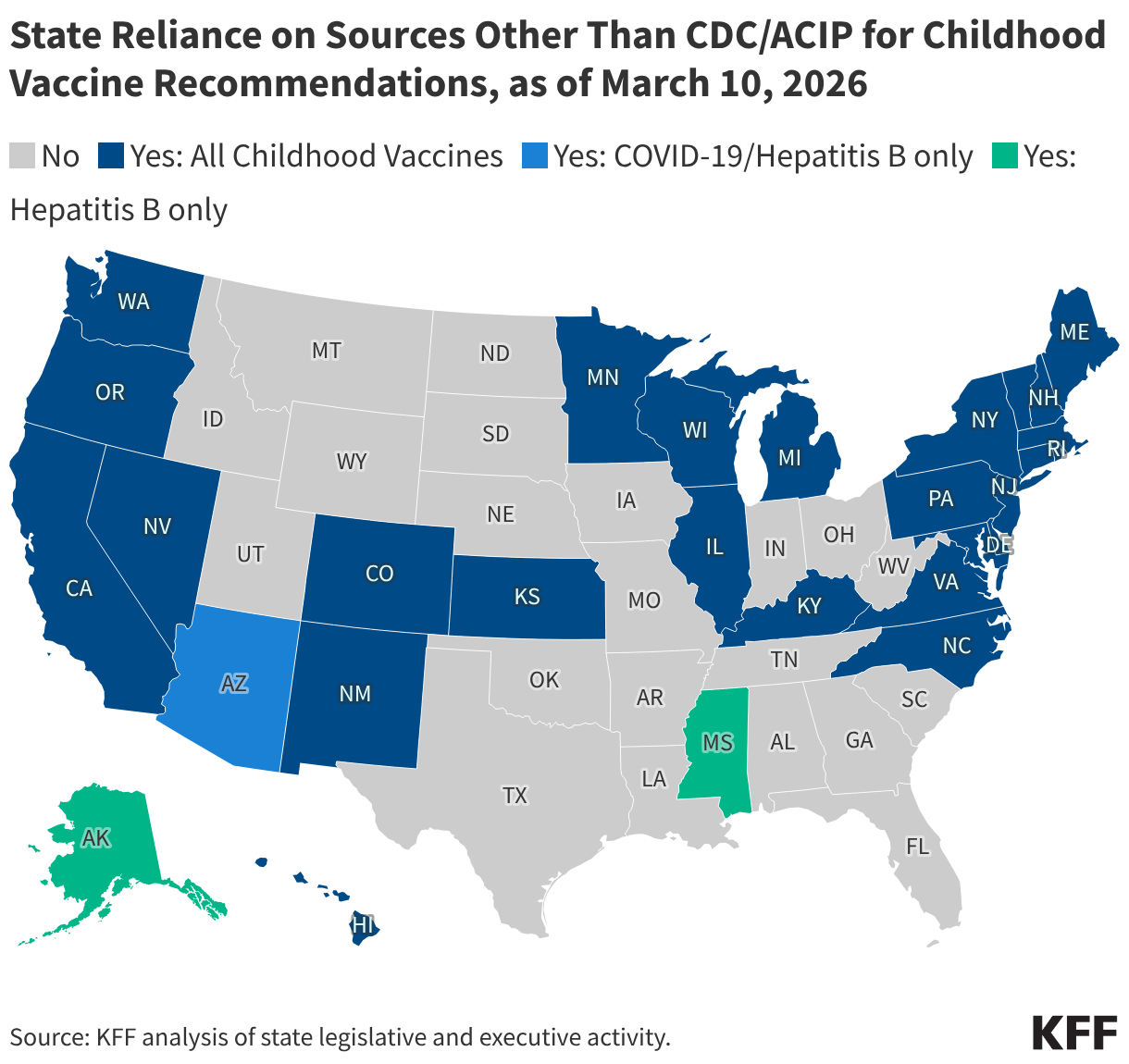
Meanwhile, because of the administration’s changes, a growing number of states, reaching 30 as of March, have announced that they are no longer following CDC recommendations as their benchmark for some or all childhood vaccines and will instead rely on non-federal experts, older versions of the vaccine schedule, or allow their health authorities to determine recommendations based on the latest science and evidence.
While most of these states have Democratic governors, five have Republican governors. The court’s stay does not change these states’ decisions and, in some ways, may allow them to avoid a potential “ping pong” of federal vaccine policy that could result from future legal rulings or actions by the administration.
Still, this latest development may leave parents more confused about where to look for recommendations for their children. KFF polling finds that the public’s trust in CDC for providing reliable vaccine information has continued to fall and, while parents are more likely to say the administration’s recent changes to vaccine recommendations are more negative (47%) than positive (29%), and make them less trusting (despite the administration’s stated goal of restoring trust), there is a growing partisan divide among parents (and the public overall), and falling vaccine rates among children.
This could only become more acute as the next school year approaches and states will need to assess whether they make any changes to school vaccine mandates. As of now, all states continue to mandate vaccines for school-age children, although most allow for non-medical exemptions. However, some states are pursuing changes to reduce or eliminate mandates, such as Florida and New Hampshire.