New Federal Guidelines for Alcohol Use Come as Alcohol Deaths Remain Above Pre-Pandemic Levels
Published: January 13, 2026
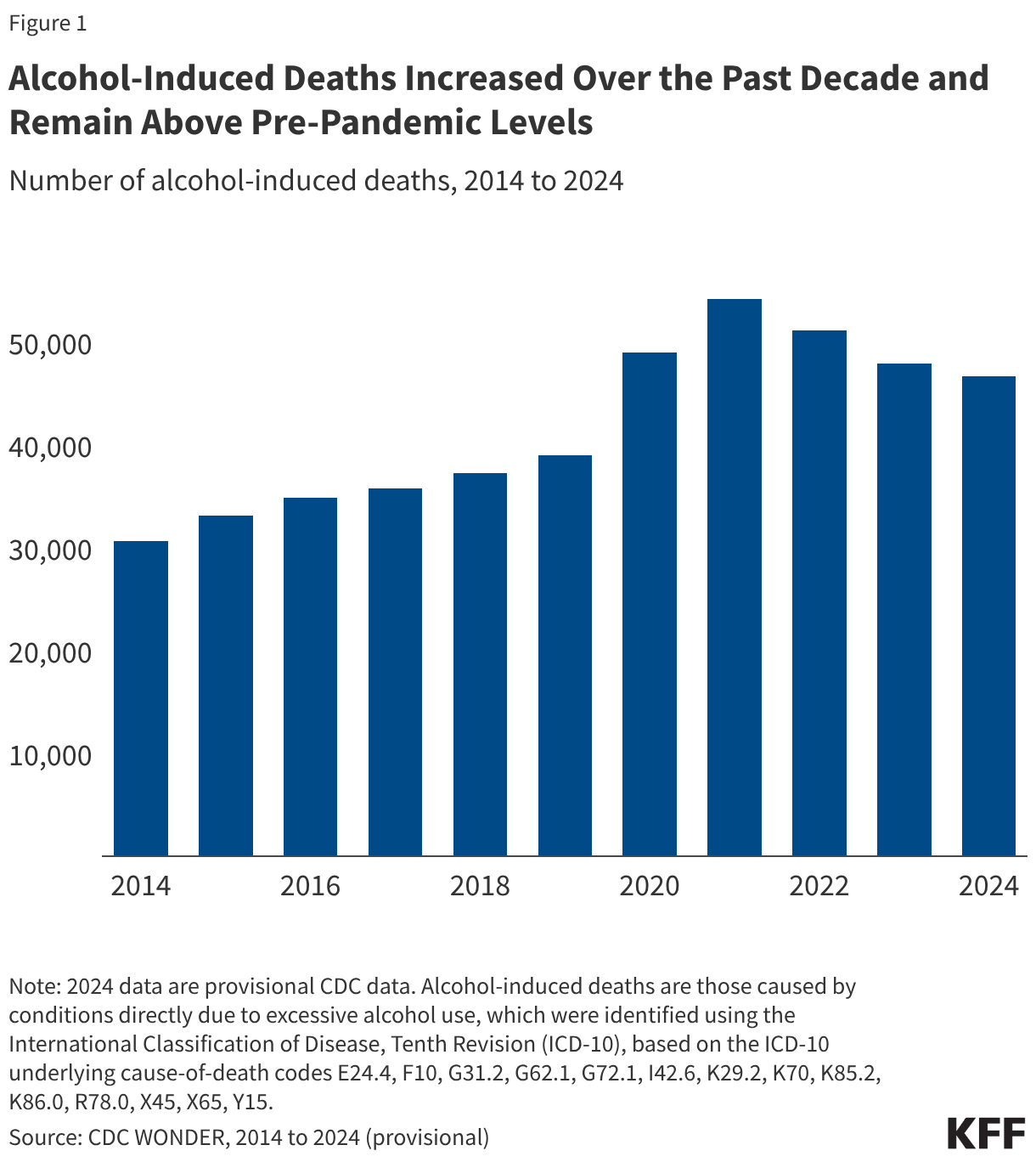
New federal dietary guidelines removing the long-standing recommendation that adults who drink limit their intake to 1 drink per day for women and 2 drinks per day for men come as alcohol induced deaths in the U.S. remain far above levels seen before the Covid-19 pandemic.
The updated federal alcohol guidelines simply advise adults to “consume less for better overall health” without specifying limits – a change that could portend a renewed rise in alcohol-related deaths.
The nation’s 46,756 alcohol-induced deaths in 2024 (the most recent year of data) were about 50% higher than 10 years before and about 20% higher than pre-pandemic levels, after rising sharply during the COVID years and decreasing somewhat since then.
More broadly, KFF polling shows that over half of US adults (54%) say that someone in their family has struggled with an alcohol use disorder, making it the most prevalent non-tobacco substance use disorder. Yet, treatment is very low: federal survey data show that in 2022, only 7.6% of people (12+) with a past year alcohol use disorder received any treatment.
Well established and growing body of evidence places alcohol as a significant contributor to cancer—which one reason why some countries and international health organizations have tightened their recommendations in recent years—with some saying that no amount of alcohol is safe. In January, during the final weeks of the Biden administration, then-Surgeon General Dr. Vivek Murthy released an advisory recommending a reassessment of alcohol consumption limits and updates to the warning label on alcohol products.
Instead of lowering recommendations for alcohol intake, the US guidelines have moved away from numeric thresholds. Without specific limits to point to, it may be harder for individuals and providers to understand risks associated with drinking and identify when drinking may warrant screening or treatment—potentially leading to an increase in alcohol-induced or related deaths.