Child and Adolescent Firearm Deaths: National Trends and Variation by Demographics and States
Youth gun violence sharply increased in the United States in recent years. At the same time, a growing body of research links gun violence to adverse impacts on the mental health and well-being of youth. However, understanding the full scope of the youth gun violence epidemic is limited by the lack of data on nonfatal firearm injuries. Estimates find that for every firearm fatality, there are at least two survivors of firearm injuries. Over the past decade, the number of youth who died by firearm increased by 68% (Figure 1), suggesting that many more youth have experienced nonfatal firearm injuries or some other exposure to gun violence which may impact their mental health (for example, school shootings have increased over time, as has exposure of school-aged children to these shootings).
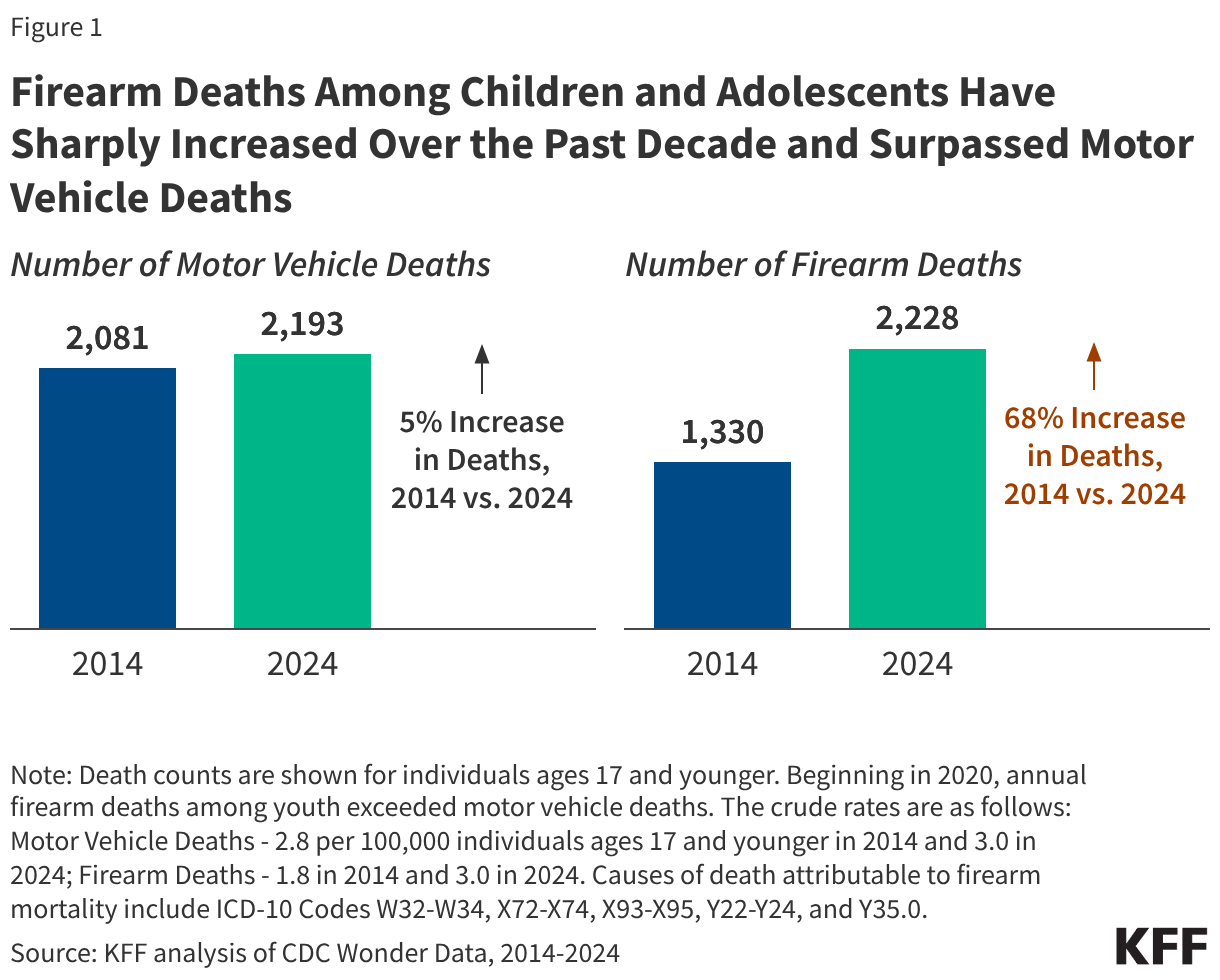
Beginning in 2020, firearm deaths among youth (ages 17 and younger) surpassed motor vehicle deaths for the first time. Motor vehicle deaths – a longstanding leading cause of death among youth – have decreased over several decades and levelled off in recent years, largely as a result of nationwide efforts to improve safety. However, firearm deaths remain elevated in recent years and a number of safety efforts put forth in the previous Biden administration are being rolled back during the second Trump administration. This includes dismantling the White House Office of Gun Violence Prevention; building a Second Amendment Section under the Department of Justice, focused on expanding gun-rights protections; and reducing a number of funds through the Department of Justice and Bipartisan Safer Communities Act (BSCA), which were intended for improving safety and mental health resources for children. The BSCA also allocated funds to support states with Extreme Risk Protection Order policies – a red flag law linked to a reduction in suicide deaths – however, it is unclear how this funding will be impacted going forward. Separately, a KFF poll found that 44% of parents with children below 18 have a gun in their home; and large shares of these parents said a gun is stored loaded (32%), stored in an unlocked location (32%), or any gun in is stored in the same location as ammunition (61%).
This brief explores the impacts of gun violence on children and adolescents (ages 17 and below), including changes in death rates over time and by demographics, methods of gun violence exposure, and how gun violence can impact mental health and well-being. Key findings include:
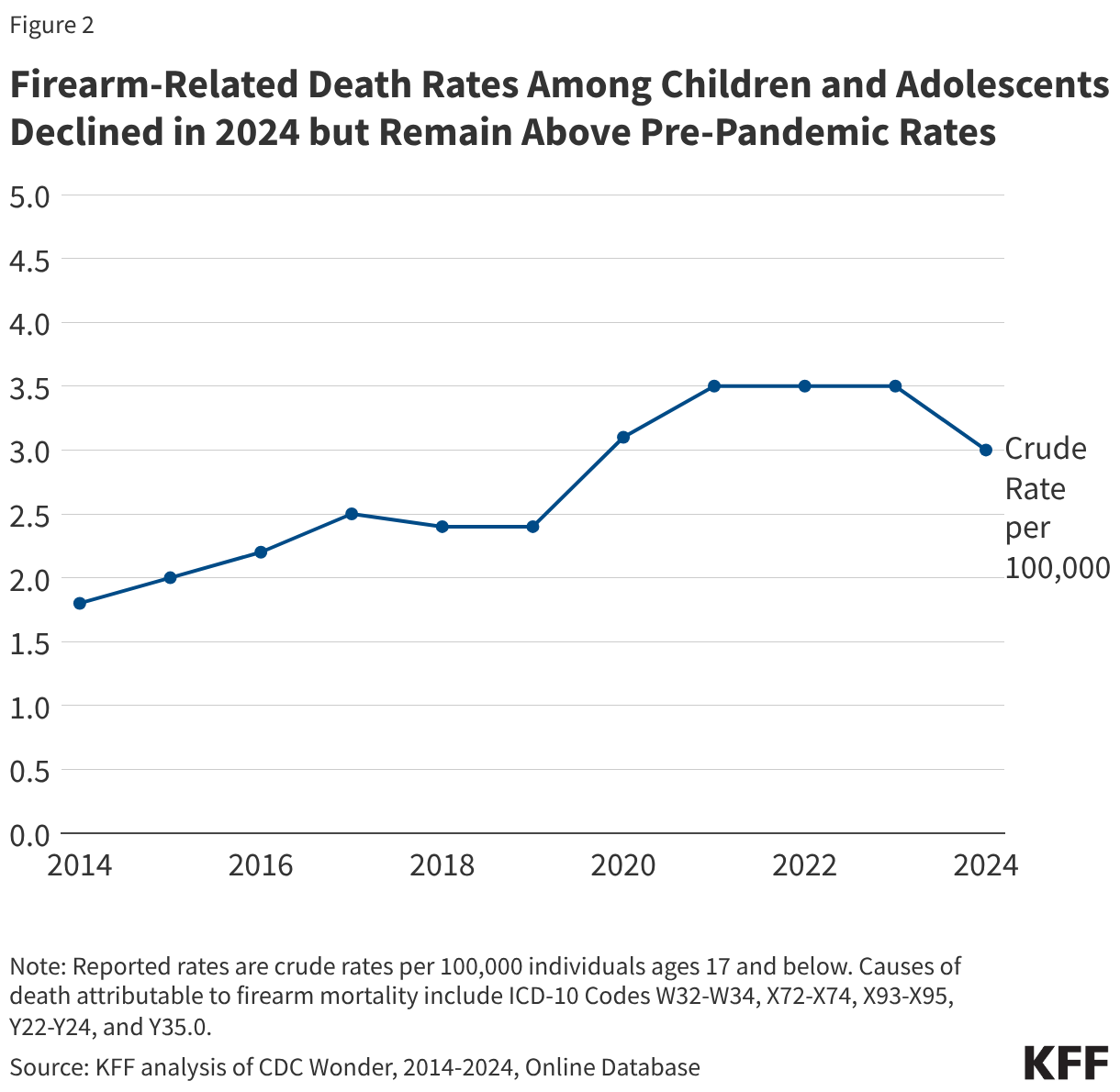
- Firearm death rates among children and adolescents increased with the onset of the pandemic, primarily driven by gun assaults. From 2021 to 2023, the firearm death rate held steady at 3.5 per 100,000 children and adolescents, before declining to 3.0 in 2024, but remaining above pre-pandemic levels.
- Firearm deaths are more common among adolescents (ages 12-17) than younger children; Black and American Indian and Alaska Native children and adolescents than their White peers; and male children and adolescents than female.
- States vary widely by firearm death rate, although high rates are more common in Southern states.
How have firearm deaths changed in recent years among children and adolescents?
Firearm-related death rates among children and adolescents sharply increased in 2020, alongside the onset of the pandemic; however, the latest CDC data shows a decline from 2023 to 2024 (Figure 2). From 2014 to 2024, nearly 22,000 youth ages 17 and younger died by firearm.1 During this period, firearm death rates gradually rose until 2017, held steady for a few years, and then quickly increased during the pandemic (Figure 1). While the death rate remains higher than pre-pandemic rates, there was a decrease from 2023 to 2024 (3.5 vs. 3.0 firearm-related deaths per 100,000 children and adolescents).
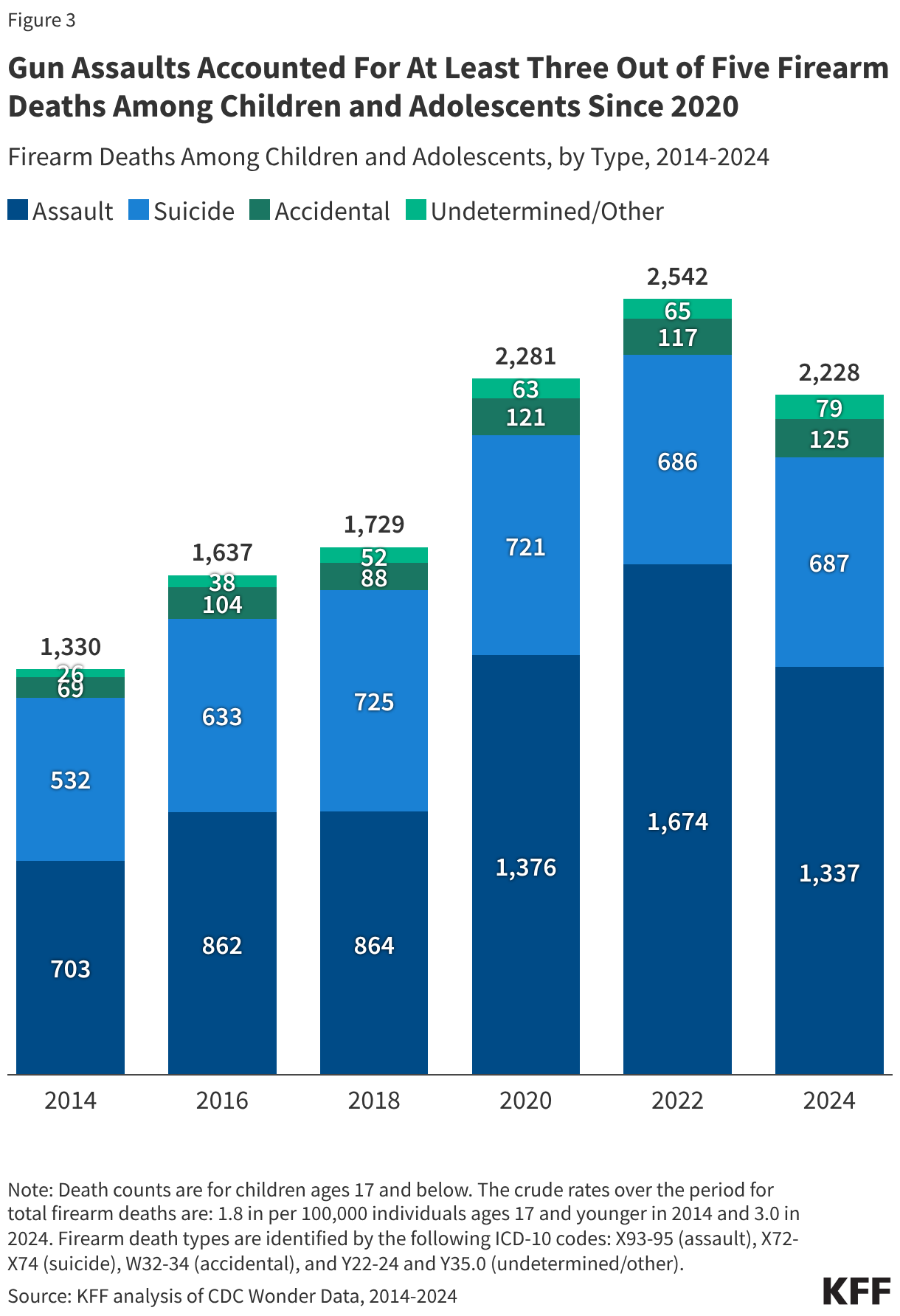
The increase in firearm deaths in recent years was driven by gun assaults, which accounted for at least three out of five firearm deaths among children and adolescents since 2020. Gun assault deaths among children and adolescents increased over the past decade, peaking in 2022 with 1,674 deaths, before decreasing to 1,337 deaths in 2024 (Figure 3). The number of suicide deaths by firearm among children and adolescents increased overall in the past decade; and, in 2024, accounted for 31% of firearm deaths.
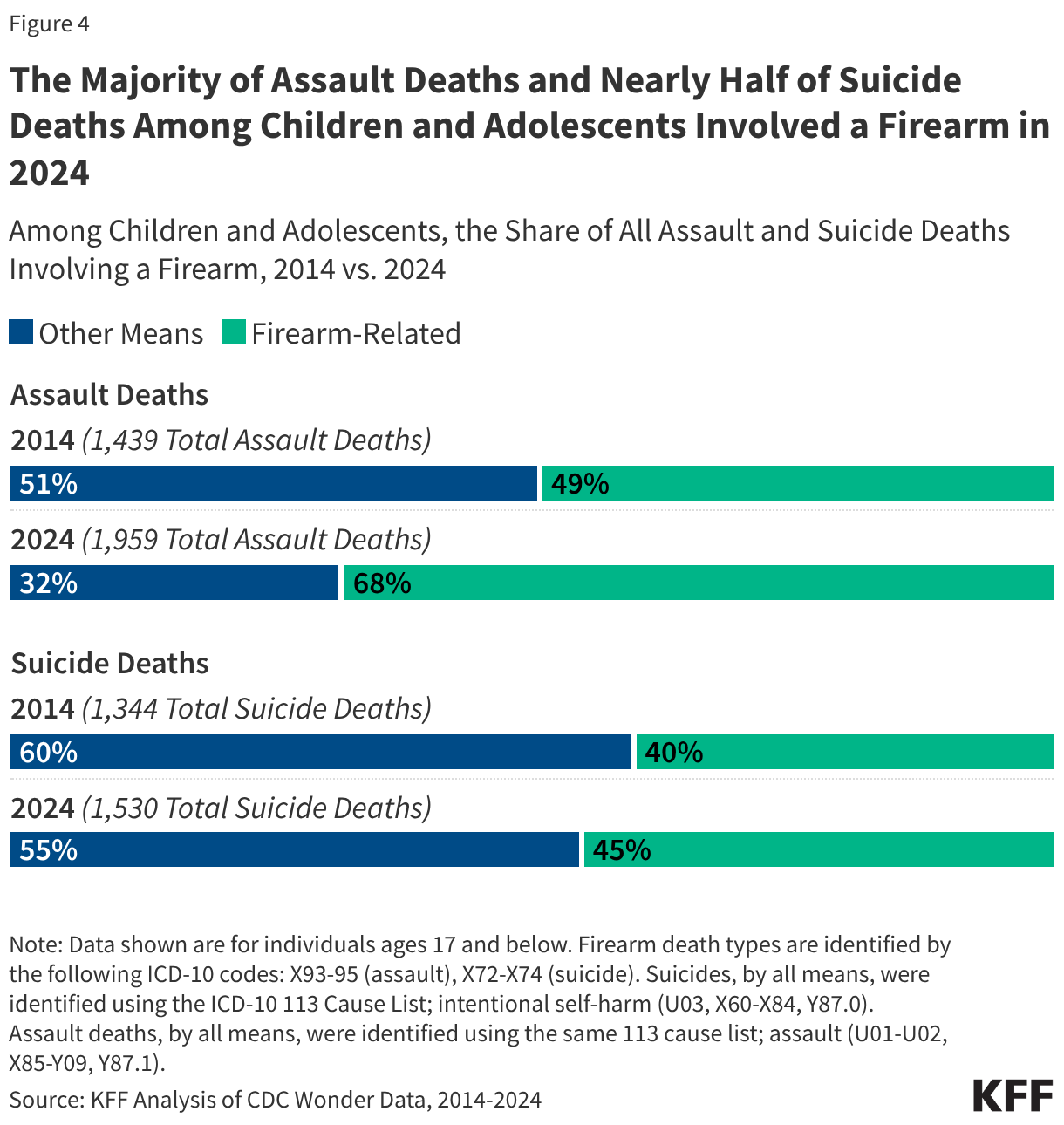
By 2024, 68% of total assault deaths among children and adolescents involved a firearm; and 45% of total suicide deaths involved a firearm (Figure 4). From 2014 to 2024, the share of total assault deaths involving a firearm increased from 49% (703 out of 1,439 deaths among children ages 17 and younger) to 68% (1,337 out of 1,959 deaths). During the same period, the share of total suicide deaths involving a firearm also increased but to a lesser extent compared to firearm assaults. In 2024, 45% of suicide deaths involved a firearm (687 out of 1,530 deaths among children ages 17 and younger) compared to 40% in 2014 (532 out of 1,344 deaths).
How do youth firearm deaths vary by demographic characteristics?
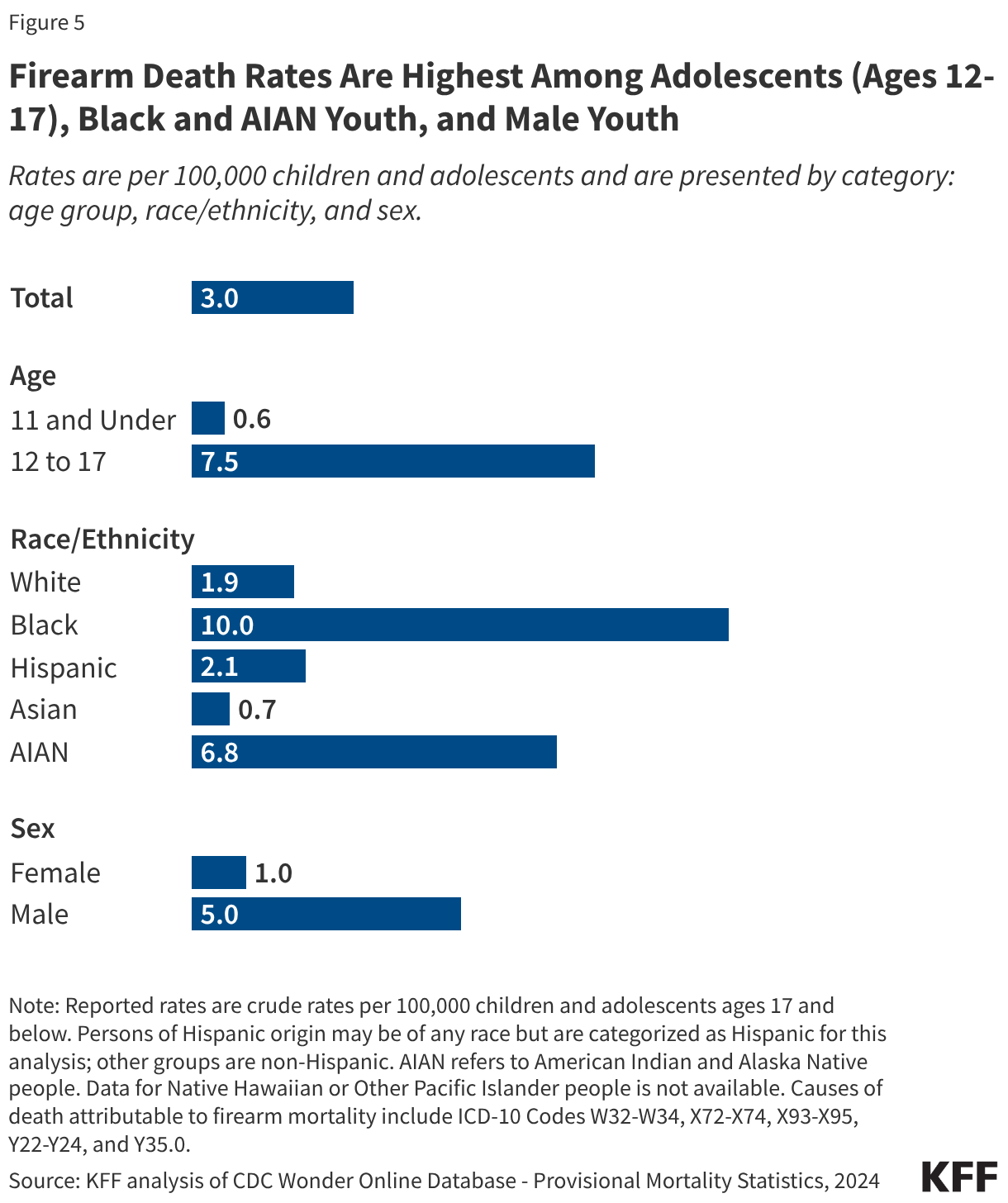
In 2024, firearm death rates were highest among adolescents (ages 12-17), Black and American Indian and Alaska Native (AIAN) youth, and male youth (Figure 5). The adolescent (ages 12-17) firearm death rate was 7.5 per 100,000 compared to 0.6 for children ages 11 and below. Black and AIAN youth experienced a significantly higher firearm death rate (10.0 and 6.8 per 100,000) compared to their White peers (1.9). Males ages 17 and below were five times more likely than their female peers to die by firearm (5.0 per 100,000 vs. 1.0 in 2024).
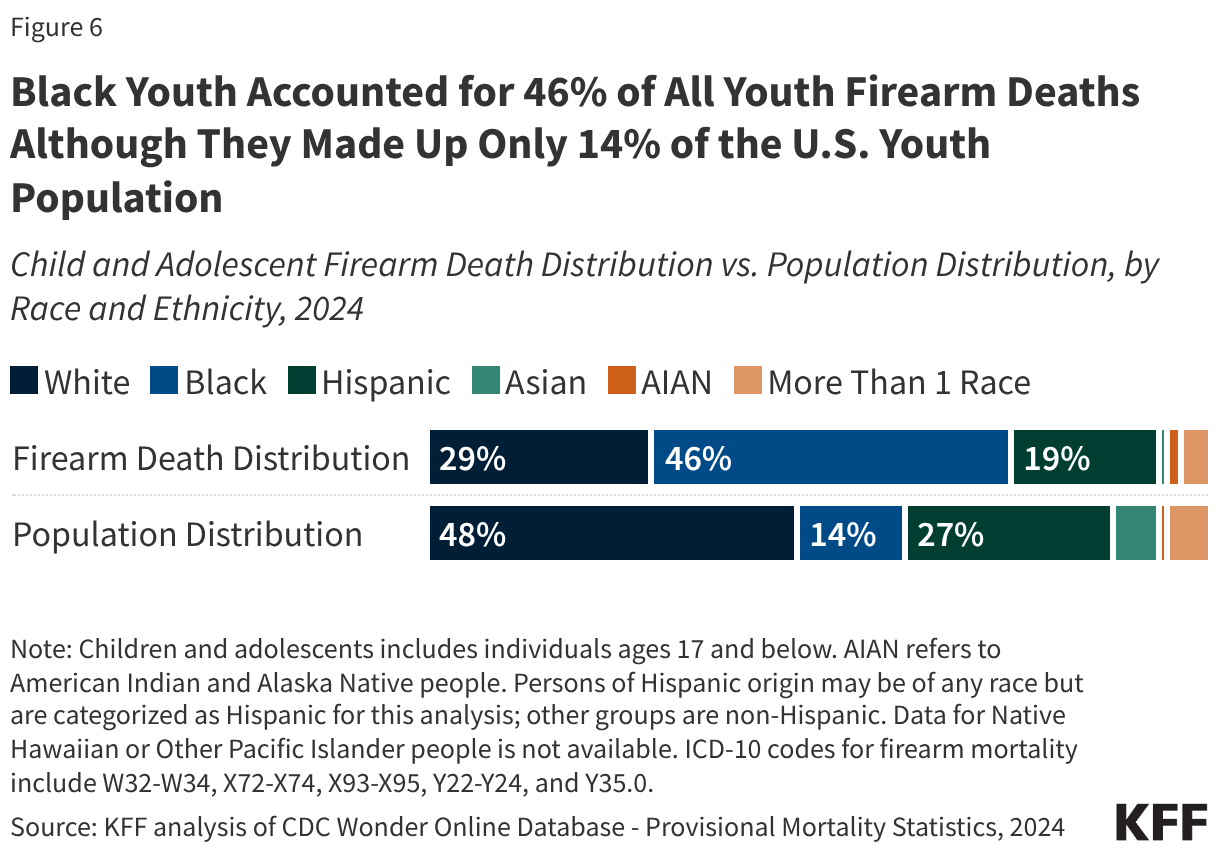
In 2024, Black youth accounted for 46% of all youth firearm deaths although they made up only 14% of the U.S. youth population (Figure 6). In contrast, White youth accounted for 29% of all youth firearm deaths and they made up nearly half (48%) of the youth population in 2024.
How do youth firearm deaths vary across states?
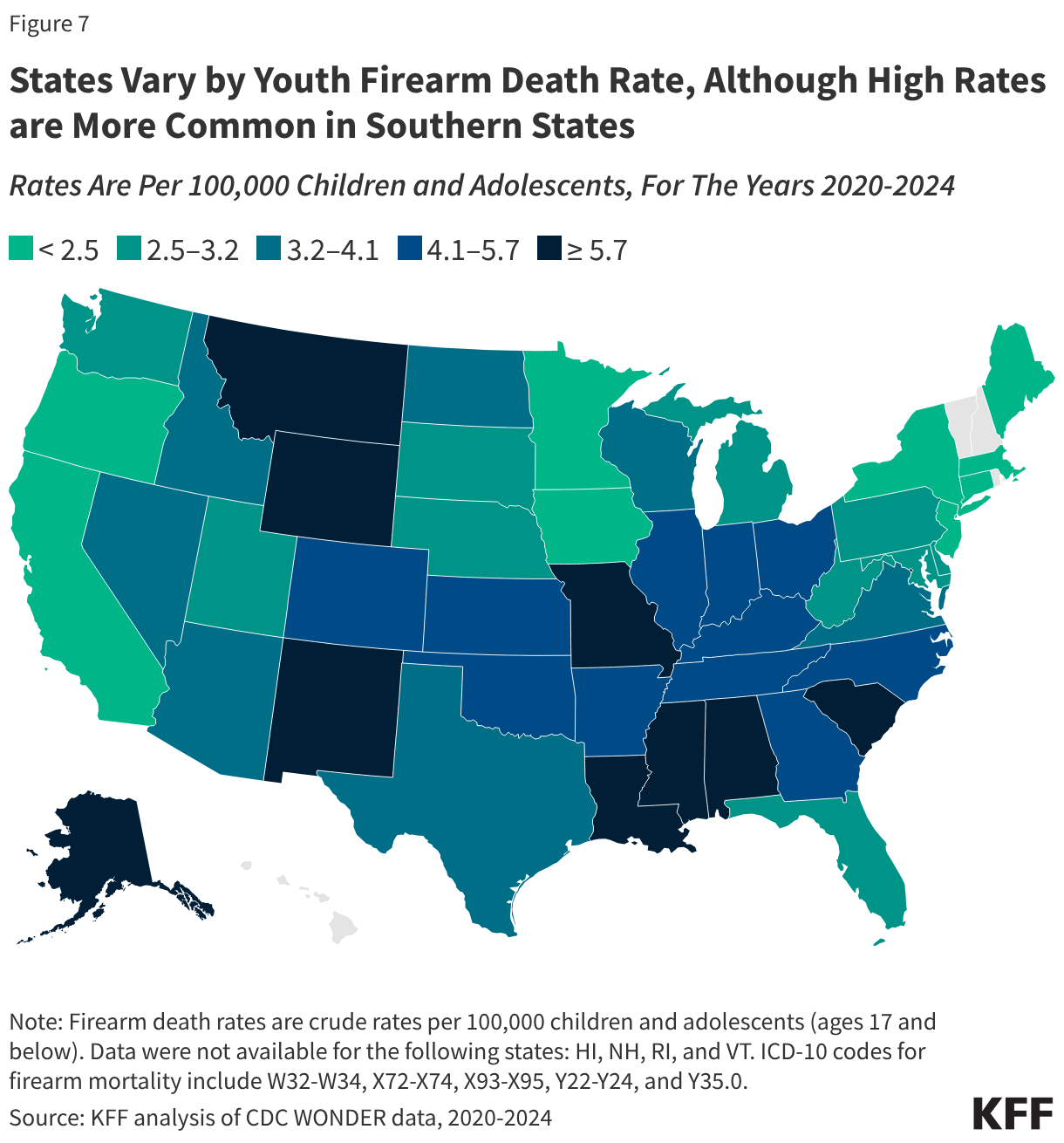
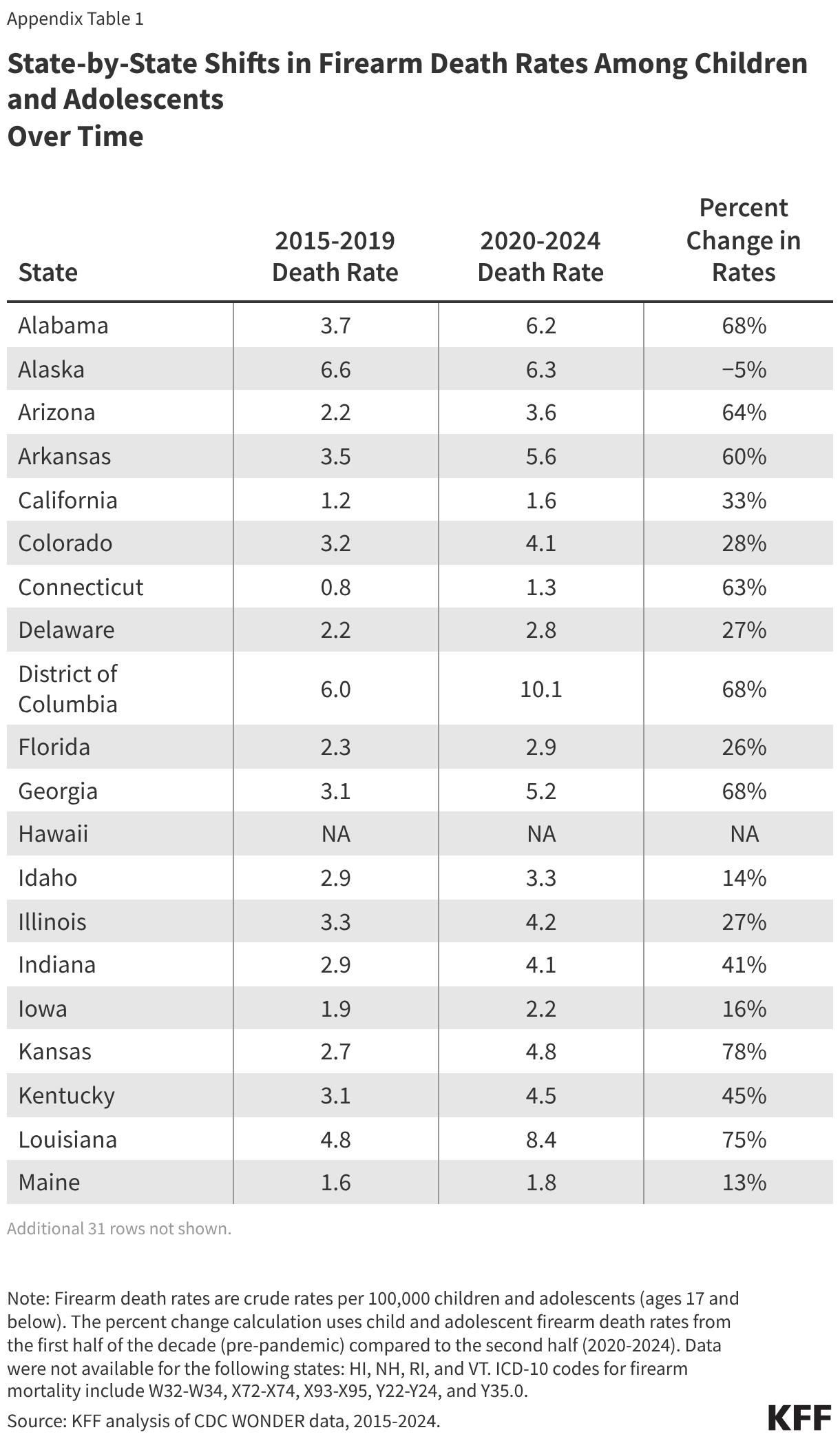
Firearm death rates among children and adolescents range from a high of 10.1 per 100,000 in the District of Columbia to a low of 0.7 in Massachusetts; however, many states with high rates are concentrated in the south (Figure 9). From 2020 to 2024 the states with the highest firearm death rates among children and adolescents were the District of Columbia, Mississippi, and Louisiana (10.1, 8.7, and 8.4 per 100,000 respectively for combined years, 2020-2024). Almost all states experienced an increase in firearm death rates over the decade, with the largest increases seen in North Carolina and Mississippi (109% and 107% respectively) (see Appendix). The states with the lowest firearm death rates were Massachusetts, New Jersey, and New York (0.7, 0.9, and 1.1 per 100,000 respectively for combined years, 2020-2024). States also vary widely in their provisions on gun safety, including child access prevention laws and Extreme Risk Protection Order (ERPO) policies.
Appendix
- KFF analysis of youth firearm mortality is based on data from Center for Disease Control and Prevention (CDC) Wonder injury and mortality database. In this analysis, firearm-related deaths are defined as gun assault deaths, suicide deaths by firearm, deaths due to accidental firearm discharge, legal intervention leading to firearm death, and firearm deaths from an undetermined cause. ↩︎