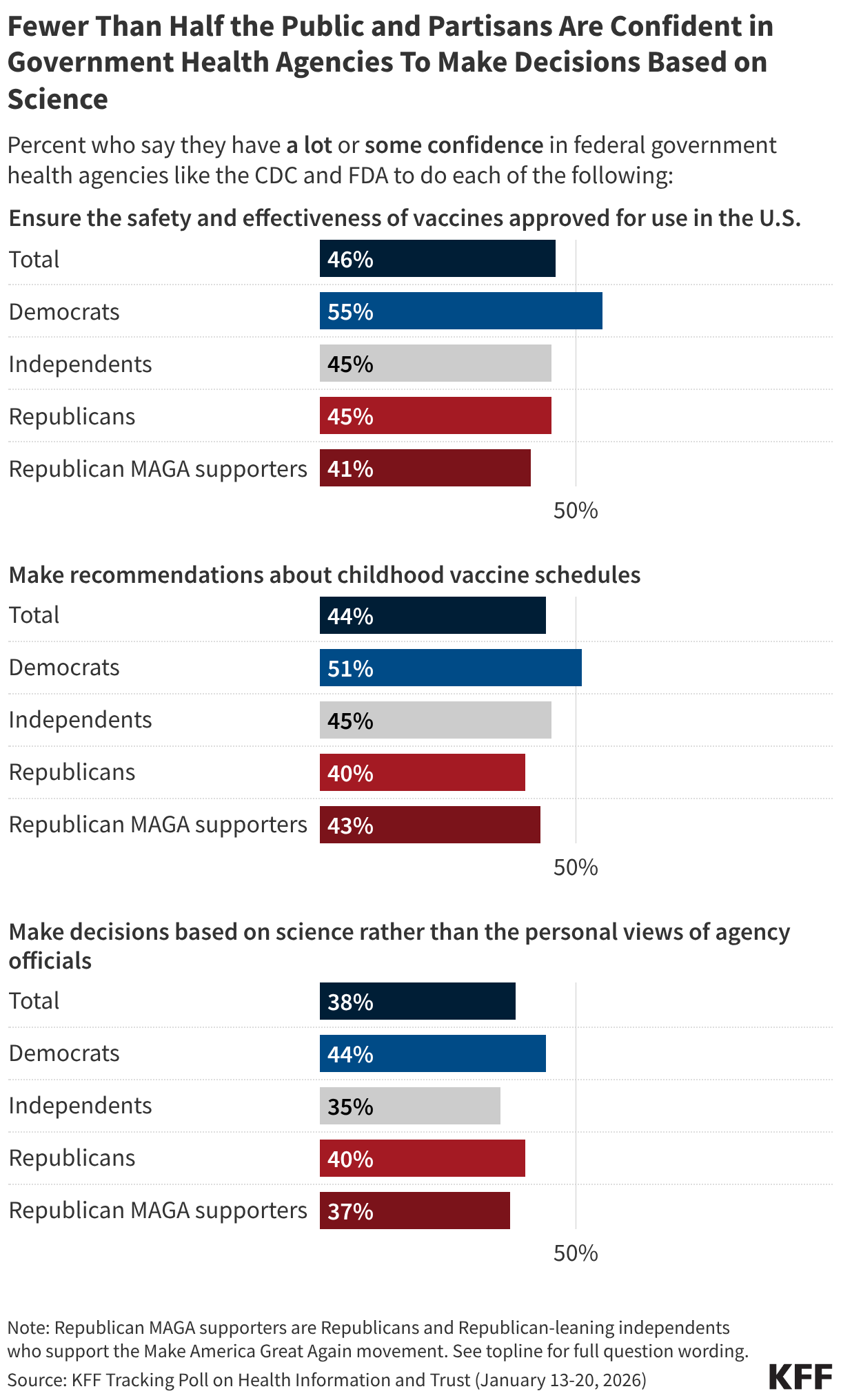
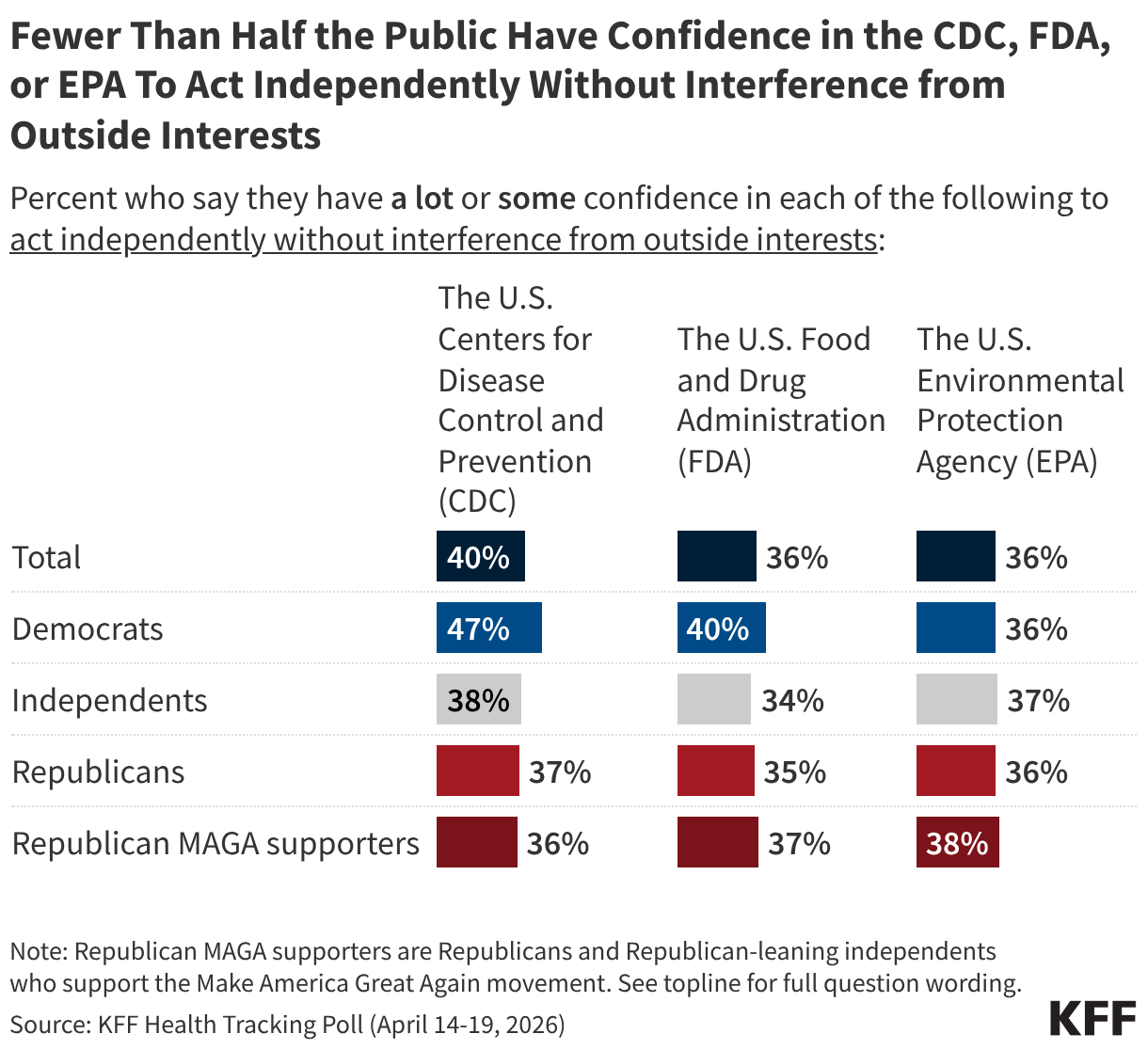
Many adults lack confidence in agencies like the CDC or FDA to carry out some of their core responsibilities. While Democrats are more likely than Republicans to have at least “some confidence” in government health agencies to ensure vaccine safety and effectiveness, fewer than half across partisans have confidence in these agencies to make decisions based on science or to act independently. For more information, see KFF’s July 2025 Tracking Poll on Health Information and Trust.
KFF Polling on Health Information and Trust
Key insights and trends from KFF’s polling on Health Information and Trust
December 4, 2025
Trusted Sources of Health Information
Confidence in Federal Health Agencies
Trends in Trust of Government Health Agencies and Officials
At the onset of the COVID-19 pandemic, there were high levels of bipartisan trust in information from the U.S. Centers for Disease Control and Prevention (CDC). Trust in the agency has since declined amid widening partisan divisions. Keep scrolling to see trends among the public and partisans.
KFF polling has found trust in information from other health agencies and officials has also declined amid partisan divisions since 2020, including for the U.S. Food and Drug Administration (FDA), state government officials, and local public health departments.
Who Does the Public Trust For Vaccine Information?
Amid declining trust in government health agencies, health care providers have consistently remained the most trusted source of vaccine information among the public. Majorities also trust medical associations like the American Medical Association (AMA) and American Academy of Pediatrics (AAP) for reliable vaccine information, higher than the share who trust the CDC, FDA, or HHS Secretary Robert F. Kennedy Jr. Trust differs by partisanship, with Republicans less trusting than Democrats of most sources, but more trusting of Secretary Kennedy. Republican and Republican-leaning independents who support the Make America Great Again (MAGA) movement are as likely to trust Secretary Kennedy as they are their own doctor. For more information, see KFF’s September 2025 Tracking Poll on Health Information and Trust.
Who Parents Trust for Childhood Vaccine Information
Among parents of children under age 18, pediatricians are the most trusted source of reliable vaccine information. Smaller shares, but still majorities, also trust their local public health department, the CDC, and the FDA. Over half of parents trust their friends and family for vaccine information, while far fewer express trust in Robert F. Kennedy Jr., pharmaceutical companies, or health and wellness influencers. As with the public overall, partisanship plays a role in who parents trust for vaccine information. For more information, see the KFF/Washington Post Survey of Parents.
Among parents, Secretary Kennedy garners trust on vaccines from a majority of Republican supporters of the Make America Great Again, or MAGA, movement (18% of all parents) and supporters of the Make America Healthy Again, or MAHA, movement (38% of all parents). While slim majorities of these MAGA and MAHA parents trust Kennedy for vaccine information, larger shares express trust in their child’s pediatrician.
News, Social Media, and AI
Use and Trust of News Sources for Health Information
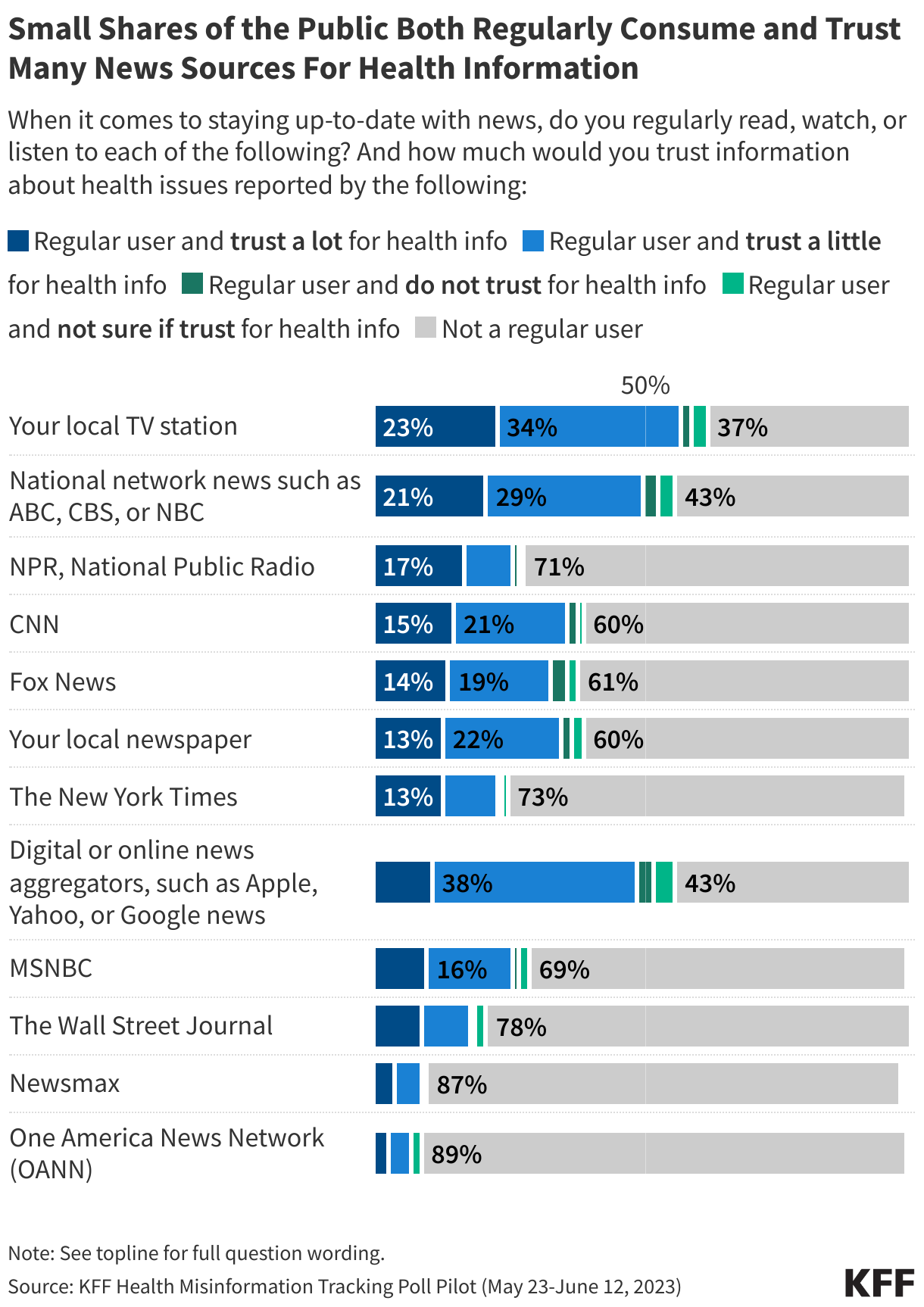
KFF’s Health Misinformation Tracking Poll Pilot measured the public’s consumption of a variety of television, print, radio, and digital news media sources as well as their trust in these sources for information about health issues. Overall, few adults both regularly consume most news sources and trust them a lot for information on health issues, with local and network television news topping the list. Nearly a quarter (23%) of adults say they regularly watch their local TV station and would trust it “a lot” for health information, while a similar share (21%) say the same about national network news. Other news sources, including NPR, CNN, Fox News, local newspapers, The New York Times, digital news aggregators, and MSNBC have trusting audiences that make up between one in ten and one in six of the overall public.
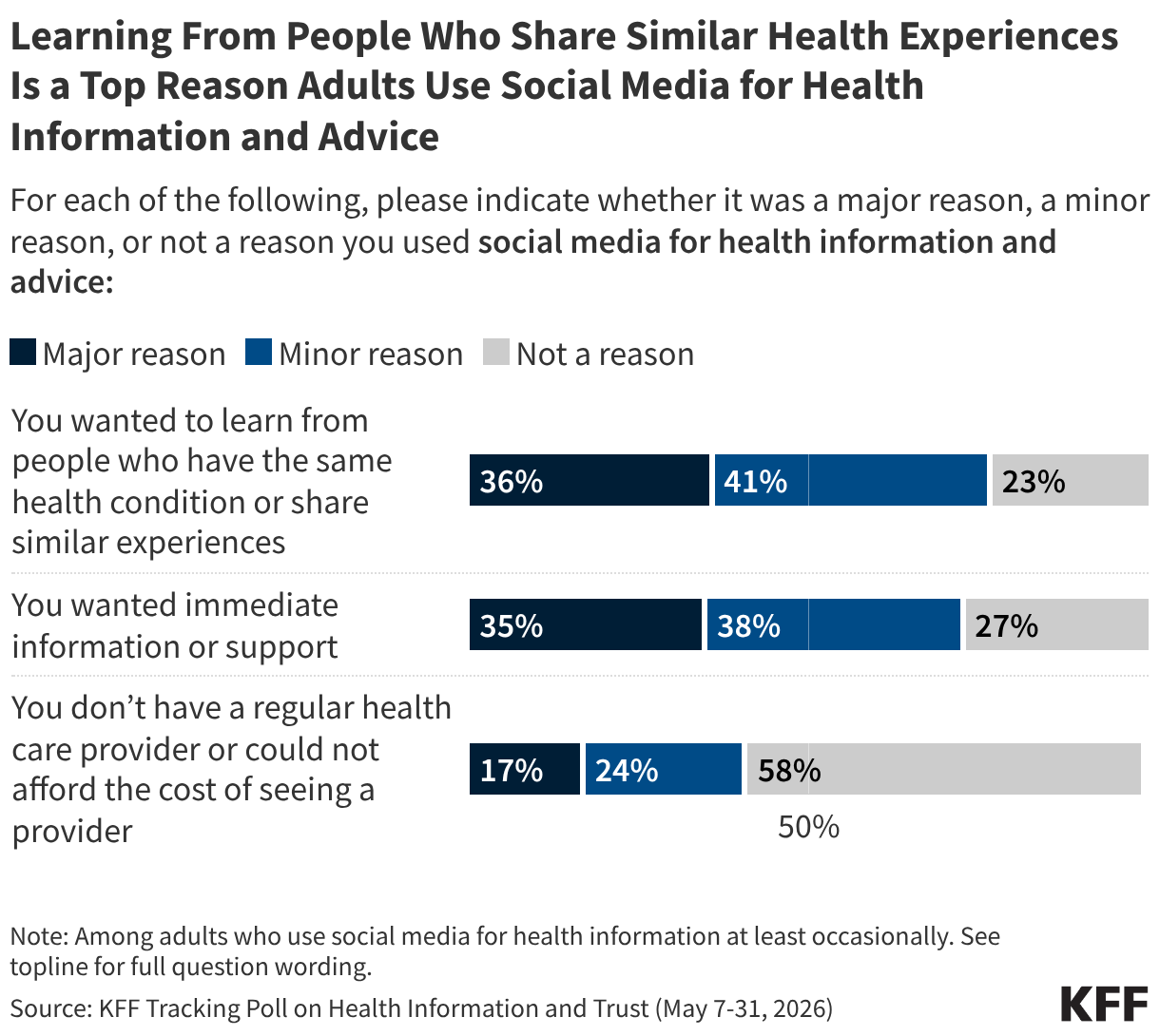
Social Media Use for Health Information
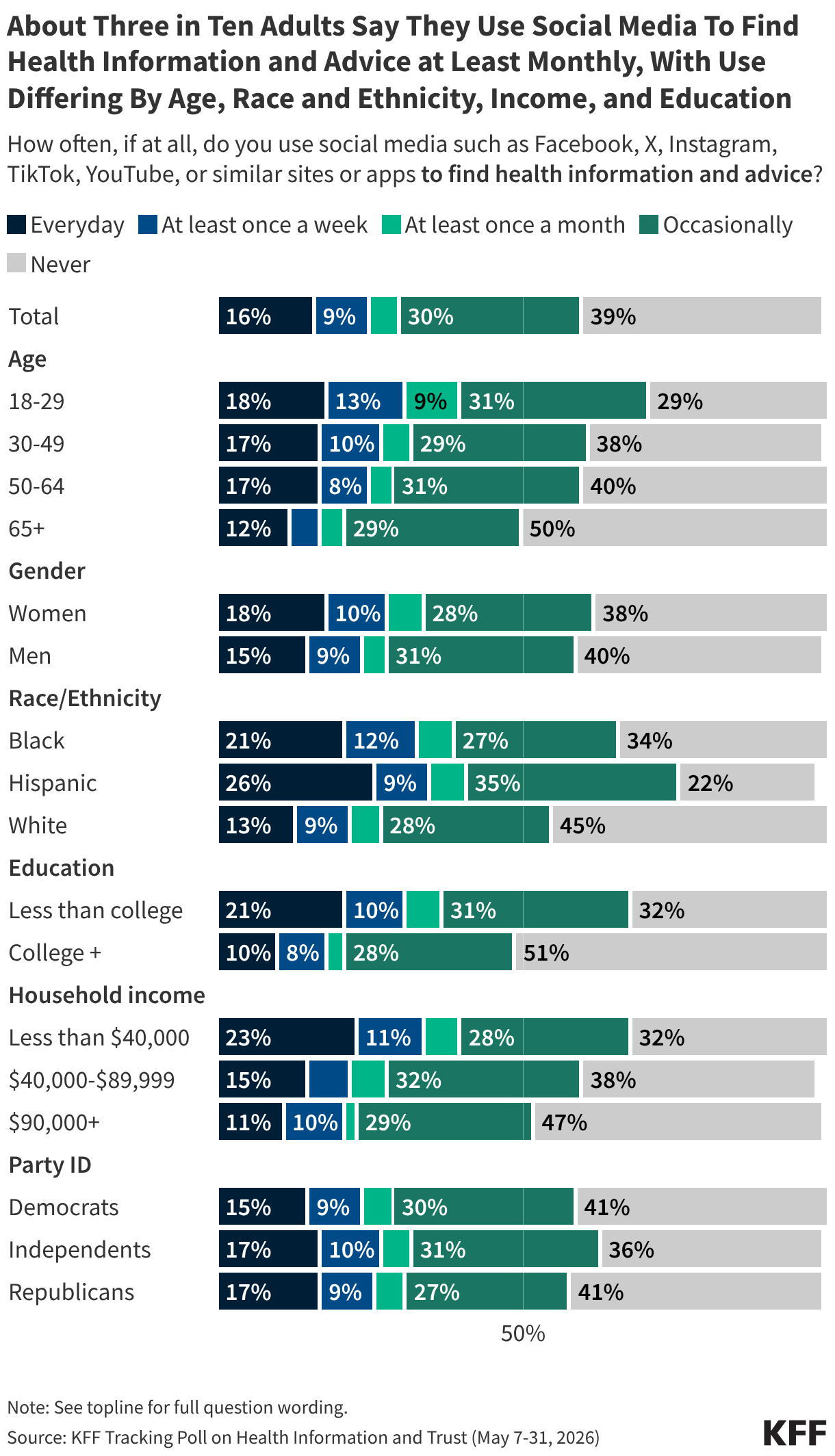
Just over half of adults say they use social media to find health information and advice “at least occasionally,” including larger shares of younger adults, and Black and Hispanic adults. For more information on social media use and trust see KFF’s July 2025 Tracking Poll on Health Information and Trust.
While just over half of the public report actively using social media to find health information and advice, larger shares report being exposed to such information, with majorities saying they have recently seen content related to weight loss, diet, or nutrition and mental health.
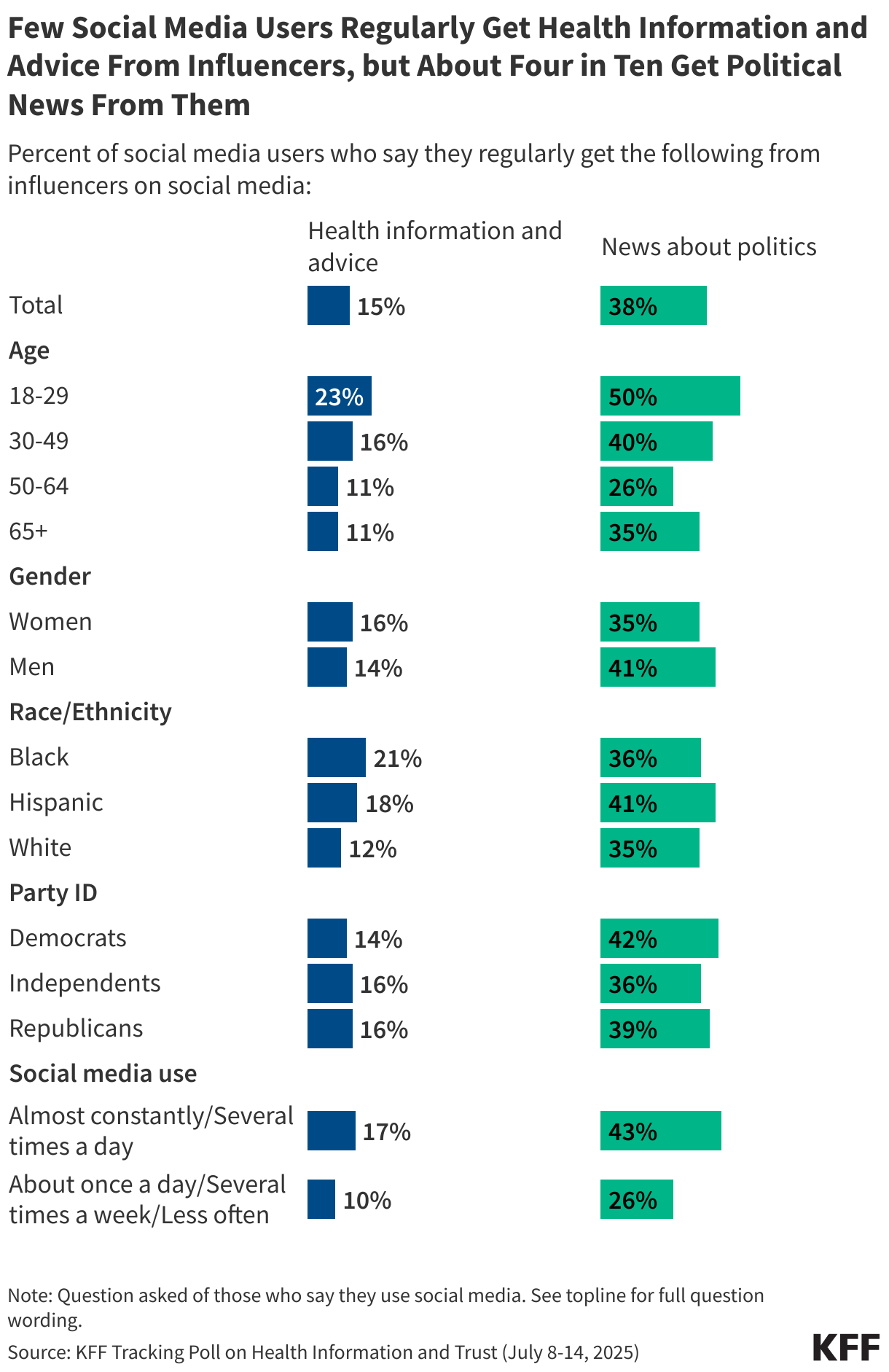
While four in ten social media users say they regularly get information about news and politics from social media influencers, far fewer (15%) say they turn to influencers for health information and advice. Younger adults, Black adults, and more frequent social media users are more likely than their peers to say they rely on influencers for health information. For more information on the relative impact of influencers on the public and health policy debates, see KFF CEO Drew Altman’s column.
Trust in Social Media for Health Information
Across different social media platforms, fewer than half of users say they find at least “some” of the health information they see on these platforms to be trustworthy. Younger users tend to be more trusting than older users of health content on certain platforms including TikTok, YouTube, Instagram, and Reddit.
While few say they trust social media when it comes to health, KFF’s 2023 Health Misinformation Tracking Poll Pilot found that that those who turn to social media more frequently for health information may be more susceptible to health misinformation. Adults who reported using social media at least weekly were more likely than less frequent users to believe at least one false claim related to either COVID-19, reproductive health, or firearms.
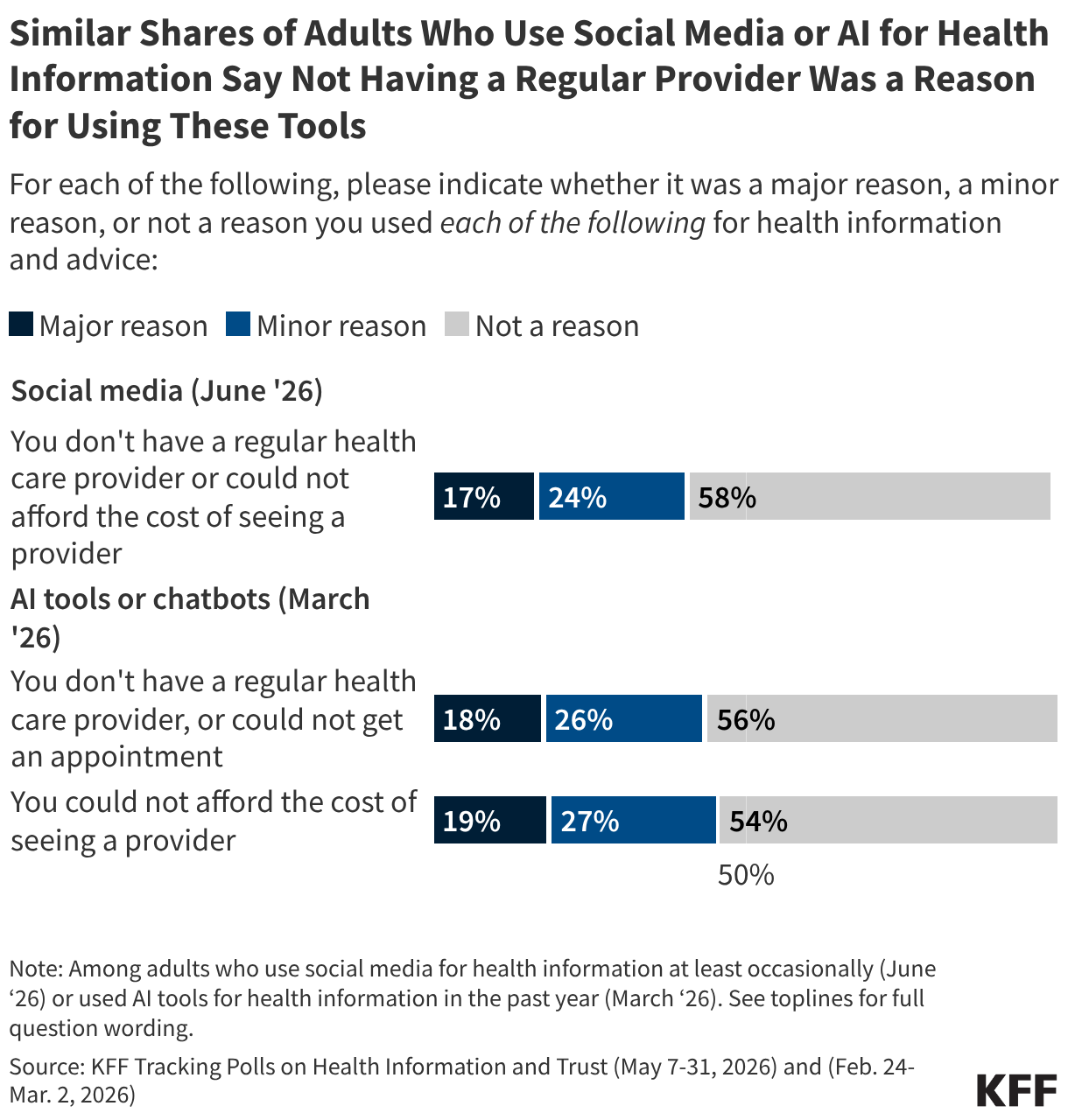
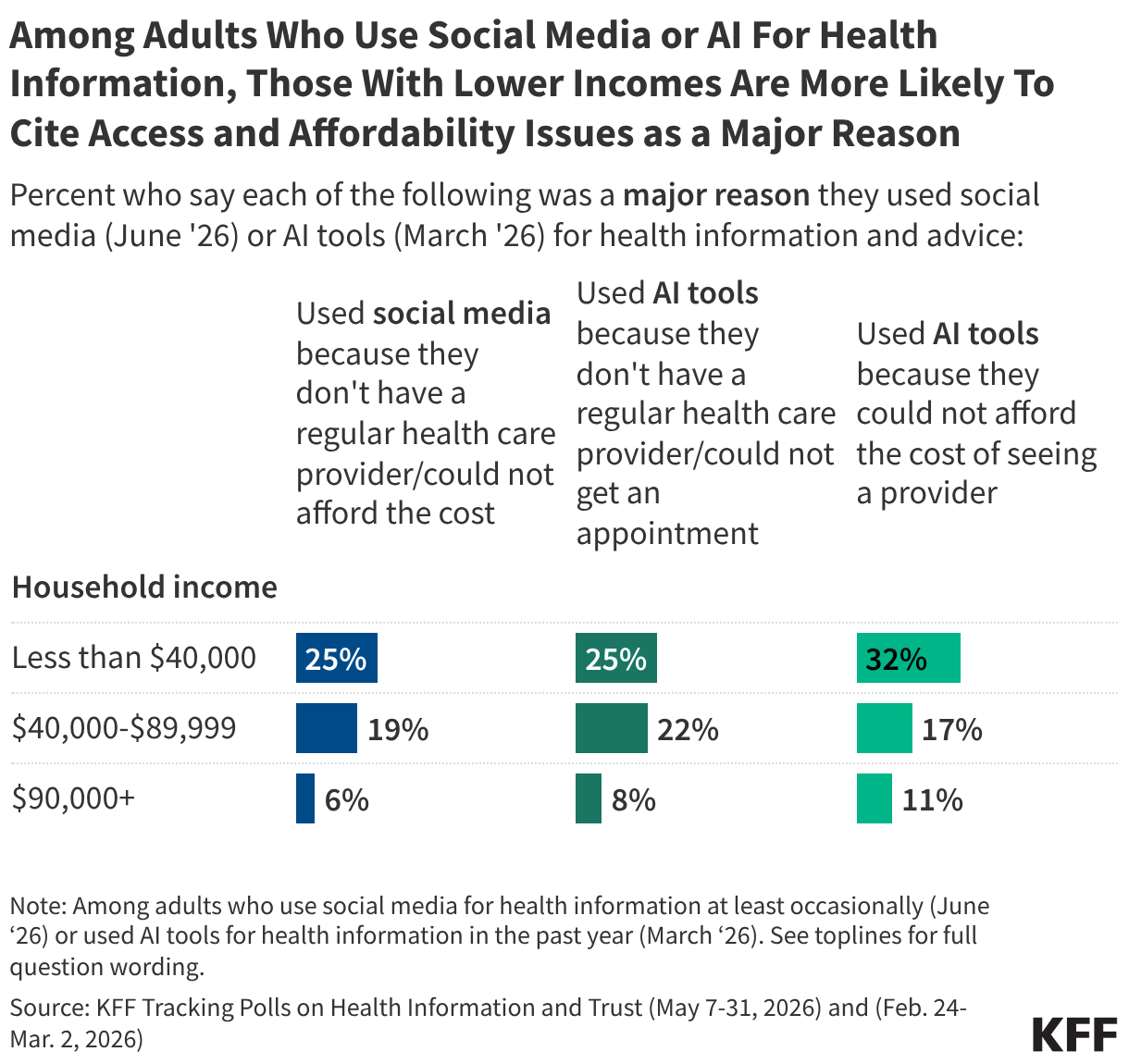
AI and Health Information
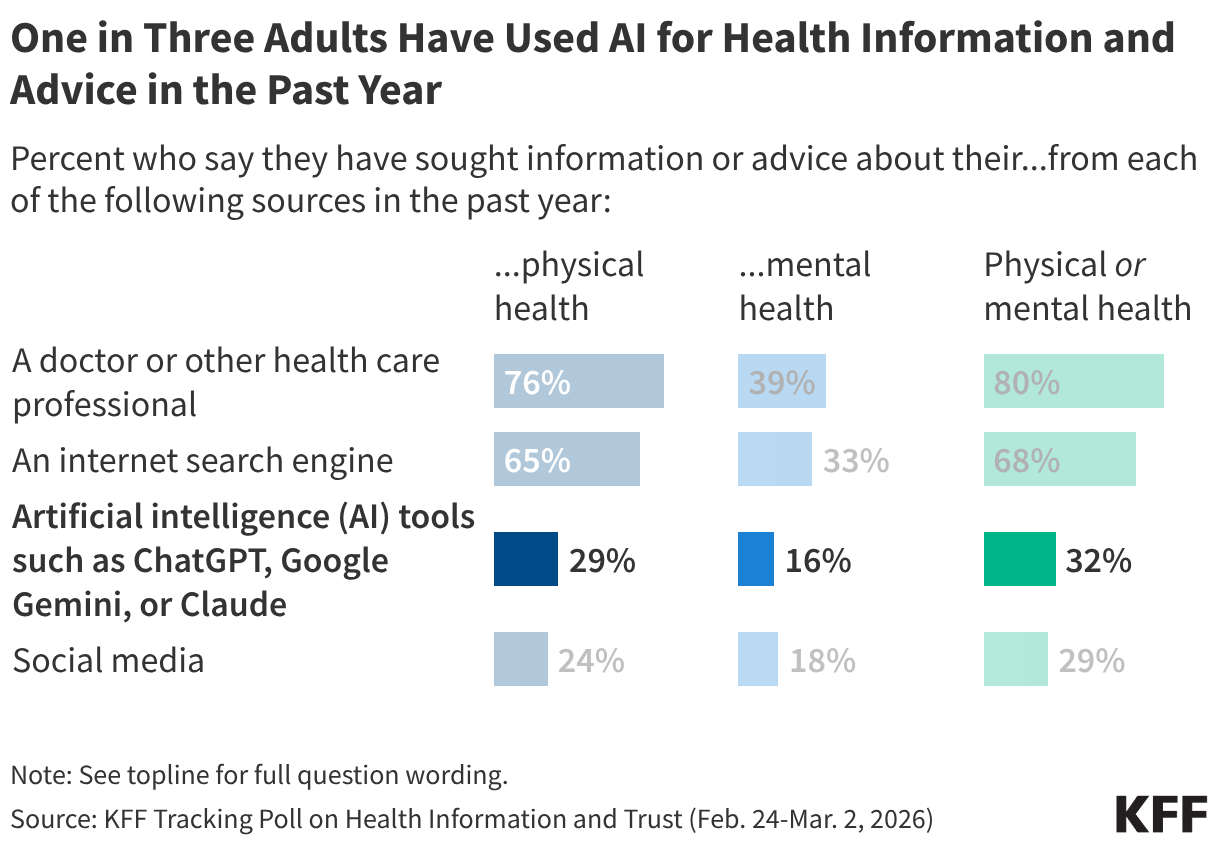
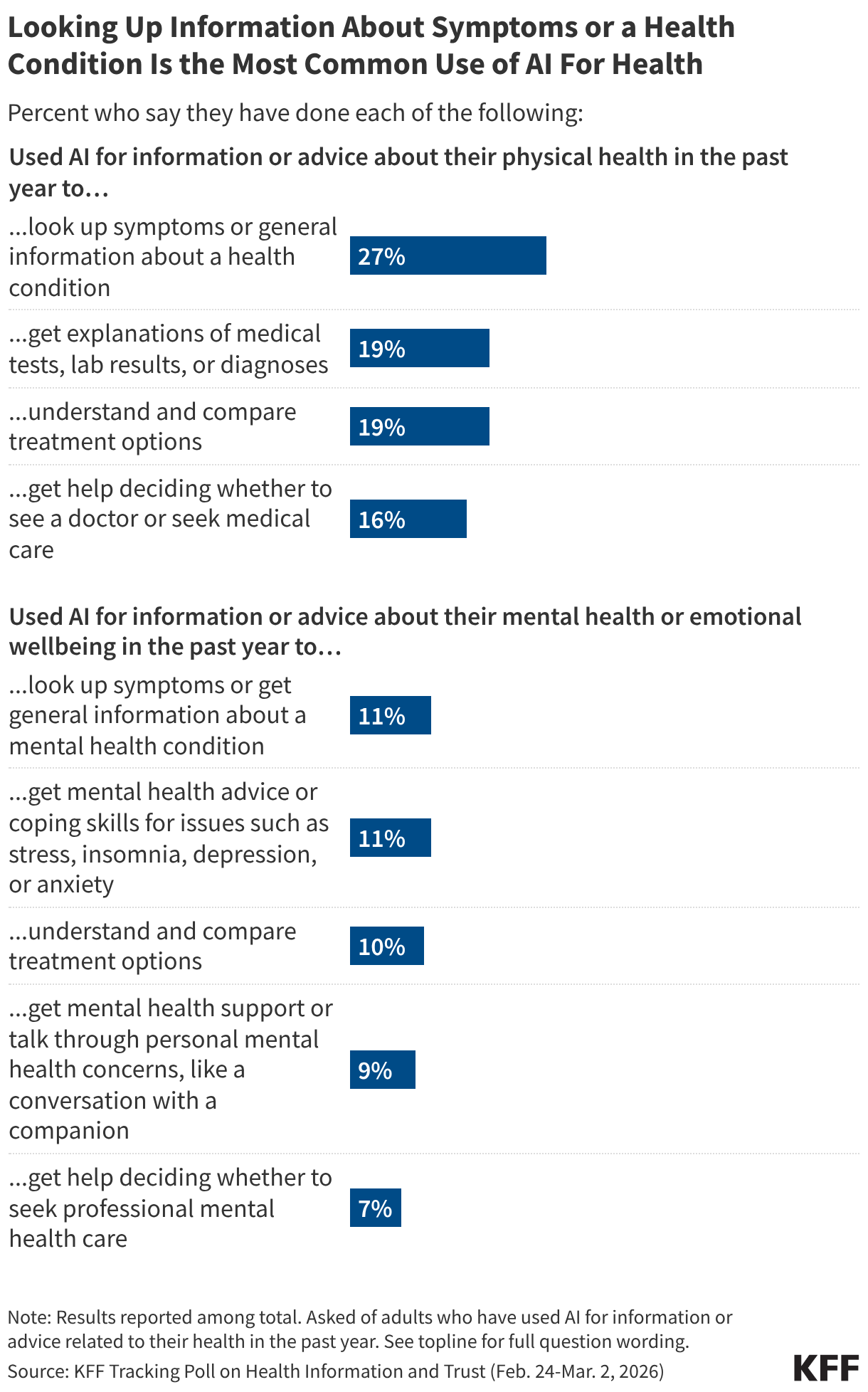
While most adults say they have used or interacted with artificial intelligence (AI) in some form, use of this technology for health information and advice is much less common, though younger adults are more likely to report using AI for this purpose. For more information, see KFF’s Health Tracking Poll on Artificial Intelligence and Health Information.
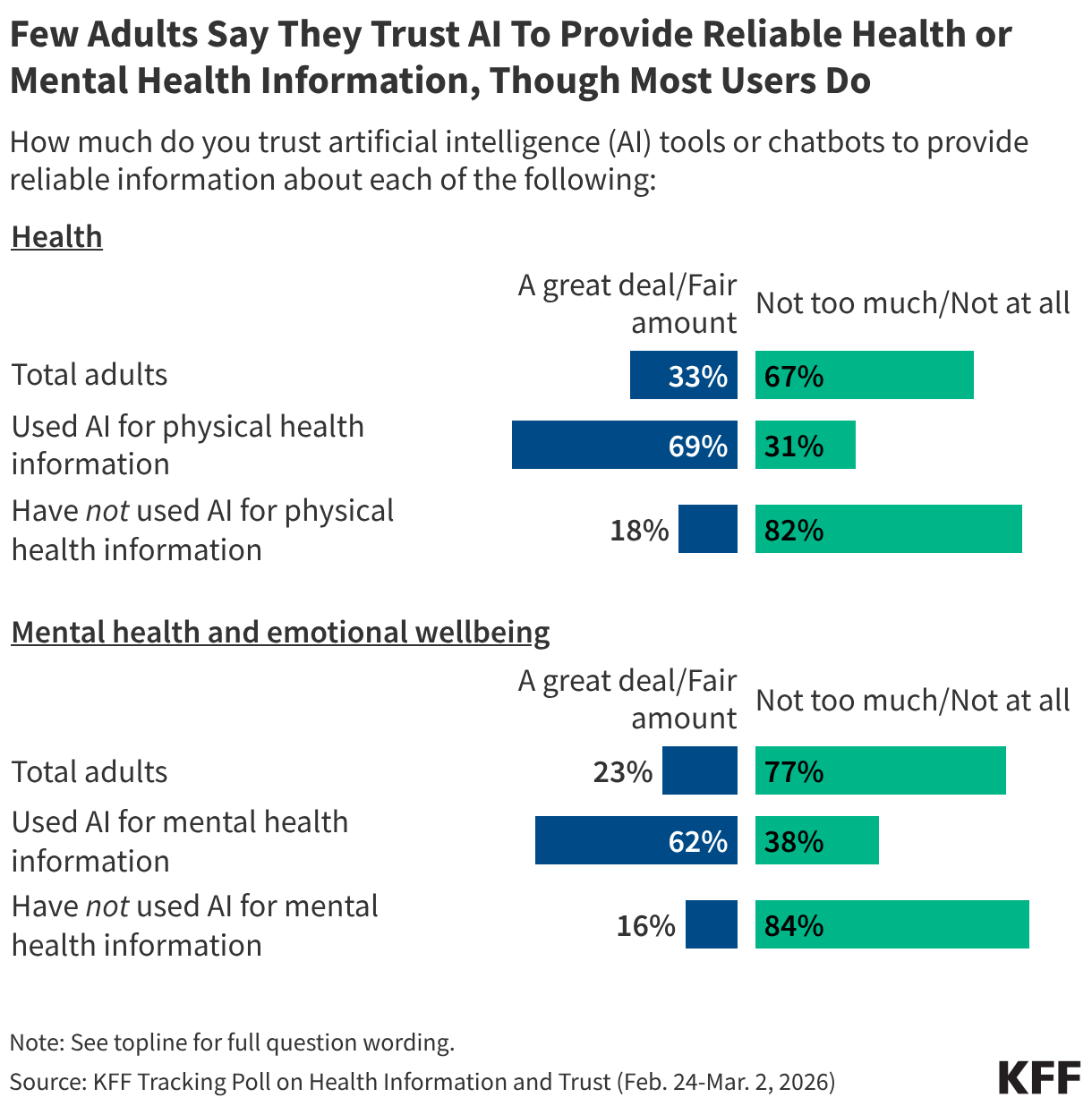
Most adults who use AI chatbots lack confidence in the accuracy of health information and advice produced by AI, but adults under age 50 and Black and Hispanic adults are somewhat more likely than their peers to express confidence.
False or Unproven Health Claims
Awareness and Belief in False or Unproven Health Claims
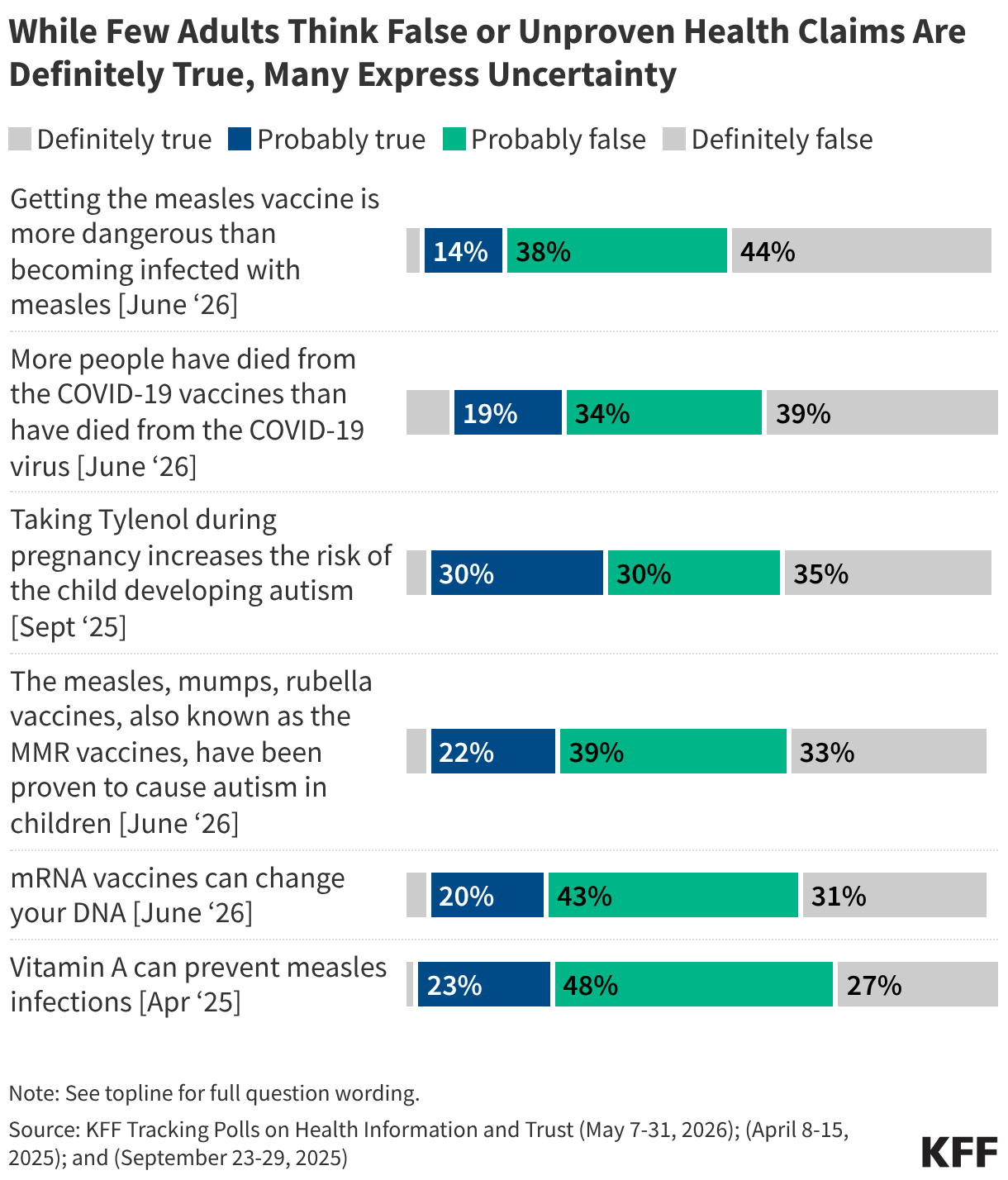
Exposure to health misinformation is often widespread, but relatively small shares of the public express certainty that many false or unproven claims are true. In fact, most of the public fall in a “malleable middle,” saying these claims are either “probably true” or “probably false.” The public’s uncertainty around false or unproven health claims related to COVID-19 , vaccines , measles and the purported causal link between Tylenol and autism presents an opportunity for interventions to clear up confusion and deliver accurate information.
Measuring Exposure
KFF polls have measured exposure to a wide array of false, misleading, and unproven health claims since 2023. Exposure varies widely depending on the topic and prominence of news coverage of the claim. The most widely heard of those tested in KFF polls is that taking Tylenol during pregnancy increases the risk of a child developing autism, a claim cited by President Trump in a widely covered September 2025 press conference.
The Malleable Middle
Across an array of false or unproven health claims measured in KFF surveys, few adults are certain these claims are “definitely true” while much larger shares consistently say they are “definitely false.” For most claims, at least half express uncertainty, falling into the malleable middle and saying the claims are either “probably true” or “probably false.” The six most recent claims measured in KFF surveys in 2025 are shown below.
KFF polling has measured exposure to and belief in false or unproven claims across a wide array of topics. For information on belief in additional claims about COVID-19, reproductive health, and gun violence, see KFF’s Health Misinformation Tracking Poll Pilot. For information on additional false claims related to COVID-19, see KFF’s May 2022, and October 2021 COVID-19 Vaccine Monitors.
Belief in False or Unproven Health Claims
KFF polling has found partisanship and education play a substantial role in belief of false or unproven health claims about vaccines, COVID-19 and measles. Republicans and adults without a college degree are consistently more likely than Democrats and college educated adults, respectively, to believe or lean towards believing false claims related to COVID-19, measles, and vaccines.
Beyond partisanship and education, younger adults and Hispanic adults are more likely than their peers to believe or lean toward believing some of these false or unproven health claims but not others. These differences show that susceptibility to health misinformation among some groups can vary depending on the topic, which may reflect different information channels relied upon by these groups (see social media and news sources sections for more info).
Appendix For False or Unproven Health Claims
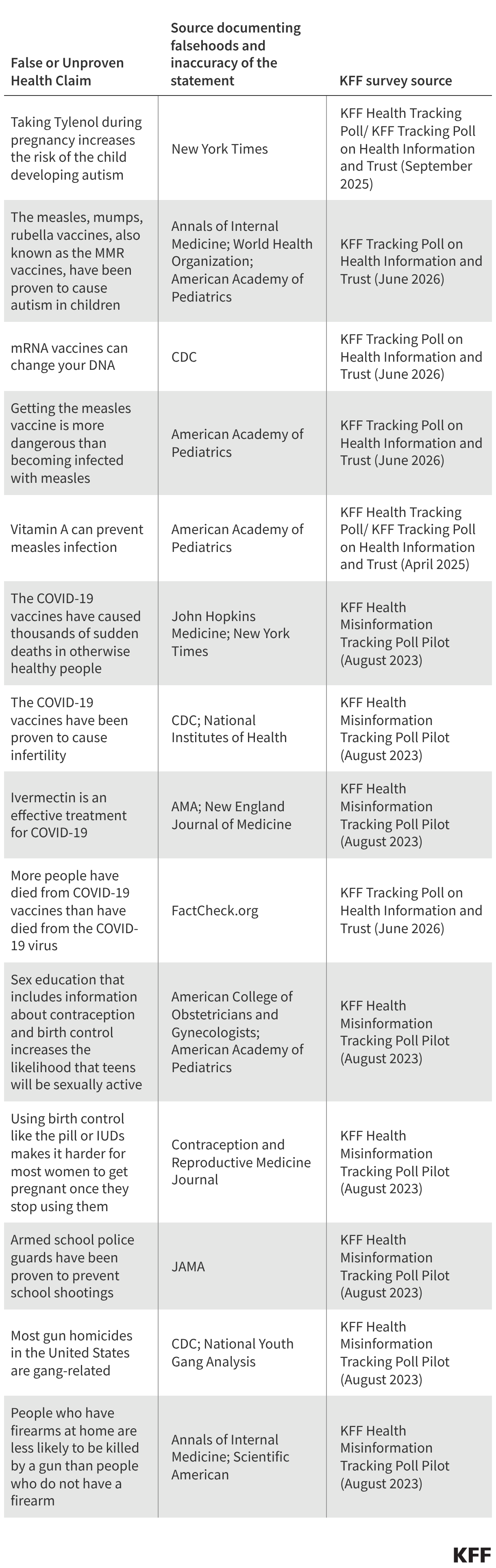
KFF polling has sought to examine the public’s exposure to and belief in a wide array of false or unproven health claims. Many of the false or unproven claims measured in KFF surveys have been amplified by or directly made by government officials, while others have been more nebulously shared and spread in public media over the years. Below is a list of sources to document these claims’ inaccuracy.
Vaccine Attitudes
Views on Vaccine Safety
Most U.S. adults, including majorities across partisans, express confidence in the safety of many routine vaccines, but views of the safety of COVID-19 vaccines are divided on partisan lines. For more information, see KFF’s April 2025 Tracking Poll on Health Information and Trust.
Parents’ Vaccine Attitudes and Behavior
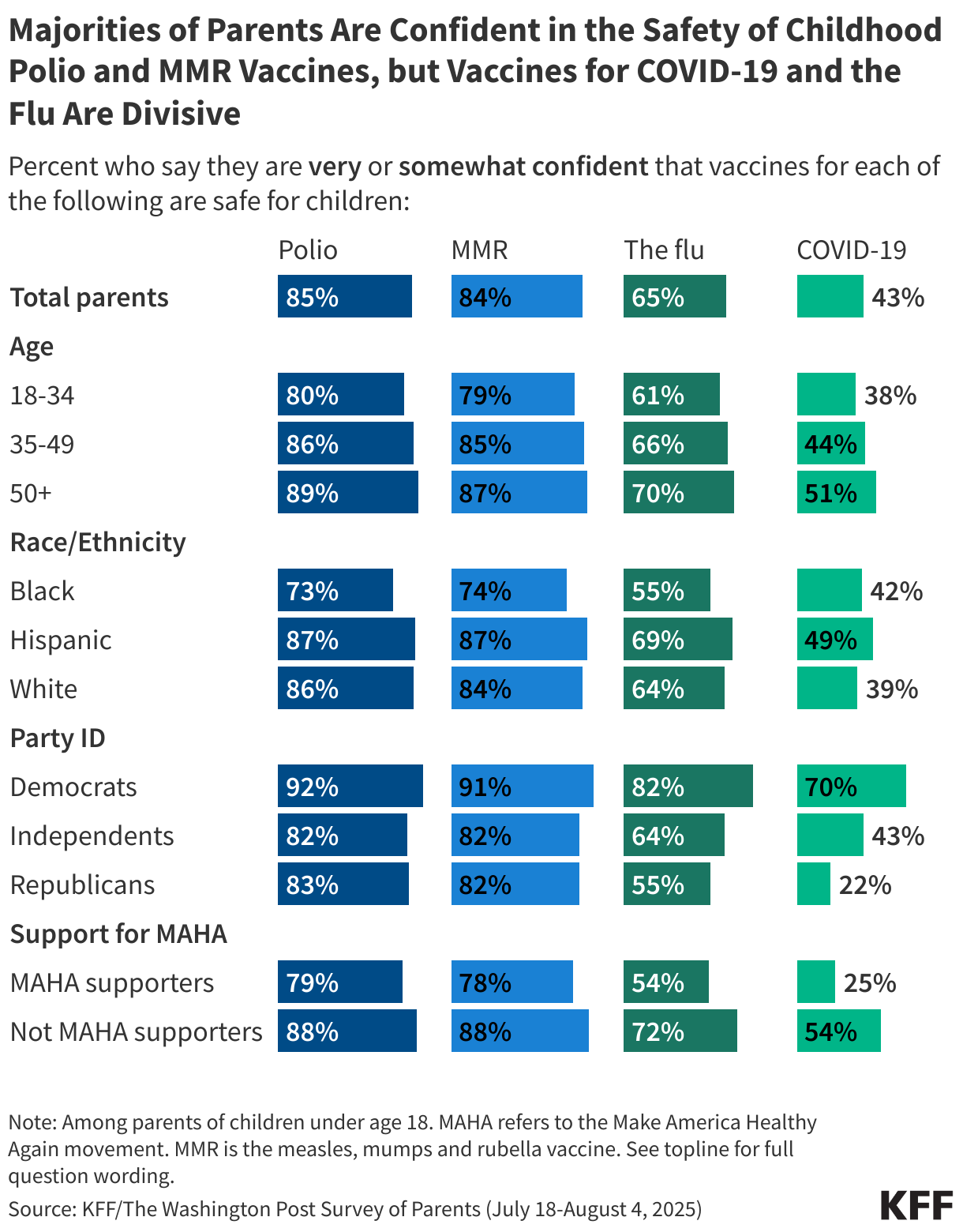
Large majorities of parents express confidence in the safety of childhood vaccines for polio and measles, mumps, and rubella (MMR), but parents’ views on the safety of flu and COVID-19 vaccines are more polarized. About two-thirds of parents say the flu vaccines are safe for children, while fewer than half say the same about COVID-19 vaccines, with divisions along partisan lines. Beyond partisanship, parents who support the Make America Healthy Again (MAHA) movement (38% of parents), Black parents and parents under age 35 are less likely than their peers to be confident that many routine vaccines are safe for children. For more information, see the KFF/Washington Post Survey of Parents.
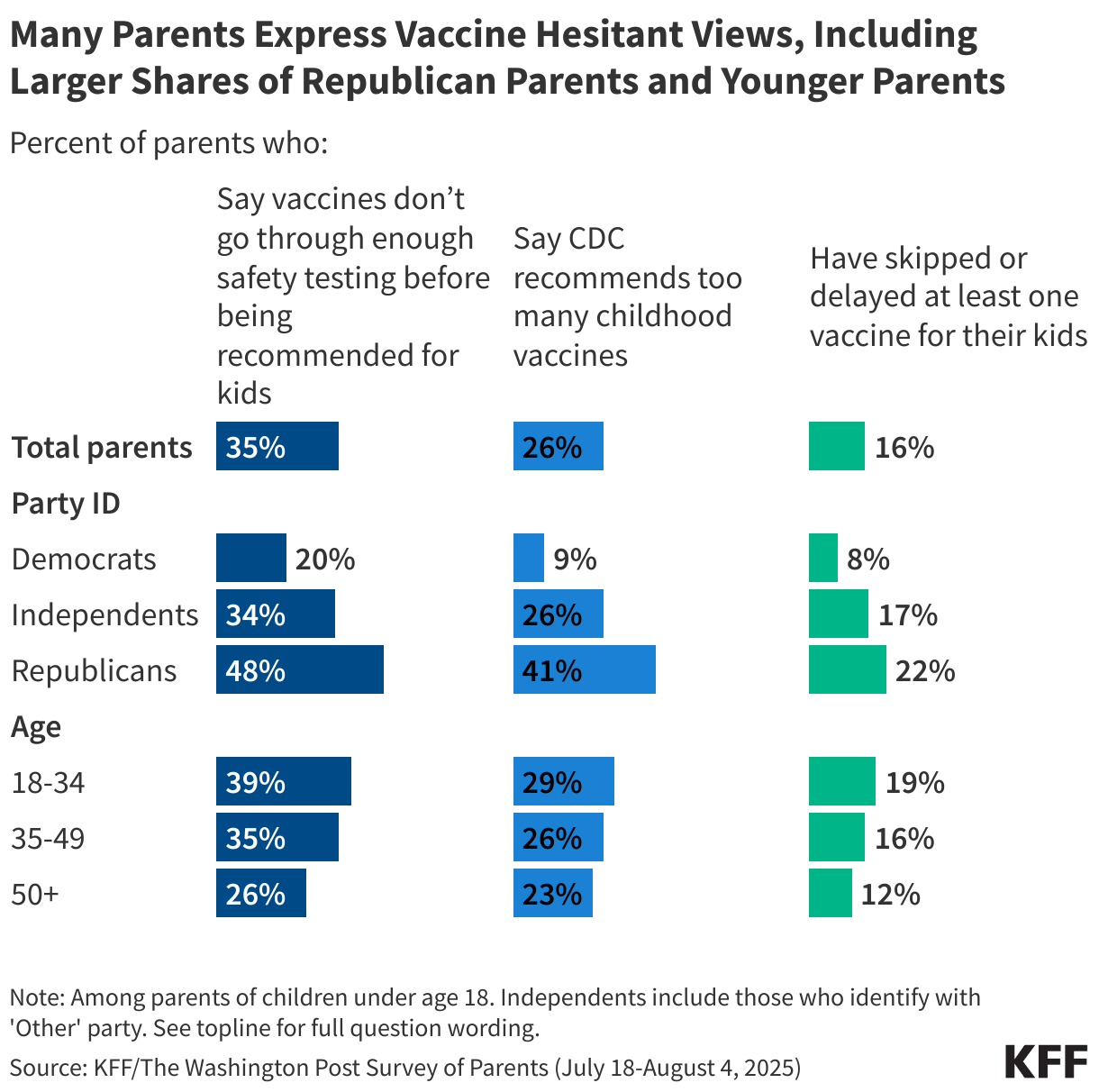
Most parents report keeping their children up to date on childhood vaccines, but about one in six say they have ever skipped or delayed at least one childhood vaccine for any of their children (excluding seasonal vaccines like flu and COVID-19). Despite strong uptake, many parents express skepticism towards vaccine safety testing and the number of vaccines recommended under the current childhood vaccine schedule. Younger parents and those who identify as Republicans are more likely than their counterparts to endorse vaccine-skeptical attitudes and to report skipping vaccines for their own children. For more information, see the KFF/Washington Post Survey of Parents.
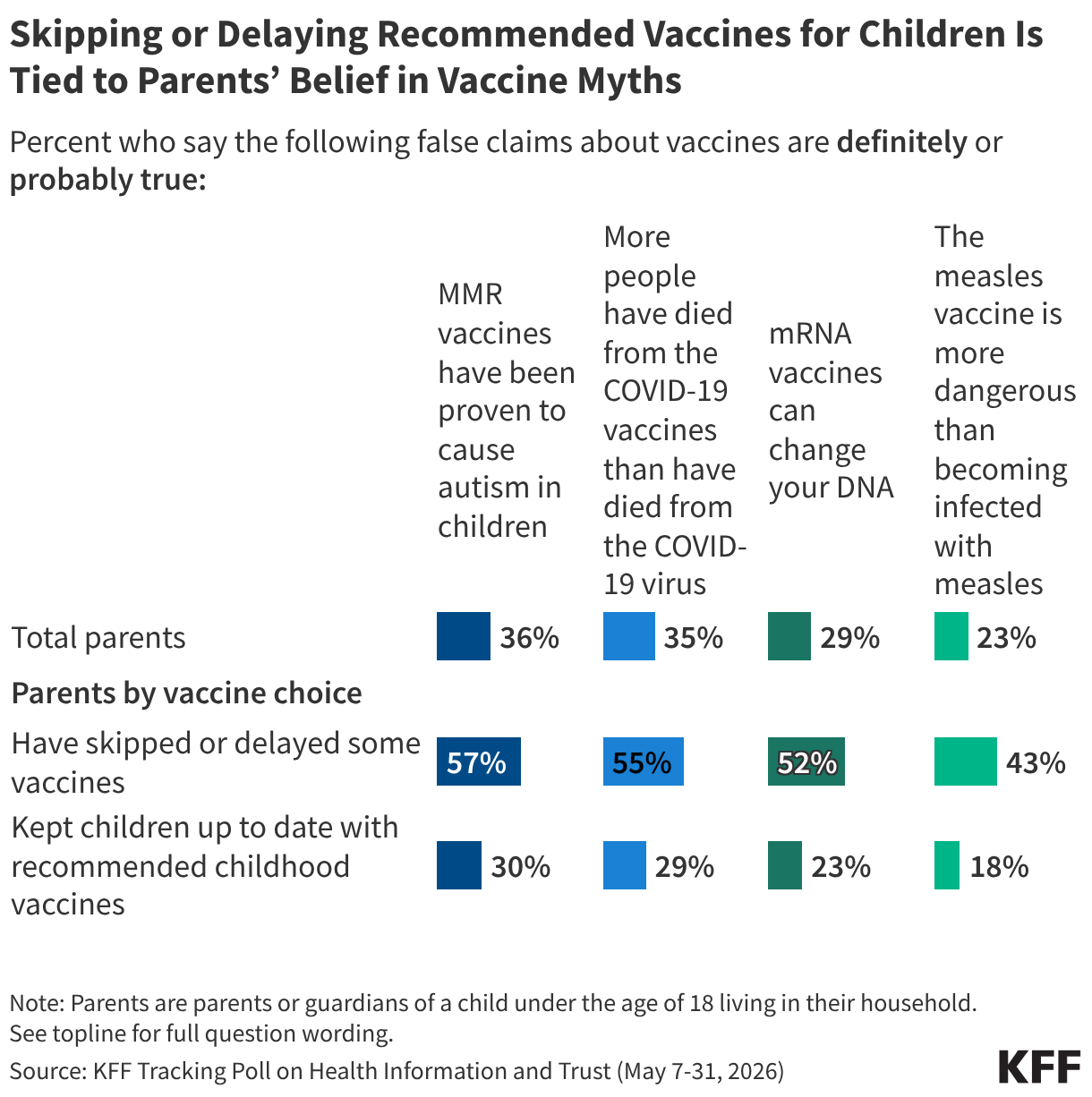
The KFF/Washington Post Survey of Parents tested belief in several false, misleading, or unproven claims amplified by HHS Secretary Robert F. Kennedy Jr related to vaccines, measles, and autism. While few parents think these claims are true, parents who have skipped or delayed at least one recommended vaccine for their children are at least three times as likely as those who have kept their children up to date to say these false or unproven claims about vaccines or measles are true.
mRNA Vaccine Safety
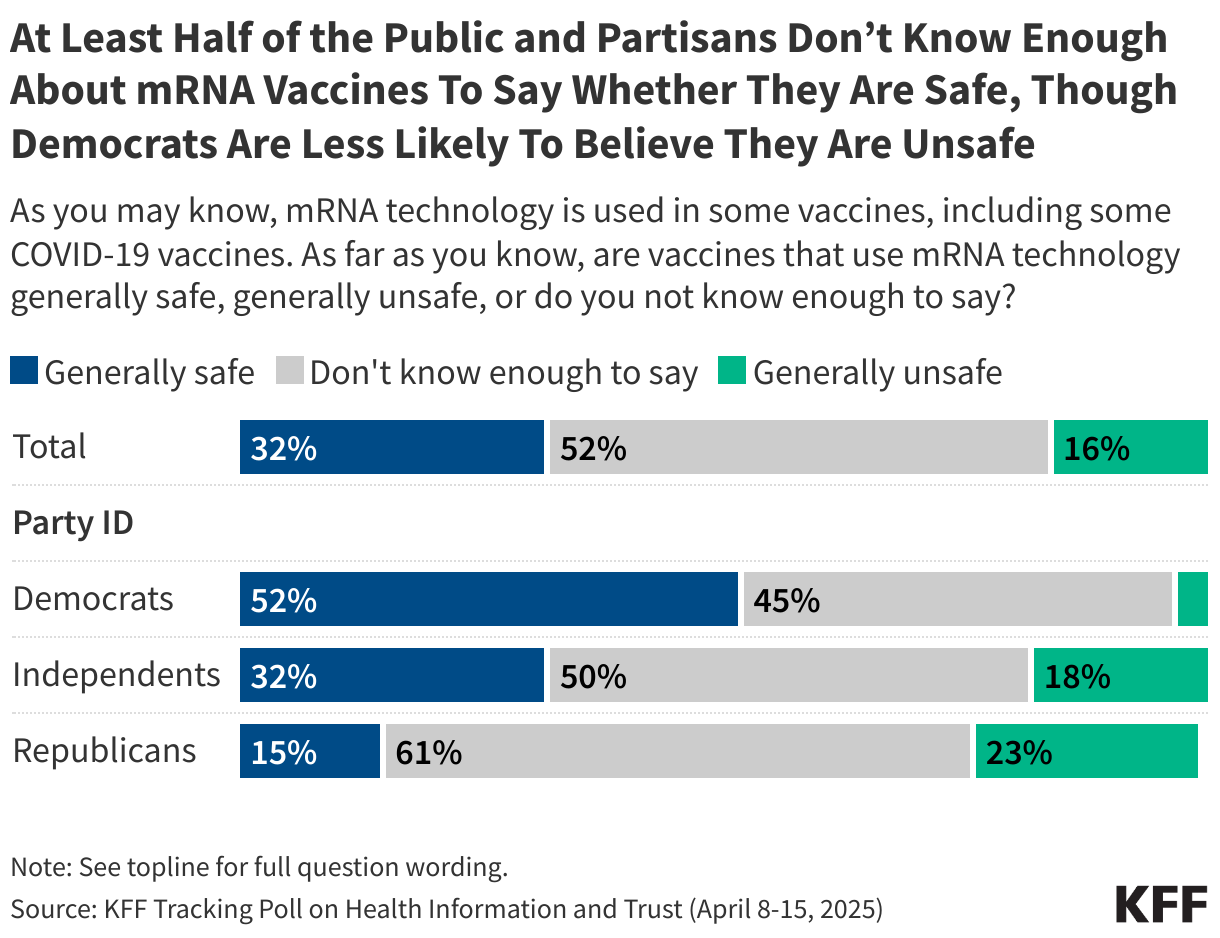
COVID-19 vaccines and some other vaccines currently under development rely on a vaccine technology known as messenger-RNA (mRNA), which has long been the subject of misinformation. While few adults view mRNA technology as unsafe, the technology remains obscure to much of the public, with about half saying they don’t know enough to say. For more information, see KFF’s April 2025 Tracking Poll on Health Information and Trust.